


DETROIT, United States — President Donald Trump’s attacks on a Muslim Democratic Senate candidate have intensified a bitter Michigan Senate race, drawing accusations of religious prejudice and criticism from Arab American leaders who previously supported him.
Trump has repeatedly described Abdul El-Sayed, the Democratic nominee, as a religious extremist and questioned whether he should be allowed to serve in the United States Senate.
The attacks have become a prominent feature of the campaign against Republican candidate Mike Rogers, a former congressman seeking the seat being vacated by retiring Democratic Senator Gary Peters.
El-Sayed, a Michigan-born physician and former Detroit public health director, has denied allegations that he is associated with extremist organisations.
The controversy intensified on Friday, October 30, 2026, as the candidates entered the final days of campaigning before the November 3 midterm elections.
The contest has attracted national attention because of its importance to control of the Senate and the prospect that El-Sayed could become the first Muslim elected to the chamber.
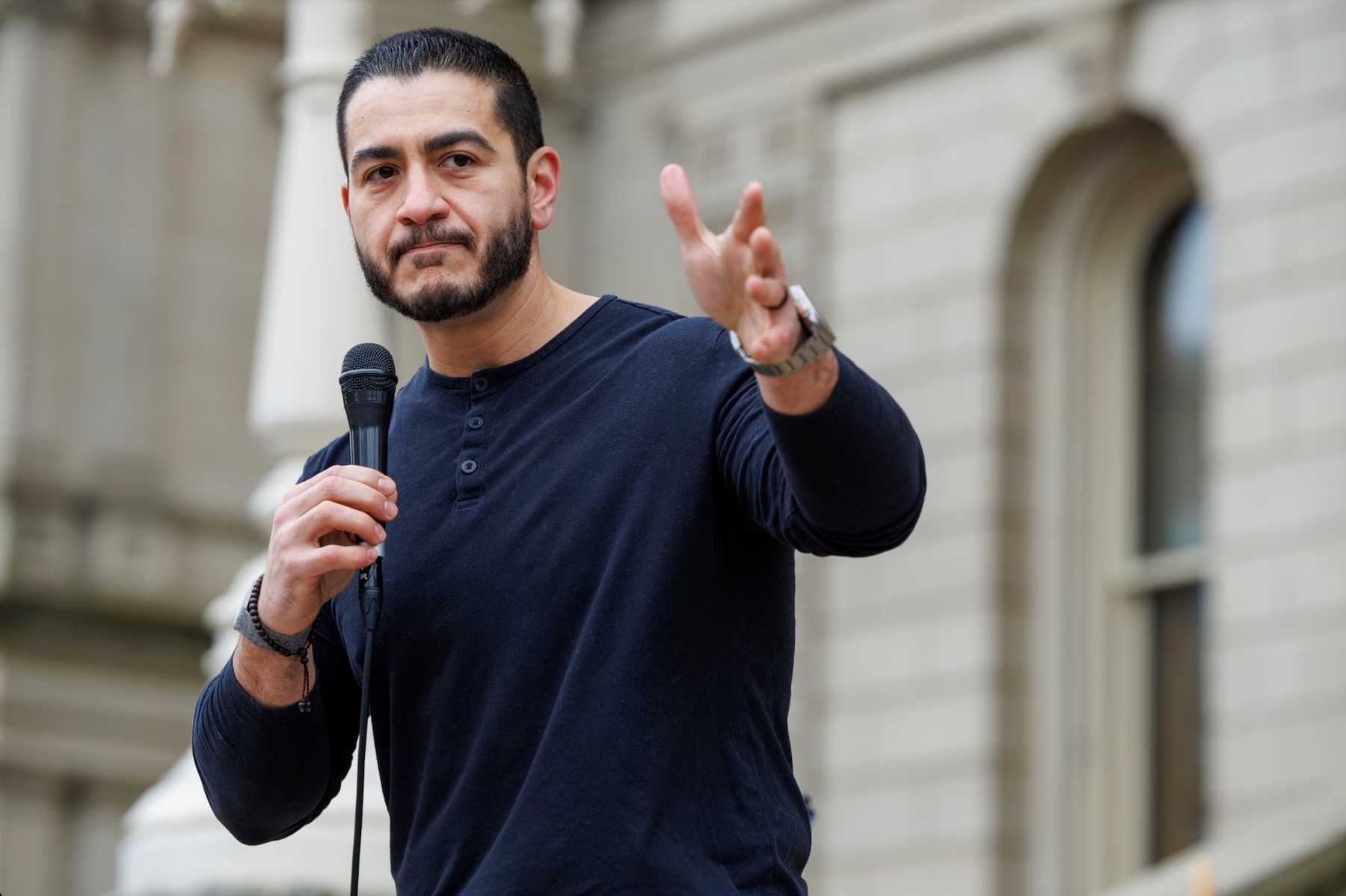
Trump Links Democratic Candidate to Terrorism
At a campaign rally in Port Huron, Michigan, Trump described El-Sayed as a “jihadist” and accused him of having connections to the Muslim Brotherhood.
The president also suggested that El-Sayed posed a security risk, saying the Democrat would need to pass through a metal detector before entering the Senate.
Trump invoked the September 11, 2001, terrorist attacks during his remarks and compared preventing El-Sayed from entering the Senate with efforts to resist the hijackers aboard United Airlines Flight 93.
The accusations have not been supported by evidence establishing that El-Sayed belongs to the Muslim Brotherhood or any terrorist organisation.
According to The Associated Press, the president’s remarks prompted criticism from Muslim community representatives and former political allies.
Trump has also repeatedly used variations of El-Sayed’s name in campaign speeches, a practice the Democrat has characterised as an attempt to make his Muslim identity a political liability.
El-Sayed, whose parents emigrated from Egypt, was born and raised in Michigan.
He has publicly rejected claims that his religious identity makes him less committed to the United States.

Republican Rival Defends His Criticism
Rogers has also made allegations concerning El-Sayed’s associations and political views.
During televised debates, the Republican candidate questioned whether his opponent was sufficiently committed to American interests, citing alleged connections to organisations associated with Islamist movements.
He has pointed to a 2012 letter that El-Sayed signed with other Egyptian Americans supporting Egypt’s then-newly elected president, Mohamed Morsi, who was affiliated with the Muslim Brotherhood.
Rogers has also questioned El-Sayed’s associations with individuals and organisations involved in Muslim American political and civic life.
El-Sayed has denied belonging to the Muslim Brotherhood or supporting terrorist organisations.
In comments reported by CBS News, he said he had never joined the Muslim Brotherhood and had no intention of doing so.
Rogers, meanwhile, has rejected suggestions that his criticism is directed at Islam itself.
In an appearance on NBC’s Meet the Press, he said his objections concerned what he described as El-Sayed’s “radical Islamic agenda”.
The Republican has also attacked his opponent’s support for universal healthcare and other progressive economic policies.
El-Sayed has campaigned on lowering household costs, expanding healthcare access, and reducing the influence of wealthy donors and corporations in American politics.
Rogers has emphasised manufacturing, border security, and economic policies intended to support Michigan businesses.
Arab American Leaders Condemn Trump’s Remarks
The president’s rhetoric has drawn criticism from some Arab Americans who supported his successful campaign in the 2024 presidential election.
Bishara Bahbah, a founder of Arab Americans for Trump, condemned Trump’s characterisation of El-Sayed.
“They are crossing a red line. They are racist,” Bahbah told the Associated Press.
Bahbah’s organisation, which has since changed its name to Arab Americans for Peace, played a role in efforts to mobilise Arab American voters for Trump.
Michigan is home to one of the largest Arab American populations in the United States, with substantial communities in Dearborn and neighbouring cities.
Trump made gains among those voters during the previous presidential election, when dissatisfaction with the Biden administration’s handling of the war in Gaza influenced political attitudes in the state.
Some community leaders have expressed frustration that a president they supported is now using language they regard as hostile towards Muslims.
Dearborn Mayor Abdullah Hammoud has also raised concerns about increasing anti-Muslim hostility.
Speaking to Michigan public radio, Hammoud said the current climate was worse than the hostility he remembered growing up in the years following the September 11 attacks.
The controversy has extended beyond the Senate candidates.
Democratic Representative Rashida Tlaib, who represents part of the Detroit area, has criticised campaign advertisements connecting El-Sayed with terrorism.
Some advertisements have placed images of the candidate alongside footage or photographs associated with the September 11 attacks.
According to Michigan Public, Muslim residents have expressed concern about the effect of those advertisements and political statements on their communities.
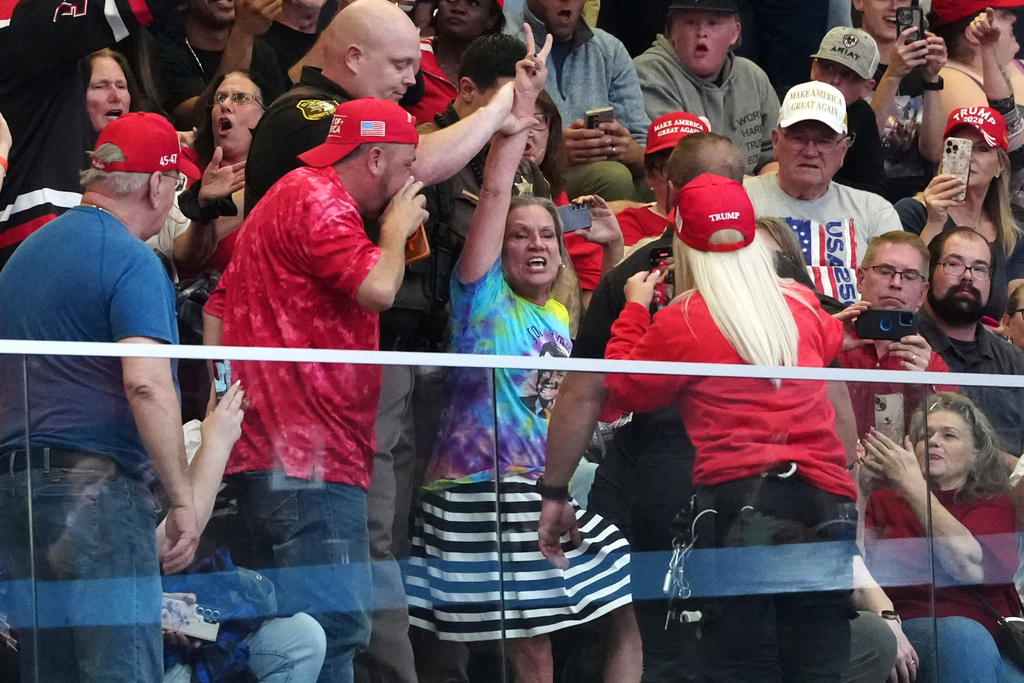
Religious Prejudice Becomes an Election Issue
El-Sayed’s candidacy has also prompted wider examination of religious attitudes among Michigan voters.
A survey by Michigan State University’s Institute for Public Policy and Social Research found that 38 per cent of respondents said they would be less likely to support a Muslim candidate.
The findings have drawn attention to the possible influence of religious identity in an election where the candidates are also divided over healthcare, economic policy, immigration, and foreign affairs.
Civil rights organisations have criticised attacks that associate a candidate’s Muslim background with terrorism.
The National Association for the Advancement of Colored People condemned the rhetoric surrounding the Michigan race, describing the attacks as racist and unacceptable.
Republican representatives have maintained that questions about El-Sayed’s political associations and previous statements are legitimate campaign issues.
According to a Reuters examination of the contest, the campaigns have adopted markedly different approaches, with El-Sayed emphasising economic reforms and Rogers questioning his opponent’s political positions and associations.

Close Contest Could Affect Control of Senate
The election is being watched closely because Republicans hold a 53-47 majority in the Senate, including two independents who caucus with Democrats.
Michigan is among the states where Democrats are seeking to retain a Senate seat while challenging Republicans elsewhere.
Recent surveys have placed El-Sayed ahead of Rogers by varying margins, although independent election analysts continue to classify the contest as competitive.
A polling average cited by Reuters showed the Democrat leading by approximately 2.5 percentage points.
A separate survey reported by CBS News indicated a seven-point advantage.
Polling results represent voter preferences at the time surveys were conducted and do not establish the final election outcome.
The contest also carries significance for divisions within the Democratic Party.
El-Sayed defeated Representative Haley Stevens in the Democratic primary after a campaign involving disagreements over progressive economic proposals and US policy towards Israel.
He has received support from prominent progressive politicians, including Senator Bernie Sanders.
Rogers, a former FBI agent and congressman, narrowly lost Michigan’s 2024 Senate election to Democrat Elissa Slotkin.
He is now making another attempt to enter the chamber, with Trump’s endorsement.
With voting approaching, the candidates continue to dispute each other’s qualifications and political positions.
For El-Sayed, the closing stages of the campaign have involved repeated responses to allegations concerning his religion and loyalty to the United States.
Rogers continues to defend his scrutiny of the Democrat’s political associations and proposals.
Michigan voters will decide the election on November 3, determining who will represent the state in the Senate and whether the chamber will include its first Muslim member.