
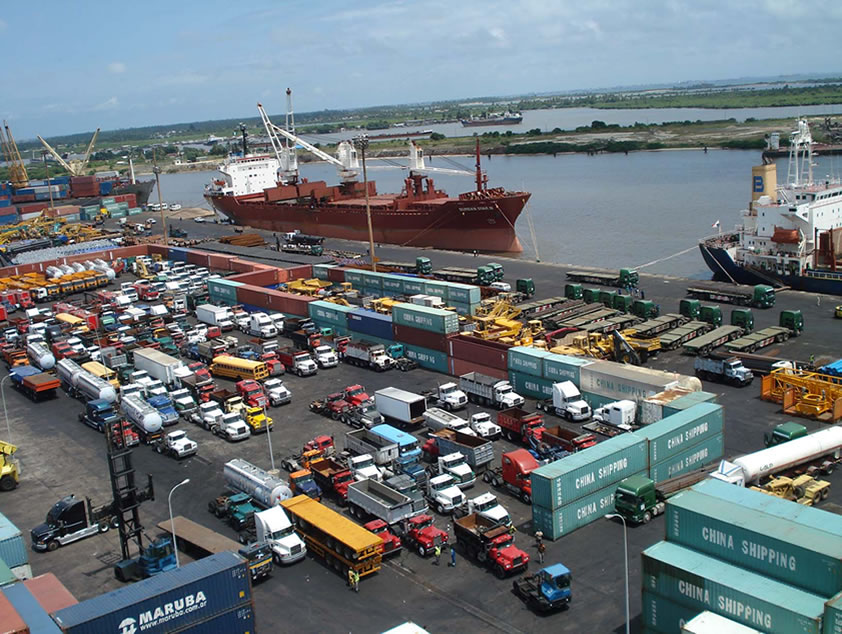

ABUJA, Nigeria — The federal government has approved the modernisation of four additional Nigerian ports, extending an infrastructure programme that already covers the country’s two major port complexes in Lagos.
The latest approval covers Onne and Rivers ports in Rivers State, Delta Port, and Calabar Port, Adegboyega Oyetola, the Minister of Marine and Blue Economy, said in a statement. Apapa and Tin Can Island ports in Lagos had previously been approved for modernisation.
Oyetola said the programme was intended to improve cargo handling, shorten vessel turnaround times, strengthen connections between ports and surrounding regions, and reduce the cost of moving goods.
On Monday, September 28, 2026, The Guardian reported the expanded approvals, citing a statement issued by Bolaji Akinola, Oyetola’s special adviser.
Programme Extends Beyond Lagos
The government’s decision brings ports in southern and southeastern Nigeria more fully into a national infrastructure renewal programme that has previously focused heavily on Apapa and Tin Can Island.
“This approval marks another important step in our determination to transform Nigeria’s maritime infrastructure and unlock the enormous economic potential of our ports,” Oyetola said.
The minister said the government wanted to reduce the concentration of cargo traffic around Lagos by improving alternative gateways for international trade.
He said upgraded infrastructure at Onne, Rivers, Delta, and Calabar ports would help them handle cargo more efficiently and give businesses more predictable movement of goods.
The Nigerian Ports Authority identifies Onne and Rivers as separate port complexes in Rivers State, alongside Delta Port in Warri and Calabar Port in Cross River State.
The broader modernisation programme includes reconstructing quay walls, deepening navigation channels to accommodate larger vessels, replacing ageing cargo-handling equipment, and further digitising terminal and gate operations, according to Oyetola.
The Nigerian Ports Authority has also said its infrastructure-renewal programme is intended to increase terminal capacity and improve Nigerian ports’ ability to accommodate larger vessels and growing trade volumes.
New Deep-Sea Ports Planned
Alongside the rehabilitation of existing ports, the government is pursuing several new deep-sea port projects.
Oyetola identified the proposed facilities as the Ibom Deep Seaport in Akwa Ibom State, Bakassi Deep Seaport in Cross River State, Agge Deep Seaport in Bayelsa State, Gateway Deep Seaport in Ogun State, Ondo Deep Seaport in Ondo State, and Bonny Deep Seaport in Rivers State.
He said combining new ports with the rehabilitation of existing facilities would increase maritime capacity and establish additional economic corridors across the country.
The government has said its port strategy is also intended to improve links between seaports and roads, railways, inland waterways, warehouses, and distribution networks.
Government Targets Lower Logistics Costs
Oyetola also addressed Nigeria’s logistics costs at a transport industry forum organised by the Transport Correspondents Association of Nigeria in Lagos.
Represented by Paul Garnuwa, director of inland transport services at the Nigeria Ports Economic Regulatory Agency, the minister said the speed, cost, reliability, and predictability of moving goods affected investment, production, trade, and employment.
He said the performance of ports could not be separated from the wider transportation system connecting cargo terminals with inland destinations.
“Modern, efficient and competitive ports are critical to achieving these objectives because they facilitate trade, support industry, attract investment and create jobs,” Oyetola said.
The Nigerian Ports Authority reported earlier in 2026 that cargo throughput increased by 12.3 per cent in the second quarter compared with the same period a year earlier, while vessel traffic rose by 14.4 per cent.
The authority said cargo handled at Nigerian ports increased from 31.83 million metric tonnes in the second quarter of 2025 to 35.74 million metric tonnes in the corresponding period of 2026.