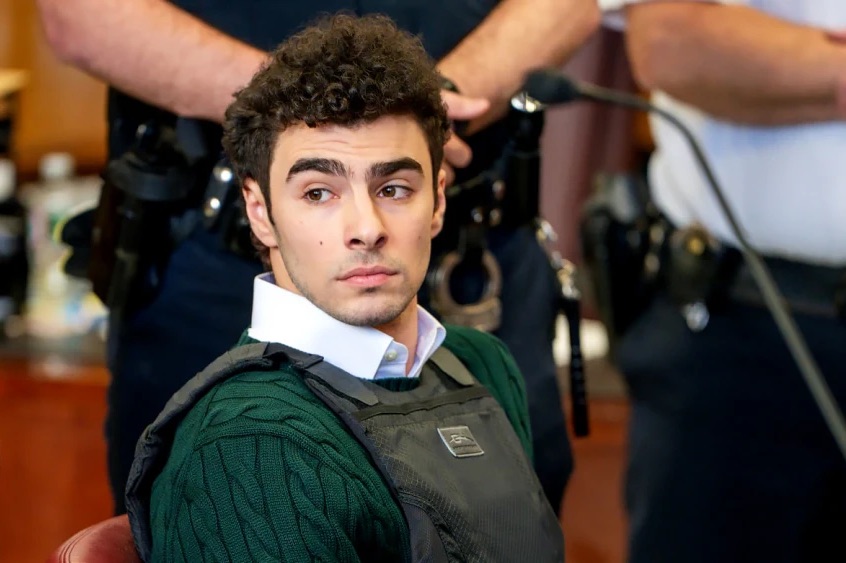

NEW YORK, USA — A federal judge on Friday, January 30, 2026, dismissed two major charges against Luigi Mangione, eliminating the possibility that he could face the death penalty in connection with the fatal shooting of UnitedHealthcare’s chief executive, Brian Thompson.
U.S. District Judge Margaret M. Garnett ruled that two of the four federal counts against Mr. Mangione, including a charge of murder through the use of a firearm and a related firearms offence, could not proceed. The murder charge carried a potential death sentence.
Mr. Mangione, 27, has pleaded not guilty to all charges.
The ruling dealt a setback to federal prosecutors, who had sought capital punishment in what the Justice Department had described as a “premeditated, cold-blooded assassination that shocked America.”
Two federal stalking counts, which carry a maximum sentence of life imprisonment without parole, remain in place.
Court’s Reasoning on Dismissed Charges
In her decision, Judge Garnett said the federal murder statute cited by prosecutors could be applied only when linked to a separate “crime of violence.” Prosecutors argued that the alleged stalking of Mr. Thompson satisfied that requirement. The judge rejected that argument.
“The analysis contained in the balance of this opinion may strike the average person — and indeed many lawyers and judges — as tortured and strange, and the result may seem contrary to our intuitions about the criminal law,” Judge Garnett wrote.
“But it represents the Court’s committed effort to faithfully apply the dictates of the Supreme Court to the charges in this case,” she added. “The law must be the Court’s only concern.”
After the ruling was entered, one of Mr. Mangione’s lawyers praised the decision.
“We’re all very relieved,” Karen Agnifilo, a defence attorney, told reporters outside the courthouse.
Mr. Mangione appeared briefly in court for a pre-trial hearing. Supporters gathered in the hallways and were heard cheering for him.
Prosecutors have accused Mr. Mangione of shooting Mr. Thompson outside a midtown Manhattan hotel on December 4, 2024, as the executive was heading to an early-morning investor conference. The killing prompted an extensive regional manhunt.

Evidence Ruling and Broader Legal Context
Judge Garnett also ruled that prosecutors may introduce evidence recovered from a backpack Mr. Mangione was carrying when he was arrested at a McDonald’s in Altoona, Pennsylvania, on December 9, 2024.
Authorities have said the backpack contained a ghost gun, counterfeit identification documents, a notebook and writings expressing grievances about the private health care system in the United States.
Defence lawyers had sought to exclude the material, arguing that it was obtained through an unlawful search. The judge rejected that claim.
“The search was reasonable under the facts of this case,” Judge Garnett wrote.
In April, Attorney General Pam Bondi instructed prosecutors to seek the death penalty, marking the Justice Department’s first attempt to pursue capital punishment during President Donald Trump’s second term. Ms. Bondi described the move as part of Mr. Trump’s “agenda to stop violent crime and Make America Safe Again.”
Separately, Mr. Mangione faces nine charges in a case brought by New York state prosecutors, including second-degree murder and weapons offences. He has also pleaded not guilty in that case. The state charges carry the possibility of life imprisonment.
New York abolished the death penalty in 2004 after its capital punishment statute was ruled unconstitutional.
Judge Garnett’s rulings came a day after federal prosecutors charged a 35-year-old Minnesota man, Mark Anderson, with impersonating an F.B.I. agent in an apparent attempt to secure Mr. Mangione’s release from federal custody in Brooklyn.
Court documents said Mr. Anderson was arrested late Wednesday at the Metropolitan Detention Center.
Officers found a barbecue fork and a “round steel blade” resembling a pizza cutter in his backpack, according to the complaint.