
ABUJA, Nigeria — Former Nigerian president Goodluck Jonathan has described the recent military intervention in Guinea-Bissau as a “ceremonial coup” and called on regional bodies to publish the results of the country’s suspended presidential election.
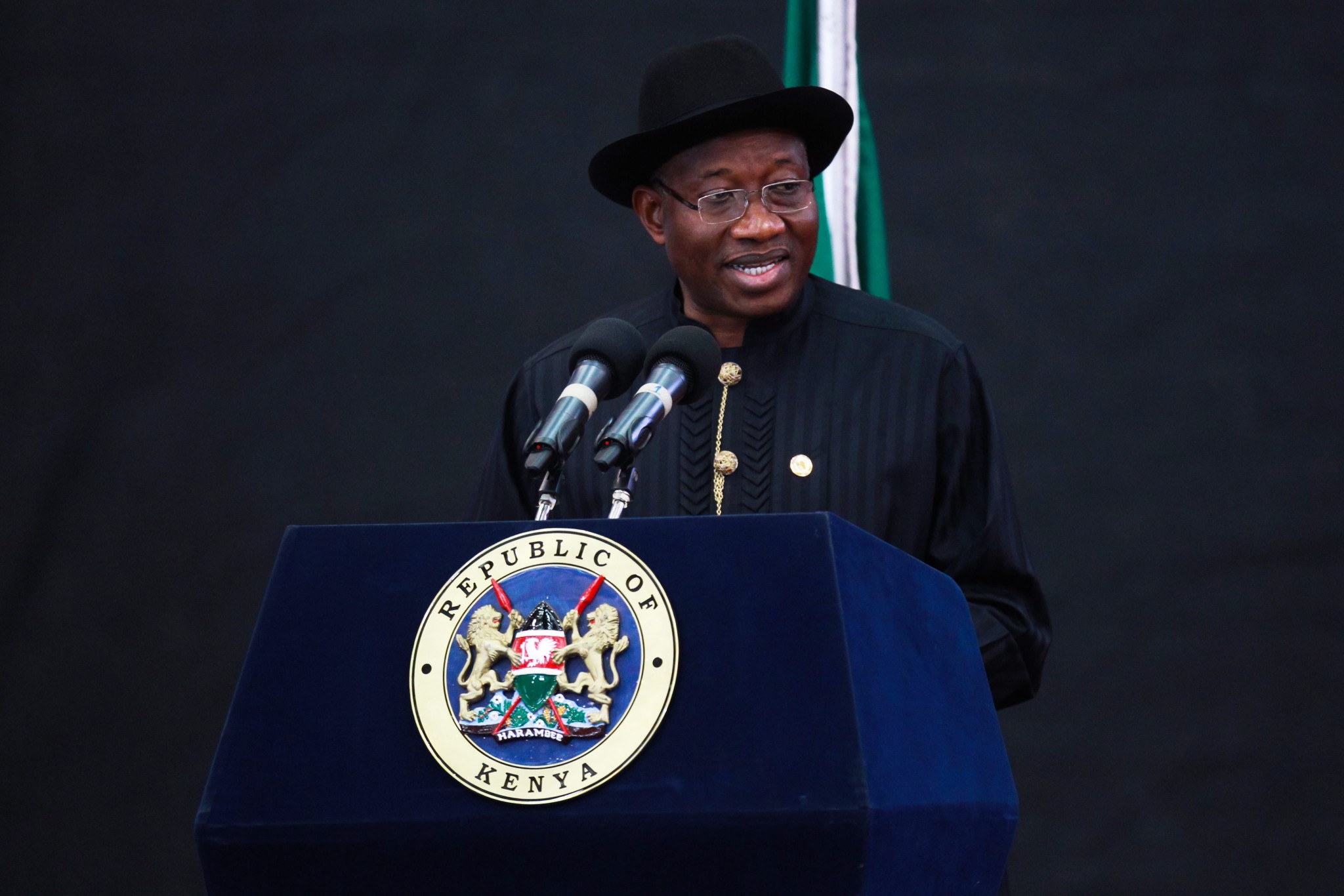
Jonathan, who spoke to journalists in Abuja on Friday, November 28, 2025, after his evacuation from Bissau, said the episode did not resemble a conventional coup and accused Guinea-Bissau’s authorities of manipulating the security crisis to derail the democratic process.
Jonathan was in Guinea-Bissau as head of the West African Elders Forum Election Observation Mission to monitor presidential and legislative elections held on Sunday, November 23, 2025.
He said voting and counting were peaceful and that results from all nine regions had already been collated when events took a dramatic turn.
“Specifically, what happened in Guinea-Bissau was not a coup; maybe, for want of a better word, I would say it was a ceremonial coup. It is the president, President Umaro Embaló, that announced the coup,” he said.
On Monday, November 24, 2025, before official results were released, President Umaro Sissoco Embaló, who was seeking re-election, and his main challenger, Fernando Dias, each declared victory, claiming to have crossed the 50 percent threshold required to win outright.
Shortly afterwards, soldiers seized key institutions, suspended the electoral process and announced they would administer the state “until further notice”.
The move followed earlier government claims that a coup attempt had been foiled ahead of the campaign season.
Mamadu Ture, deputy chief of staff, had accused Daba Nawalna, a brigadier-general and head of a military training centre, of masterminding the alleged plot.
Embaló later told French-language weekly Jeune Afrique that he had been arrested in his office at the presidential palace at about 1 p.m.
He said the soldiers did not use force and described the incident as a coup.
Jonathan questioned that account, saying no genuine coup would allow a sitting head of state to use a mobile phone freely and address media organisations while claiming to be in custody.
“Not only announcing the coup, but Embaló, while the coup took place, was using his phone and addressing media organisations across the world that he had been arrested,” he said.
“I’m a Nigerian, and I know how heads of state are treated when there’s a coup.”
“Who is fooling who? Basically, what happened in Guinea-Bissau is quite disturbing to me, who believes in democracy,” he added.
“I feel more pained than the day I called Buhari to congratulate him when I lost as a sitting president.”
Jonathan said his concern was shaped by his long-standing involvement in efforts to stabilise Guinea-Bissau during his tenure as Nigeria’s president and as chair of the Economic Community of West African States (ECOWAS).
He warned that halting the electoral process at the point of collation signalled a dangerous return to what he described as the “dark days” between 2011 and 2014.
The former president insisted that regional organisations now had a responsibility to protect the integrity of the ballot.
He said officials of ECOWAS and the African Union (AU) were present when results were collated in the regions and therefore had access to the final figures.
“My conviction is that—and my charge to ECOWAS and AU is that—they must announce the results,” he said.
“They have the results because AU and ECOWAS officials were at all the regions when the results were collated. They cannot change those results. They should tally all those results and announce.”
“They must announce, let the world know who won that election. Let the world know who won that election. And they owe the world that responsibility,” he added.
Jonathan also criticised Embaló’s role, saying it was troubling that a former ECOWAS chair and retired senior military officer could be associated with an event that interrupted an election he was contesting.
“He should be the person that can prevent any coup in Guinea-Bissau. I don’t expect a coup that would remove him from office,” he said.
He further called for the immediate release of Dias, who remains in custody, stressing that the opposition candidate had “not committed any offence”.
Jonathan and other members of the election observation team were evacuated from Guinea-Bissau on Thursday, November 27, 2025, and arrived in Abuja the same evening, after regional and bilateral efforts secured their departure amid the ongoing political uncertainty in Bissau.