
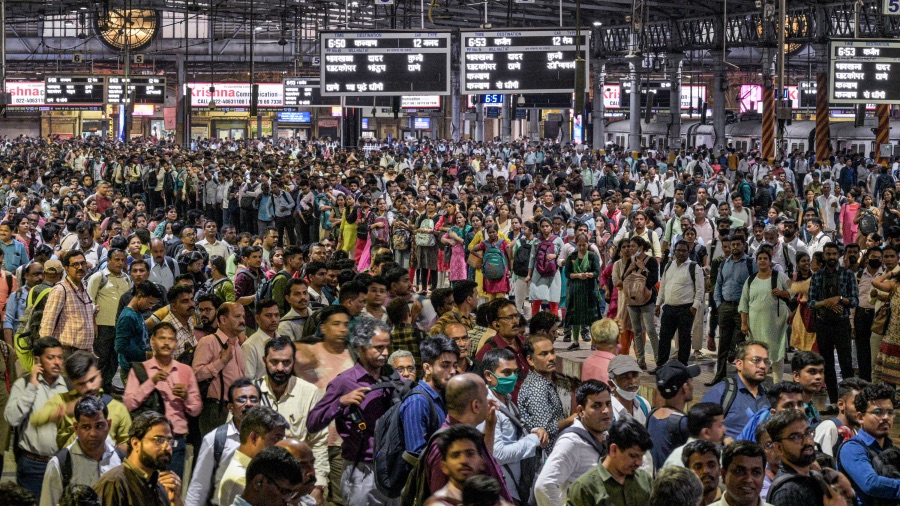

DELHI, India — More than three million officials have begun India’s latest national census, a yearlong exercise expected to influence welfare policies and political representation in the world’s most populous country.
The census, launched on Wednesday, April 1, 2026, will run until March 31 next year. It marks the first such nationwide count in more than a decade, following delays caused in part by the Covid-19 pandemic.
Two-Phase Data Collection
Authorities said the enumeration will take place in two phases. In the first stage, census workers will spend about a month gathering information on housing conditions and household characteristics.
Data will be collected through a combination of in-person visits and digital submissions, with residents able to provide information using a smartphone application.
A second phase, scheduled to begin in September, will collect more detailed demographic and socio-economic data, including information on religion and caste.
Debate Over Caste Enumeration
The inclusion of caste data has drawn renewed attention to a longstanding and sensitive issue in Indian society.
Caste remains a defining factor in social structure, influencing access to education, employment and public resources.
However, comprehensive data on caste groups is limited, with the last detailed enumeration conducted in 1931 during British colonial rule.
Since independence, censuses have recorded only certain marginalised groups, including scheduled castes and scheduled tribes.
Successive governments have avoided a full caste count, citing concerns that it could heighten social tensions.
Implications for Policy and Representation
Census data plays a central role in shaping public policy in India, informing the allocation of welfare programmes and development planning.
The results could also affect political representation. Parliamentary and state legislative seats may be adjusted to reflect population changes, potentially altering the country’s political landscape.
A law enacted in 2023 reserving one-third of legislative seats for women could further expand the number of positions set aside for female representatives if the total number of seats increases.
Population Growth Since Last Count
India last conducted a census in 2011, when the population was recorded at 1.21 billion. Current estimates place the population at more than 1.4 billion.
According to the United Nations Population Fund, India surpassed China in 2023 to become the world’s most populous country.
The census is expected to provide updated data critical for governance and planning as India continues to expand economically and demographically.