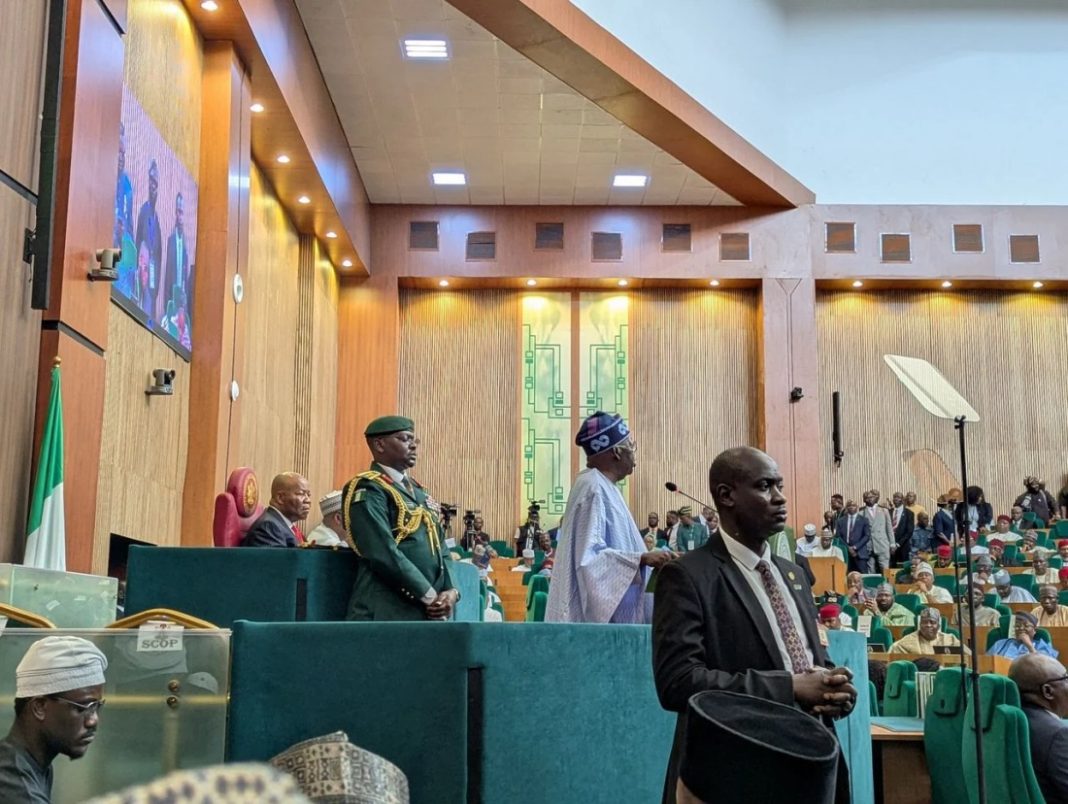

ABUJA, Nigeria — Nigeria’s House of Representatives minority caucus said on Wednesday, January 21, 2026, that several tax reform laws recently published in the official government gazette were unlawfully altered after being passed by the National Assembly and signed by President Bola Tinubu.
The finding was contained in an interim report by an ad hoc committee set up by the Minority Caucus to investigate discrepancies between the versions of the tax laws approved by parliament and those later circulated to the public.
Allegations Raised in Parliament
The inquiry followed public controversy after Abdulsamad Dasuki, a lawmaker from Sokoto State, raised concerns on the floor of the House over differences between the gazetted laws and the texts approved by legislators.
In a statement issued on December 28, 2025, the Minority Caucus said it would “unconditionally protect the independence of the legislature and our democracy,” warning that the circulation of altered laws amounted to an attack on the constitutional authority of parliament.
Days later, the caucus, led by the Minority Leader, Kingsley Chinda, established a seven-member fact-finding committee chaired by Afam Victor Ogene.
Other members included Aliyu Garu, Stanley Adedeji, Ibe Osonwa, Marie Ebikake, MB Shehu Fagge and Gaza Gbefwi Jonathan.
Release of Certified Copies
On January 3, the House announced that the Speaker, Abbas Tajudeen, had ordered the public release of certified copies of the four tax reform Acts signed into law by the president.
The directive, announced by the House spokesman, Akintunde Rotimi, also initiated an internal verification process aimed at “eliminating doubts, restoring clarity, and protecting the sanctity of the legislature.”
The released laws were the Nigeria Tax Act, 2025; the Nigeria Tax Administration Act, 2025; the National Revenue Service (Establishment) Act, 2025; and the Joint Revenue Board (Establishment) Act, 2025.
Findings of Alterations
In its preliminary report, the committee said a comparison of the certified copies with earlier gazetted versions confirmed that changes had been made, particularly to the Nigeria Tax Administration Act, 2025.
The panel said at least three different versions of that Act were in circulation and cited a directive to “align” the laws with the Federal Government Printing Press as evidence of what it described as procedural irregularities that encroached on the legislative powers of the National Assembly.
Among the changes identified was an alteration to Section 29(1), which lowered reporting thresholds in the gazetted version from ₦50 million to ₦25 million for individuals and from ₦250 million to ₦100 million for companies, contrary to the version passed by lawmakers.
The committee also reported the insertion of new subsections, 41(8) and 41(9), requiring taxpayers to deposit 20 per cent of disputed tax assessments before filing appeals at the Tax Appeal Tribunal. It said these provisions were not included in the text approved by the legislature.
Additional discrepancies cited included expanded enforcement powers under Section 64, allowing tax authorities to arrest individuals and sell assets without court orders; changes to the definition of federal taxes under Section 3(1)(b), which removed petroleum income tax and value-added tax; and an amendment to Section 39(3) mandating that tax computations for petroleum operations be conducted in United States dollars rather than the currency of transaction.
In the National Revenue Service (Establishment) Act, the committee said oversight clauses authorising the National Assembly to summon agency officials and require quarterly and annual reports were removed in the gazetted version.
Call for Extended Probe
Describing the findings as evidence of “anomalies, illegalities and impunity,” the committee said the matter required a more extensive investigation to establish responsibility for what it characterised as an affront to the legislature and Nigeria’s democratic order.
The panel has asked the Minority Caucus for additional time to conduct a broader inquiry.
In the report, Mr Ogene thanked the caucus leadership for the assignment and said the committee remained committed to defending the constitutional authority of the National Assembly.