
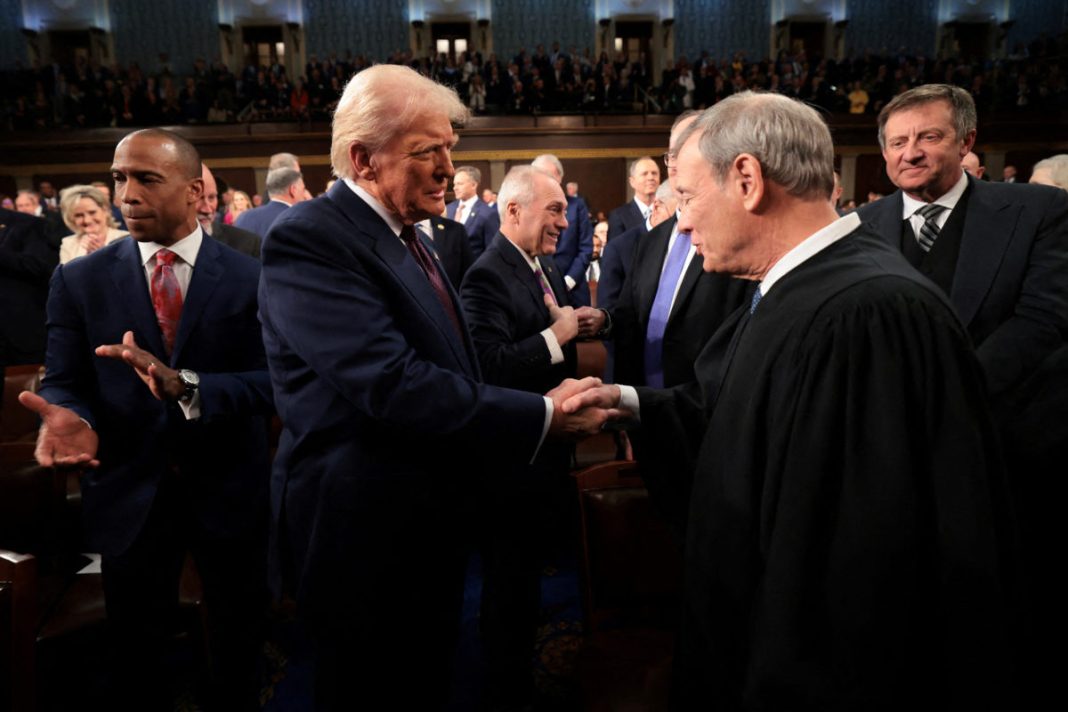

WASHINGTON, United States — In a rare and consequential courtroom moment, Donald Trump sat quietly inside the Supreme Court of the United States on Wednesday, April 1, 2026, as justices openly questioned the legal foundations of his administration’s effort to curtail birthright citizenship, a policy that strikes at the core of American identity.
The session marked the first time in modern history that a sitting U.S. president attended oral arguments in person.
Yet Trump’s presence appeared to carry little weight inside the courtroom, where the justices, led by Chief Justice John Roberts, showed clear scepticism toward the administration’s position.
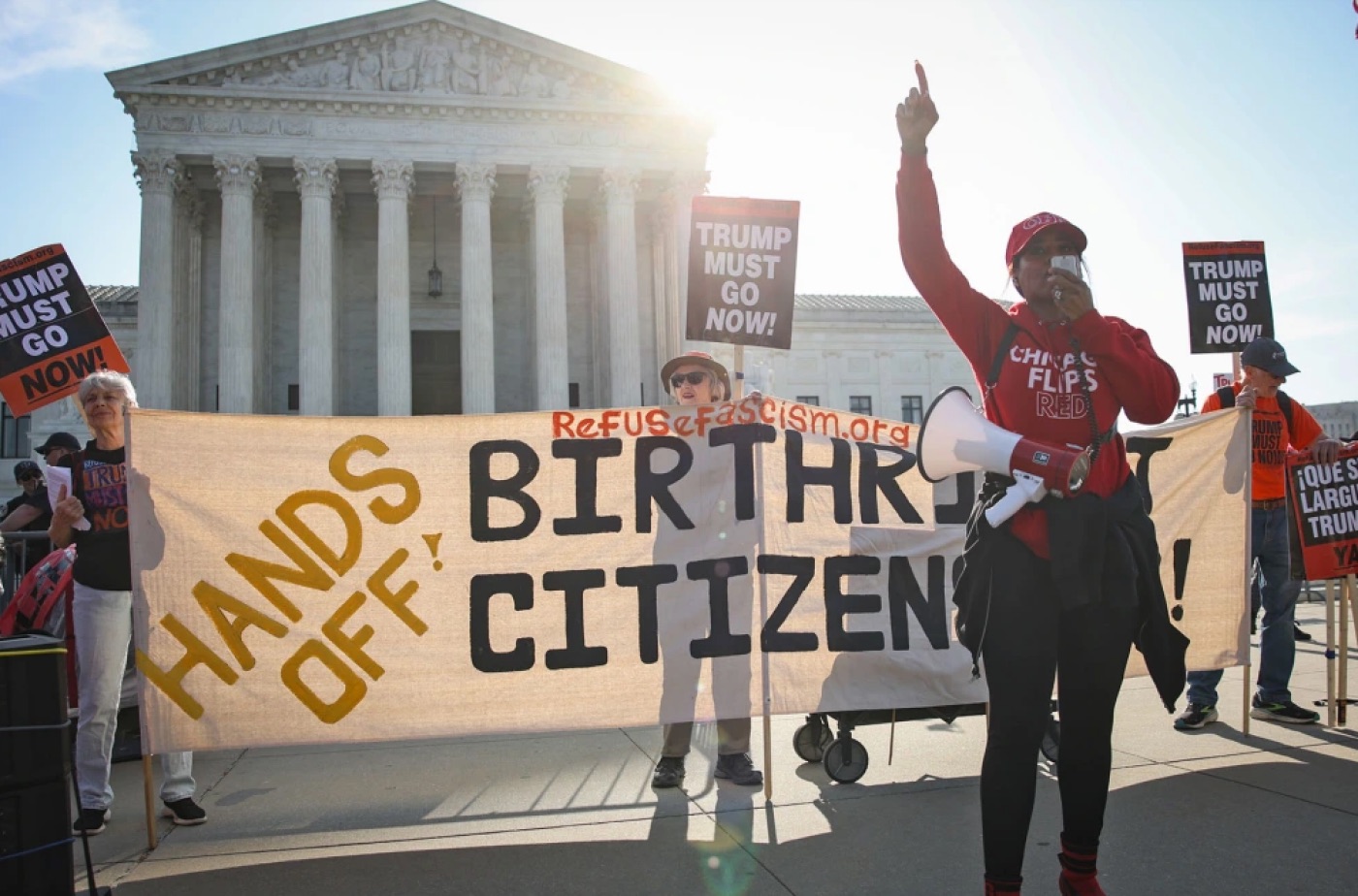
Roberts Signals Clear Skepticism
Roberts, known for his cautious and often ambiguous approach during high-profile cases, departed from form, signalling early and pointed doubt about the administration’s interpretation of the 14th Amendment.
When Solicitor General D. John Sauer argued that modern immigration realities require a rethinking of long-standing constitutional interpretation, Roberts responded sharply: “Well, it’s a new world. It’s the same Constitution.”
The exchange underscored the central tension of the case, whether contemporary immigration challenges can justify revising a principle that has, for more than a century, granted citizenship to nearly all individuals born on U.S. soil.
A Court Unconvinced
Over more than two hours of argument, there appeared to be little appetite among the justices to overturn precedent, particularly the landmark United States v. Wong Kim Ark decision, which affirmed that children born in the United States to foreign parents are citizens.
Several conservative justices joined liberals in raising practical and legal concerns.
Justice Amy Coney Barrett questioned how the policy would apply in cases where a child’s parentage is unknown, while Justice Neil Gorsuch challenged the administration’s reliance on legal status as a determinant of jurisdiction.
Roberts himself criticised what he described as an attempt to stretch narrow historical exceptions, such as children of diplomats or invading forces, into a broad exclusion affecting millions.
“I’m not quite sure how you can get to that big group from such tiny and sort of idiosyncratic examples,” he said.
Trump’s Unusual Courtroom Role
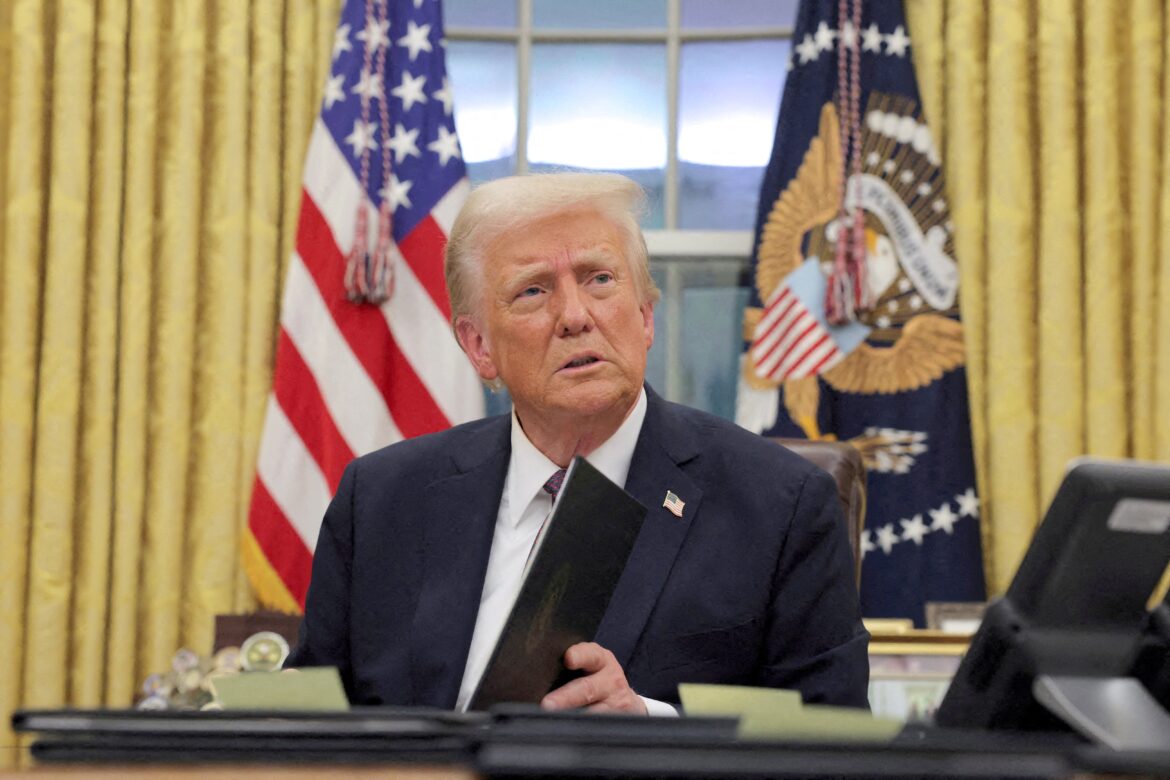
Trump’s attendance added an unusual dimension to the proceedings.
Seated among the public, alongside aides including Attorney General Pam Bondi, he observed the arguments but played no formal role.
His presence, however, underscored the political weight of the case, one of the most ambitious components of his immigration agenda.
After listening to the government’s arguments, Trump departed the courtroom before the challengers’ presentation concluded, leaving justices to continue their probing questions uninterrupted.
A Constitutional Fault Line
At the heart of the dispute is the meaning of the phrase “subject to the jurisdiction thereof” in the 14th Amendment.
The administration argues that it excludes children of undocumented immigrants and temporary visitors, while opponents contend that such an interpretation contradicts both constitutional text and historical understanding.
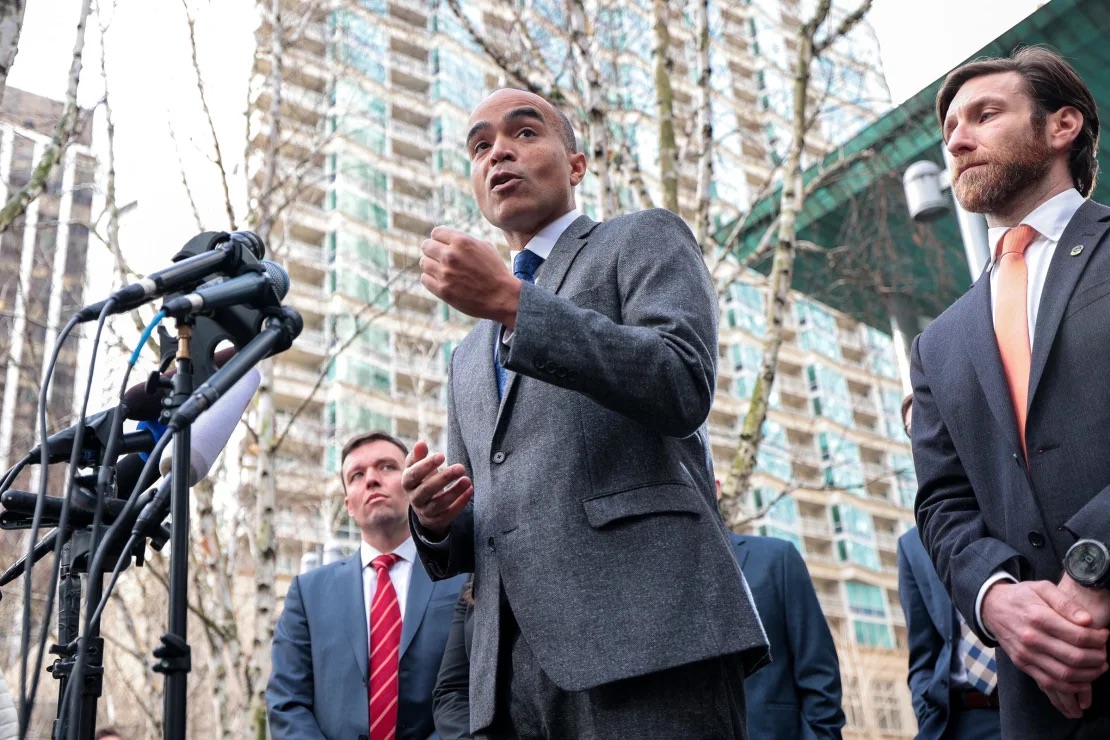
Lawyers for the challengers, including American Civil Liberties Union attorney Cecillia Wang, urged the court to uphold the traditional reading rooted in English common law, which treats birth within a sovereign territory as conferring citizenship, with only narrow exceptions.
Broader Implications
The case carries profound implications, potentially affecting thousands of children born each year and redefining a foundational aspect of U.S. citizenship.
It also reflects a broader constitutional clash between executive authority and judicial interpretation, with the court once again positioned as the arbiter of the limits of presidential power.
Despite Trump’s insistence outside the courtroom that the United States is alone in granting birthright citizenship, legal scholars note that dozens of countries, particularly across the Americas, maintain similar policies.
As the justices deliberate, the tone of Wednesday’s arguments suggests a court wary of rewriting a principle deeply embedded in American law and identity, even as political pressure mounts from the White House.