


MAGDEBURG, Germany — The far-right Alternative for Germany won Saxony-Anhalt’s state election on Sunday, September 6, 2026.
It secured about 44 per cent of the vote but failed to obtain an absolute majority.
The completed count awarded the AfD 39 of the state parliament’s 83 seats. Forty-two seats are required for outright control.
The result brought a far-right party closer to leading a German state than at any time since World War II.
It also left the AfD dependent on support from outside its parliamentary group if it is to form a majority administration.
Ulrich Siegmund, the party’s lead candidate, described the outcome as evidence that voters wanted political change.
“This is a historic moment for our beautiful region,” Siegmund said.

No Governing Partner Has Emerged
Germany’s mainstream parties have maintained their refusal to govern with the AfD, continuing the political isolation commonly described as a firewall.
The domestic intelligence service in Saxony-Anhalt classifies the AfD’s state organisation as a confirmed right-wing extremist movement.
The agency has cited statements directed against migrants, Muslims and Germany’s democratic institutions.
The Sahra Wagenknecht Alliance, or BSW, crossed the 5 per cent threshold for representation and holds enough seats to give the AfD a parliamentary majority if the two parties reach an agreement.
Siegmund rejected such a coalition during an appearance on the public broadcaster ZDF, describing the BSW as contributing to the problems confronting the state.
Tino Chrupalla, an AfD co-leader, took a less restrictive position, saying the party was prepared to “extend a hand” to other political groups.
Alice Weidel, another AfD co-leader, criticised the refusal of established parties to work with the AfD, describing the firewall as undemocratic.
Without a coalition partner, the AfD could seek to lead a minority government. No agreement on a new administration had been announced.
The CDU Records a Major Defeat
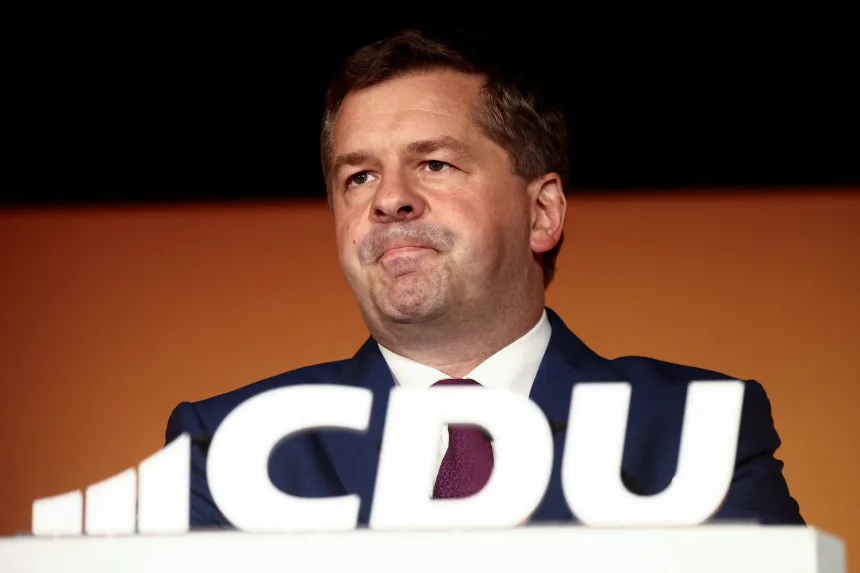
The Christian Democratic Union, led nationally by Chancellor Friedrich Merz, lost approximately half the support it received in the previous Saxony-Anhalt election.
Merz acknowledged that the result represented the party’s worst state election defeat in decades.
He said the number of voters supporting parties that challenged Germany’s democratic institutions could not be treated as an ordinary political development.
“This election result will have to have consequences,” Merz said.
Sven Schulze, the CDU’s lead candidate and Saxony-Anhalt’s state premier, said the electorate had delivered a message that the party must recognise.
Weidel predicted that Merz would be removed and that Germany would hold a federal election “before Christmas.”
No early federal election had been called.
Immigration and Russia Featured in the Campaign
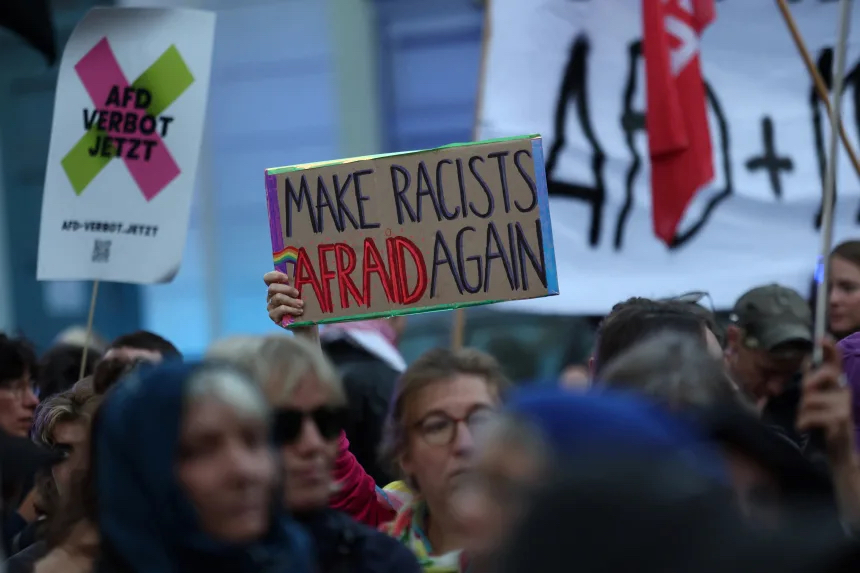
The AfD campaigned on a “remigration” policy intended to return non-Germans to their countries of origin.
Party officials have also advocated tighter immigration restrictions, changes to public broadcasting and more conservative policies for schools and cultural institutions.
Siegmund said the result provided authority for a return to what he called sensible diplomacy with Russia and the United States.
Senior AfD figures have made repeated visits to Moscow, St Petersburg and the Russian-occupied Crimean Peninsula.
The party opposes further German aid and defence packages for Ukraine, arguing that the money should instead be spent on domestic programmes.
Some AfD officials have identified Ukrainian and Muslim residents among those they want removed from Germany.
Foreign policy and immigration are primarily controlled by the federal government, limiting the changes that a state administration could make in those areas.
Grégoire Roos, director of the Europe and Russia and Eurasia programmes at Chatham House, said an AfD-led state government would be more likely to concentrate on culture, education and local policing.
Weidel said the party would pursue broader measures if it entered the federal government, including reductions in public spending, tighter border controls and the removal of people legally required to leave Germany.

International Figures Respond
United States President Donald Trump posted a picture of the exit-poll results on his Truth Social account without an accompanying comment.
Kirill Dmitriev, a close associate of the Russian president, welcomed the result on X and used his post to criticise Germany’s governing coalition.
AfD’s historic win humiliates the arrogance, narrow-mindedness, warmongering, ineptitude and hypocrisy of the discredited German ruling coalition.
Germans have spoken and Germany Awoke. Humiliated Merz just became a Starmer. pic.twitter.com/ck1Y3xYxVL
— Kirill Dmitriev (@kadmitriev) September 6, 2026
The result gives the AfD the largest group in Saxony-Anhalt’s new parliament, but its 39 seats remain insufficient to form a majority government without outside support.