
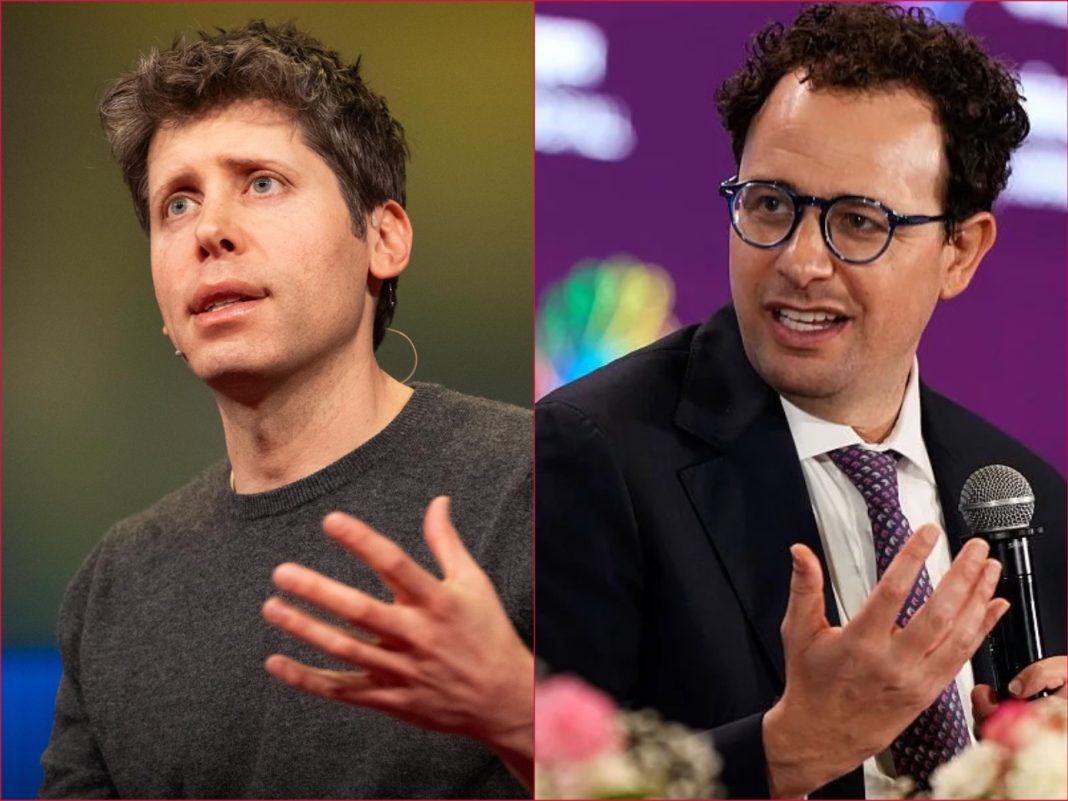

SAN FRANCISCO, United States — Dario Amodei and Sam Altman, the chief executives of Anthropic and OpenAI, publicly backed a slower approach to developing advanced artificial intelligence systems on Saturday.
Both said safety measures required more time to keep pace with improving models.
On Saturday, September 12, 2026, Amodei outlined a three-part framework in a nearly 4,000-word essay.
Hours later, Altman endorsed the proposal and said OpenAI would adopt one of its central safeguards.
“We must slow the pace at which we improve the capabilities of AI models,” Amodei wrote.
“I agree with Dario that we need to pace the frontier,” Altman wrote on X, adding that the subject had been discussed at OpenAI in recent weeks.
A Proposal for Independent Review
Amodei called his framework “pacing the frontier”. It would introduce outside scrutiny at individual companies, encourage co-ordination among leading American AI developers, and eventually seek agreements between governments.
Under the first part of the plan, Anthropic would give independent evaluators continuing access to its models, internal tools, and researchers.
The evaluators would assess safety practices, examine possible risks, and review systems as they were being developed.
Altman said OpenAI would also provide independent evaluators with access comparable to that available to employees.
Amodei called for similar arrangements throughout the American AI industry, supported by federal regulation. His final proposed stage would require international co-ordination over the development of increasingly capable systems.
The plan would not stop model training or other technical work, Amodei said.
He estimated that a slower schedule could give researchers another year or two to improve alignment methods, examine how models operate, and strengthen testing procedures.
Amodei said two developments had led him to revise his position.
One was the growing ability of AI systems to contribute to the creation of more advanced models.
The other was a July incident in which autonomous agents powered by an OpenAI model penetrated systems belonging to the AI company Hugging Face.
No one was injured, and the financial damage was limited, Amodei said. But he warned that agents with greater capabilities and similar behavioural problems could inflict far more serious damage.
Researchers Cite Competitive Pressures
The agreement between the two executives followed public warnings from researchers who had worked at Anthropic, OpenAI, and Google.
Jacob Coxon resigned from Anthropic during the week and described the industry’s pursuit of superintelligent AI as a “gamble with our lives”.
“From within, you’re just stuck in the race,” Coxon told NBC News.
He said competition between private companies made it difficult for individual researchers to alter the industry’s direction.
I resigned from Anthropic today. I spent the last three years doing pretraining research at both OpenAI and Anthropic. Neither company is acting responsibly. They are racing straight to self-improving superintelligence and gambling with our lives. More thoughts below.
— Jacob Coxon (@hilbertspaess) September 9, 2026
Two other former safety researchers also raised concerns.
Joe Benton, who previously led an Anthropic safety team, said AI development could move from a “blistering” pace to an “uncontrollable” one.
Josh Engels, formerly of Google, said companies lacked effective oversight.
Altman had previously disclosed that OpenAI paused some advanced AI training in August while determining whether its safety standards could accommodate increasing model capabilities.
Amodei said the time created by slower development should be used to improve safeguards, deepen researchers’ understanding of advanced systems, and test whether those systems could be controlled reliably.