
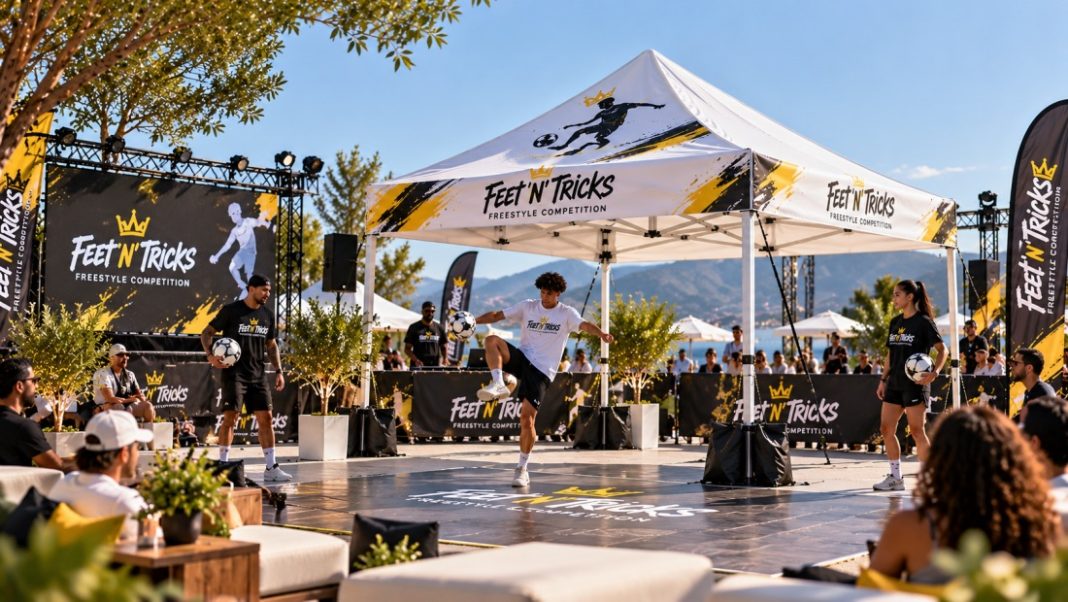

Any outdoor event is successful until the forecast changes.
After that, the story is the same. That same tent that stood firm in the relaxed conditions of Saturday is already straining along its anchors at every corner by Sunday evening. A video from the photographer is now inside the local group chat; goods are hastily returned to boxes, and visitors abandon ship faster than you can say “professional image,” leaving the company with nothing resembling a polished presence for the rest of the night.
Weather doesn’t destroy outdoor events. Poorly-chosen equipment does. A canopy purchased with summer sunshades in mind acts differently in the presence of a breeze, and many buyers will only discover the true nature of their acquisition too late to avoid disaster. Selecting appropriately for changing and breezy conditions is a simple matter of knowing what specifications to prioritize and what details to disregard.
Selecting the Right Features for Strong Winds and Changing Conditions

1. Frame Material and Weight: The Foundation for Wind Resistance Ratings
As the skeleton of the shelter, the frame either stands its ground or it doesn’t in the face of high winds. There is no in-between.
Aluminum is the preferred choice for outdoor applications, not just for its reduced weight but also for its resistance to rot after wet weather, its pliability under tension, and its ability to sustain repeated stresses without failure. Steel is arguably stronger but requires greater effort to transport and inevitably rusts from the inside after the protective coating wears off, usually around the time the annual budget is already spent.
The thickness of the walls is another detail that marketing copy will often brush aside, but the precise measurement and the method of joining directly impact the ability of the frame to resist lateral forces; vague mentions of gauge size should be viewed as a red flag. An experienced manufacturer will have a clear idea of the relevant numbers.
2. The Means of Brand Presentation Survives the Elements
Moisture, UV exposure, and temperature variations destroy most forms of printed media, which is why tents intended for continuous use require specially treated surfaces.
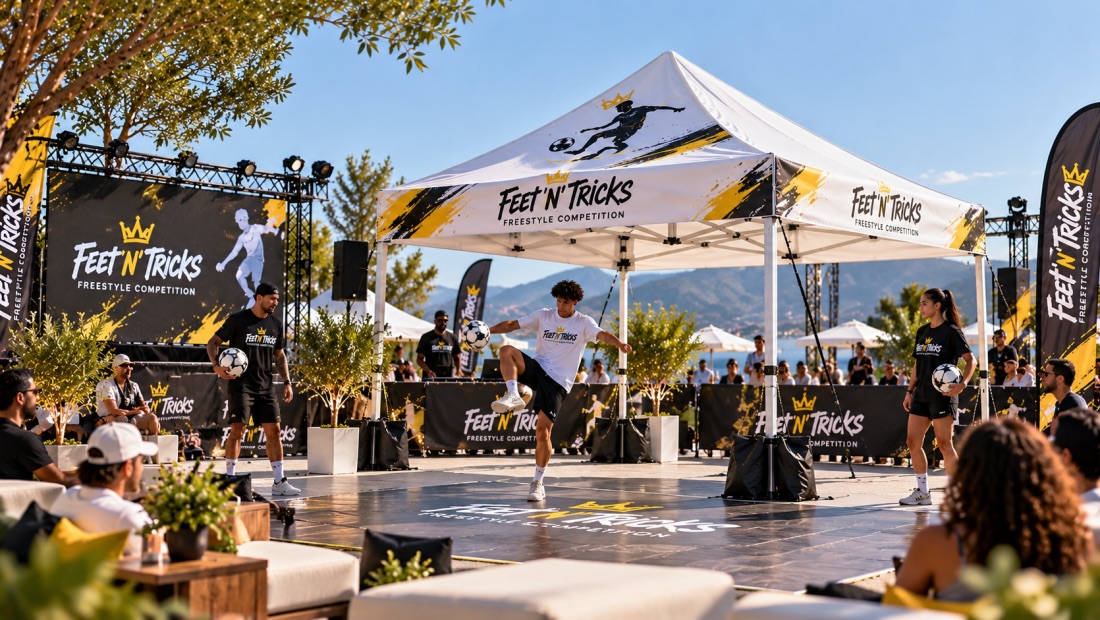
Dye-sublimation is the best available option at the moment, as it actually bonds the ink to the fibers of the fabric as opposed to painting or printing on top of them. This process yields excellent results even after years of exposure to the weather. Surface printing, on the other hand, peels at the folds and is easily washed away by frequent changes in pressure. Since these custom tents are meant to bear the brunt of the harshest conditions, the choice of branding method becomes an integral part of the marketing campaign. Having a faded and flapping roof over one’s head tends to undermine both visibility and credibility simultaneously.
If the location requires a more compact footprint, a smaller and shorter shelter in the form of a custom market umbrella will occupy less ground area, present a smaller target to the wind, and be easier to assemble and dismantle without additional resources. In some cases, the weather-resistant option is actually a slightly larger tent that provides better protection from breezes. It is worth making the investment.
3. The Weight and Nature of the Canvas Fabric
The fabric that serves as the skin of the shelter plays an equally important role, as it interacts with the forces in novel ways.
A lighter material will billow in the wind, causing the structure to shudder and tremble. The resulting vibrations will weaken the stitching until the point is reached when the whole cover flaps with such force that all of its anchors are nearing their breaking point.
Thicker cloth, expressed in ounces per yard or denier, resists this force with greater pliability and presents a consistent shape to oncoming gusts as opposed to a loose sail that flaps at its edges and taut center at once. A dense weave also prevents sagging when moisture accumulates on the surface, and the resulting drooping roof creates a separate hazard in most cases.
Water repellence should be a given at this level of specification, but it is still worth noting what hydrophobic standards the manufacturer provides. A polyester coating that causes moisture to bead is the absolute minimum, and failure to meet it will transform the next serious shower into an improvised test of versatility.
4. The Anchoring System Dictates the Outcome of a Struggle with the Wind
This feature alone determines the outcome of more conflicts with breezes than the strength of the frame, and it is worth inspecting the mechanisms and components with particular care.
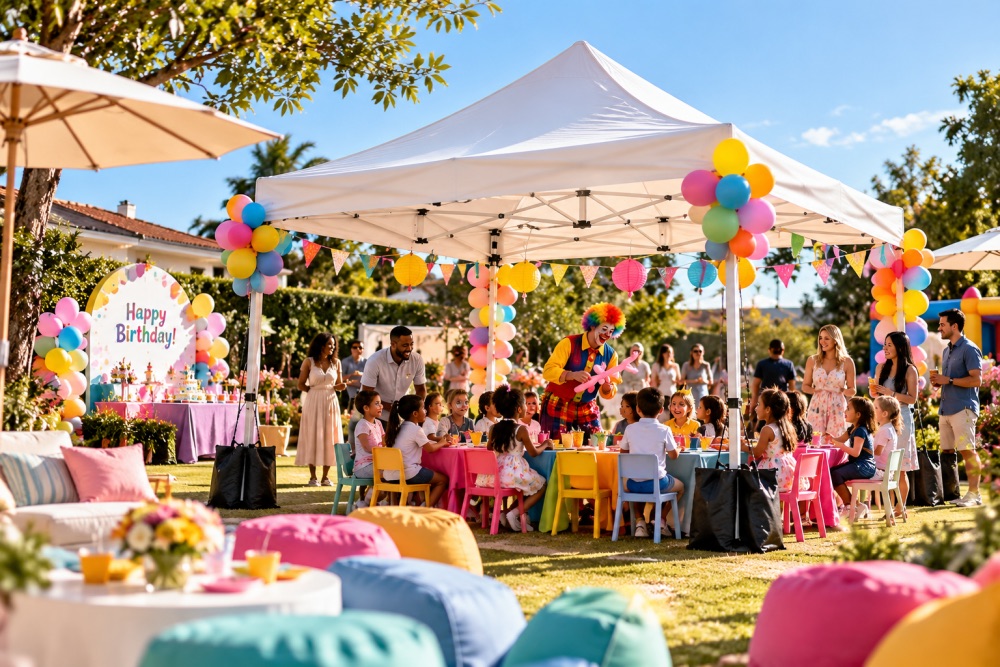
High wind-rated tents have dedicated reinforcements built into their foundation as well as the frame itself, with specific locations for all of the guy ropes and additional attachment points for the legs to resist uplift. Larger tents will also have provisions for attaching ropes directly at the corners in some configurations. If the marketing copy for a tent makes little mention of how it is intended to be secured, that omission is a symptom of a greater issue. Manufacturers that designed their shelters with breezy conditions in mind will not hide the fact in their marketing.
Loose ground will require the tent poles to be planted at an angle, facing away from the center of the shelter, and hard surfaces call for additional ballast at each leg, not just a single bag of sand or a brick to serve as an improvised anchor. Regardless of the specifics, the anchoring system has to be up to the task of resisting the full force of the wind at all times, not the gentle push of a demonstrator on a manufactured image.
5. Size Is a Factor in the Equation with Wind
Larger shelters catch more wind, and this principle of physics cannot be circumvented in favor of convenience and profits.
A 10×10 custom event tent occupies a relatively small footprint and delivers better resistance to strong winds when properly anchored than a larger alternative. Every increase in canopy size beyond this point will require additional reinforcement to the frame and upgraded equipment to secure the new addition to the ground. Greater surface area means greater pressure with changing weather and stronger gusts, and while larger canopies are justified in most cases, they always require a reconfiguration of the anchoring system and adjustments to the height whenever particularly strong winds are expected.
Businesses that operate in unpredictable conditions have nothing in common with shelters that feature the broadest possible coverage.
In Conclusion
Adverse conditions do not require the cancellation of all outdoor events, merely more thorough research and consideration before making a purchase. Frames that flex rather than break, fabrics that resist flapping, and additional reinforcement to all points of the anchoring system should be prioritized when selecting an appropriate shelter. Size has to be chosen with due consideration given to the strength of the frame and the necessary changes to the anchoring solution, and the selected printing process will determine the lifespan of the brand image on the surface of the tent. By accounting for these factors, the changing forecast becomes a non-issue, and the tent that was purchased for a specific day and location will prove to be the most suitable for the weather when the prediction was issued. Companies that keep summer-only shelters will find themselves shut down with greater frequency. Once again.