
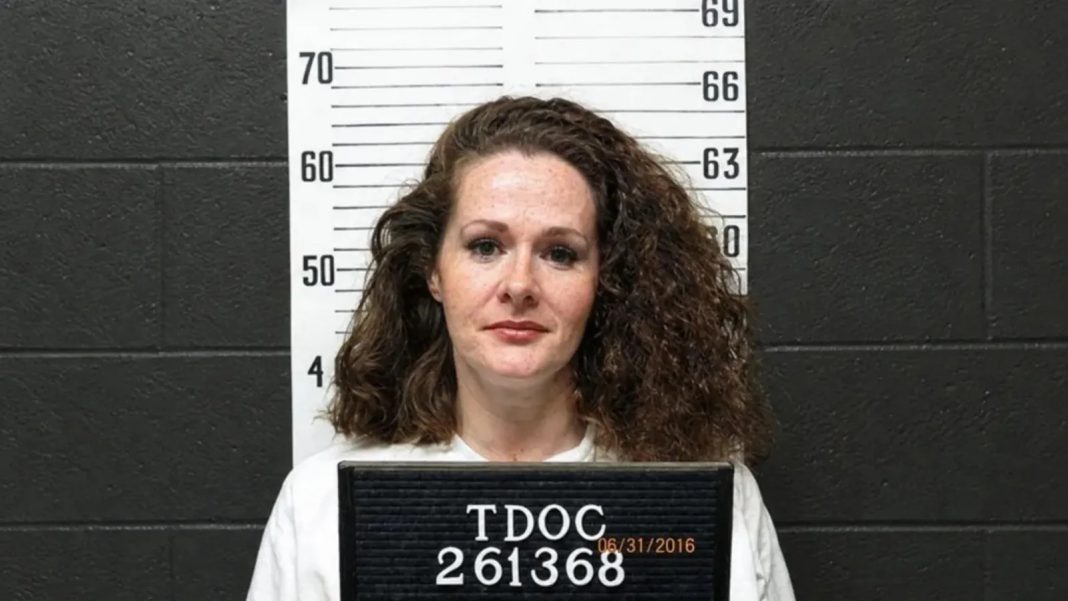

NASHVILLE, United States — Frank Strada, the head of the Tennessee prison system, has resigned days after the state failed to execute Christa Gail Pike despite administering two doses of pentobarbital.
Governor Bill Lee announced on Saturday, October 3, 2026, that he had accepted Strada’s resignation as commissioner of the Tennessee Department of Correction.
Strada will leave the post later this month, and the governor will name an interim commissioner.
The departure is the first major leadership change since Wednesday’s execution attempt at Riverbend Maximum Security Institution left Pike alive and requiring emergency medical treatment.
“Commissioner Strada has served with integrity, and I appreciate his willingness to put the interests of Tennesseans first during this difficult moment,” Lee said.
Strada said he believed department personnel had followed the state’s prescribed execution procedure but concluded that leaving his position was appropriate while an outside investigation was conducted.
“Stepping aside is in the best interest of Tennesseans as the independent review moves forward,” he said.
Independent Review Ordered
Lee has appointed former United States Attorney Ed Stanton to examine what went wrong during Pike’s execution attempt.
Stanton previously conducted a review of Tennessee’s execution system after Lee suspended an execution in 2022.
That investigation found failures by the state to follow its own lethal-injection procedures.
Lee has now halted executions in Tennessee for the remainder of 2026 while the latest review proceeds.
The Department of Correction maintained immediately after Wednesday’s attempt that it had followed every step of the state’s approved protocol.
It said the procedure did not permit officials to take additional execution measures after those already carried out.
Pike was then transported from the prison to an outside hospital.
Her lawyers said in a court filing on Friday that she was unconscious, intubated, and being kept alive with a mechanical ventilator.
They said doctors were working to remove pentobarbital from her system.
No more recent public medical update had been issued by Saturday.
Two Doses Failed to Complete Execution
Pike, 50, had been scheduled to die for the 1995 killing of Colleen Slemmer, a 19-year-old fellow student at a Job Corps programme.
The execution initially faced a last-minute delay when a federal appeals court issued a stay. The United States Supreme Court later lifted that order, permitting Tennessee to proceed.
Officials administered two rounds of pentobarbital, the drug used under Tennessee’s single-drug lethal-injection protocol, but Pike remained alive.
Her lawyers contend that the intravenous lines did not properly deliver the drug into her bloodstream and say prison authorities had been warned beforehand that her small veins and a blood disorder, thrombocytosis, could make intravenous access difficult.
The state has not accepted that explanation, and the independent review has yet to determine why the execution failed.
The episode would have marked Tennessee’s first execution of a woman in more than two centuries.
Second Failed Execution This Year
Wednesday’s events followed another unsuccessful execution attempt under Strada’s leadership.
In May, Tennessee halted the execution of Tony Carruthers after staff succeeded in placing one intravenous line but were unable to establish the secondary line required by the state’s protocol.
That execution was postponed for at least a year.
Tennessee had revised its lethal-injection procedures under Strada, adopting pentobarbital as its sole execution drug in late 2024.
At the time, Strada said he was confident the new procedure could be carried out in accordance with departmental policy and state law.
Four prisoners have been executed in Tennessee since executions resumed under the revised system.
Strada Took Charge in 2023
Lee appointed Strada to lead the Department of Correction in January 2023 following a previous review of Tennessee’s execution practices.
Before moving to Tennessee, Strada had been deputy director of the Arizona Department of Corrections, overseeing prison operations and other programmes.
He had also spent nearly three decades with the Federal Bureau of Prisons.
His Arizona tenure included oversight responsibilities during the state’s return to executions in 2022.
Several of those executions involved difficulties establishing intravenous access, according to court records and witness accounts cited by The Associated Press.
Pike’s lawyers said Strada’s resignation did not resolve the broader questions raised by what happened inside the Tennessee execution chamber.
“What happened to her Wednesday reflects a systemic failure that goes far beyond any one person,” her legal team said.
The lawyers said they hoped Lee’s independent investigation would examine the state’s wider death-penalty procedures.
Stanton’s review is now expected to determine whether Tennessee followed its protocol, why two administrations of pentobarbital failed to kill Pike, and what changes may be required before executions can resume.