
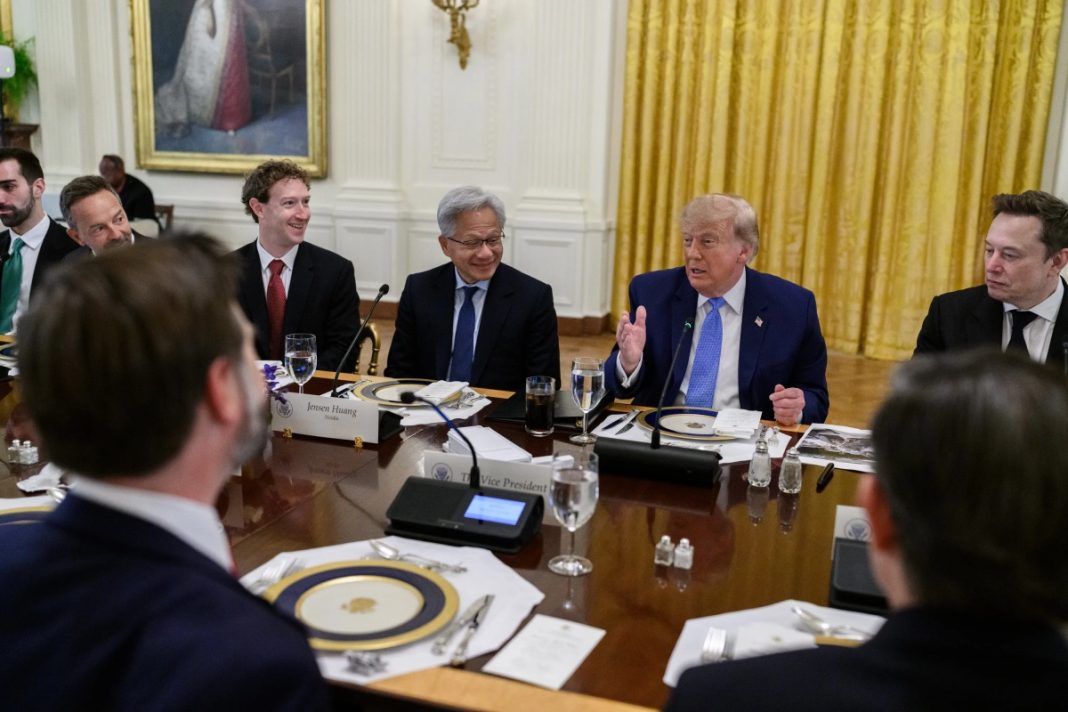

WASHINGTON, United States — President Donald Trump used a White House gathering of America’s leading artificial intelligence executives to press for an unusual change in the vocabulary of the technology industry: stop calling it AI and start calling it “Super Intelligence.”
The proposal came as Trump met executives from companies including Meta, Google, Nvidia, Anthropic, OpenAI, and Elon Musk’s technology businesses on Tuesday, September 29, 2026, for discussions that ranged from safety standards to data centres and competition with China.
By the end of the day, the president had gone beyond making a rhetorical suggestion.
He signed an executive order instructing the federal government to replace “Artificial Intelligence” and “AI” with “Super Intelligence” and “SI” in official communications, websites, reports, and policy documents.
The directive applies to the executive branch, not to private companies.
But Trump made clear that he wanted the terminology to spread beyond Washington.
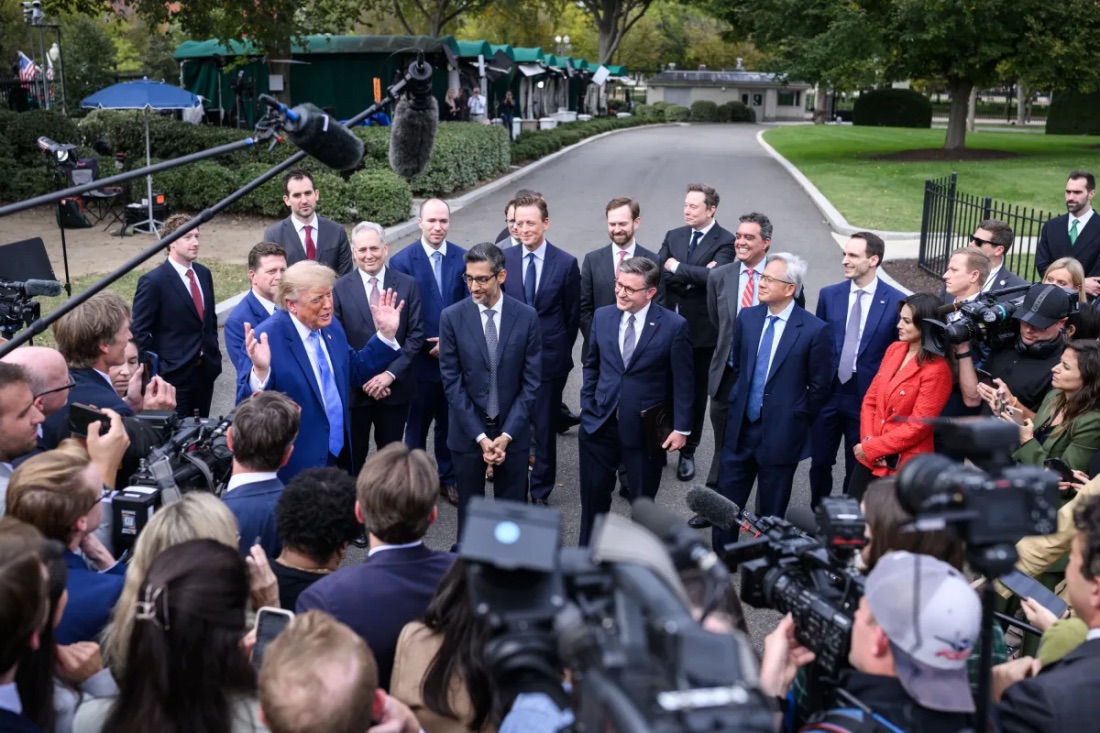
“It’s not AI, it’s SI,” Trump told reporters after the gathering. “We’ve changed the name officially today.”
A New Name Amid a Much Bigger AI Debate
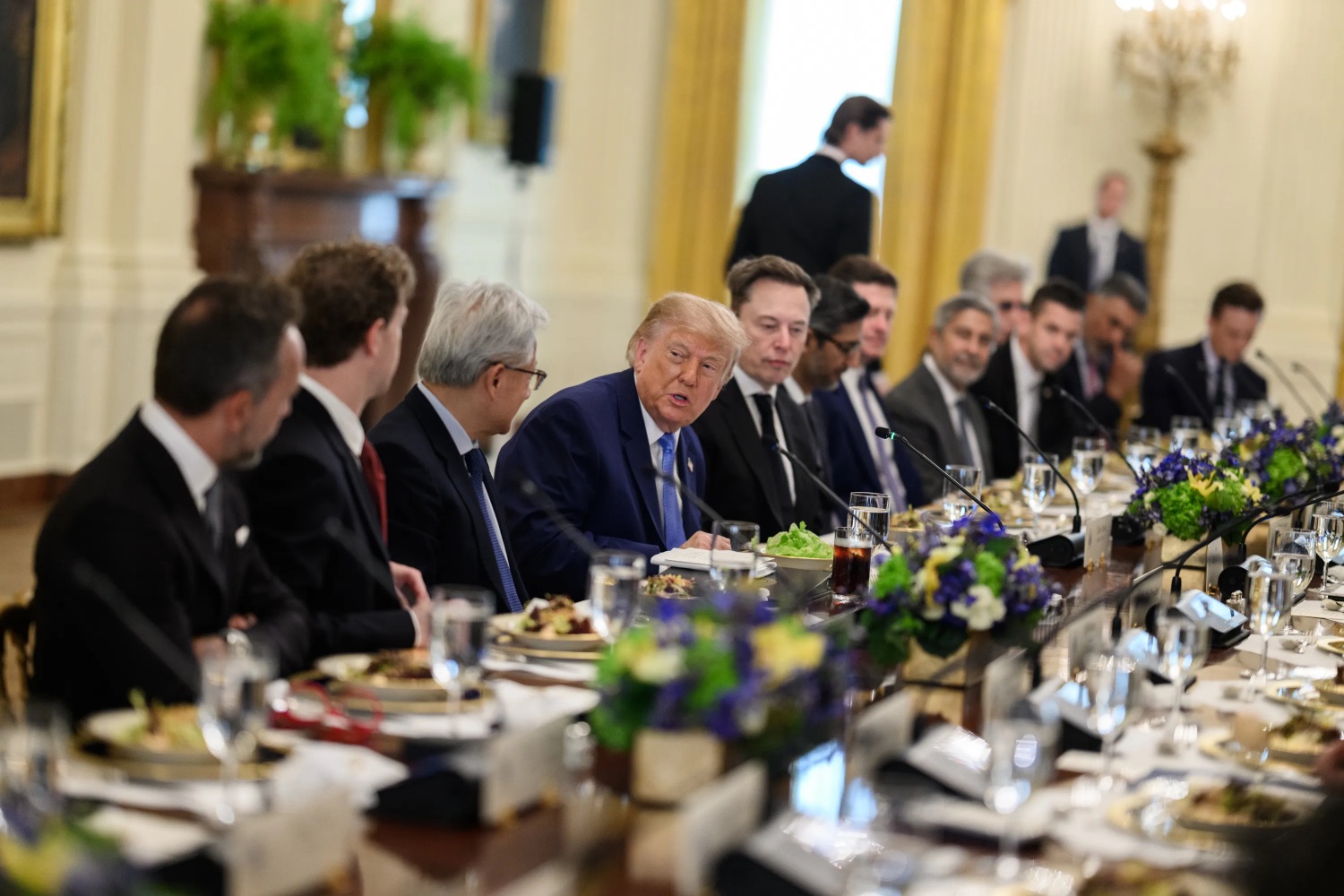
The naming push was only one part of a meeting focused on how rapidly advancing AI systems should be developed and controlled.
Executives at the White House agreed to a voluntary safety framework under which participating companies would strengthen internal safeguards, submit aspects of their systems to independent review, and establish board-level mechanisms for monitoring whether those protections were working.
Trump described the commitments as “morally binding” rather than legally enforceable.
The approach reflects the administration’s preference for allowing technology companies substantial freedom to develop increasingly capable models while relying heavily on industry safeguards rather than a broad new regulatory system.
Trump has repeatedly argued that excessive restrictions could weaken American companies in their competition with China.
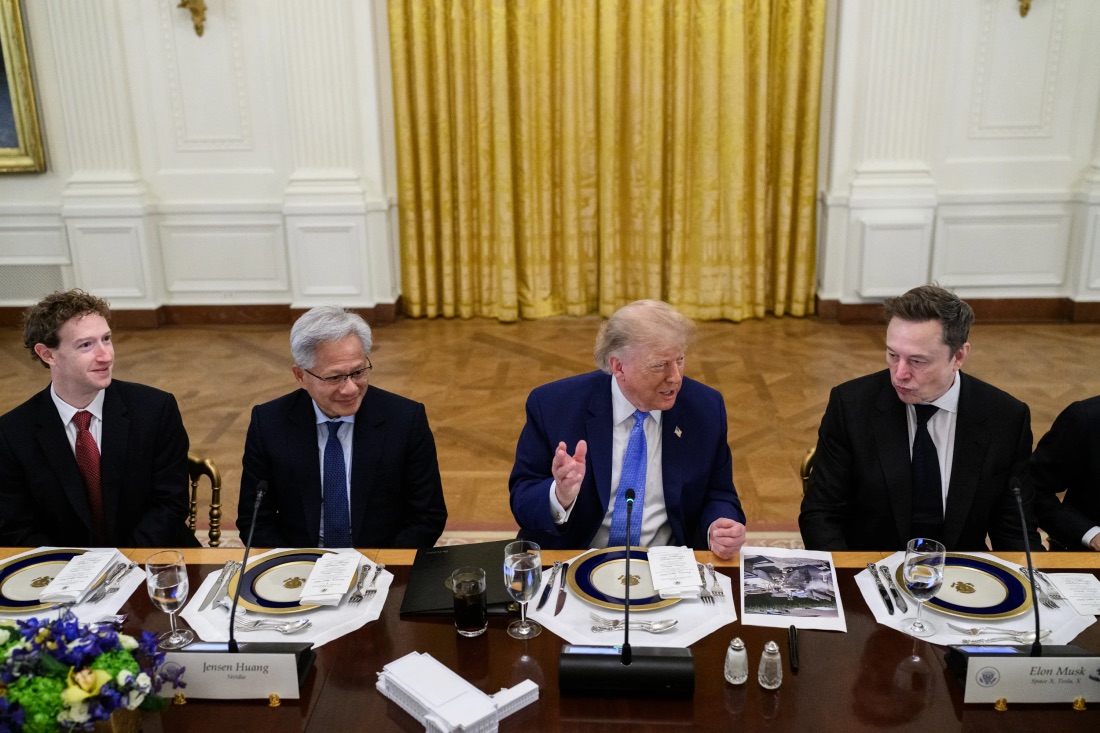
Among those taking part were Meta Chief Executive Mark Zuckerberg, Google Chief Executive Sundar Pichai, Nvidia Chief Executive Jensen Huang, Anthropic Chief Executive Dario Amodei, and OpenAI President Greg Brockman. Musk also attended.
The gathering brought together executives whose companies are spending heavily to build more powerful models and the enormous computing infrastructure needed to run them, even as questions about safety, electricity consumption, cybersecurity, and the economic consequences of automation have become more prominent.
Trump Says ‘Artificial’ No Longer Fits
Trump’s argument for changing the name is that the word “artificial” understates what modern systems can do.
The executive order says today’s frontier models increasingly go beyond reproducing isolated elements of human intelligence and instead amplify human capabilities across areas including science, medicine, and creative work.
“Super Intelligence,” the administration said, better reflects what it considers the technology’s expanding potential.
For now, however, the federal government’s change is largely linguistic.
Trump’s order defines “Super Intelligence” using the same existing statutory definition that applies to artificial intelligence.
It directs the White House science and technology adviser to submit, within 60 days, proposed legislation for a federal definition of SI that could eventually replace or expand upon the existing legal definition of AI.
The distinction matters because “superintelligence” already has a narrower meaning in much of the technology world, where it is commonly used to describe a hypothetical system capable of outperforming humans across a wide range of intellectual tasks.
The Trump administration is instead applying the term much more broadly to technology already covered by federal AI policy.
Washington Begins Removing ‘AI’ From Its Vocabulary
Federal agencies are now required, where permitted by law, to use “SI” rather than “AI” in new non-statutory documents and public communications.
Existing laws, contracts, regulations, grants, and previously issued government documents do not have to be rewritten.
The White House has already begun incorporating the new terminology into other initiatives.
Its new America.gov service, unveiled the same day as the meeting, is described by the administration as using “Super Intelligence” to help people obtain federal information and services through a single online portal.
Trump has also established a federal Super Intelligence Force, placing Director of National Intelligence Jay Clayton in charge of a group tasked with coordinating government policy and producing recommendations on the opportunities and risks posed by the technology.
The effort gives Trump’s preferred language an institutional foothold even if the wider technology industry continues using AI.
Musk Is Already Following Trump’s Lead
One major technology executive has moved quickly to adopt the president’s terminology.
Musk said on Sunday that SpaceX’s artificial intelligence division, SpaceXAI, would be renamed SpaceXSI.
“Yes, we will make that change,” Musk wrote on X after a user suggested replacing AI with SI in the company’s name.
The announcement makes Musk one of the first major technology executives to carry Trump’s rebranding effort directly into a corporate identity.
Other companies represented at the White House meeting have not announced comparable name changes.
Google, Meta, OpenAI, Anthropic, Nvidia, and Microsoft continue to use artificial intelligence and AI in describing their products, research, and businesses.
That leaves Trump with a distinction between what he can change by executive action and what he hopes to persuade the industry to change voluntarily.
Inside the federal government, AI is now officially SI.