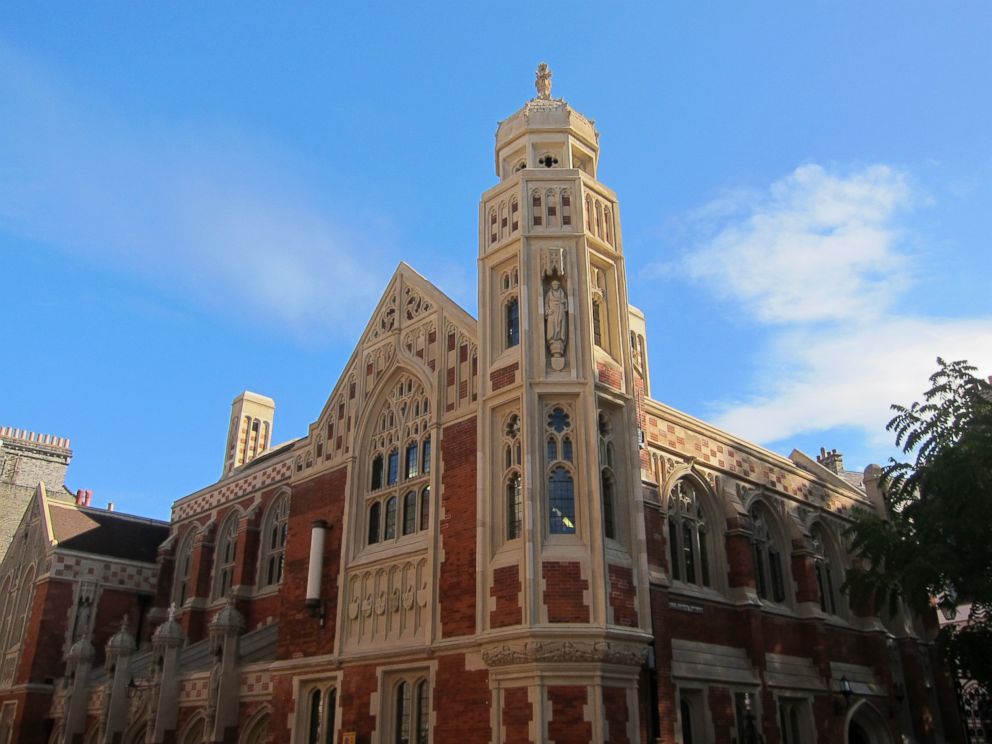
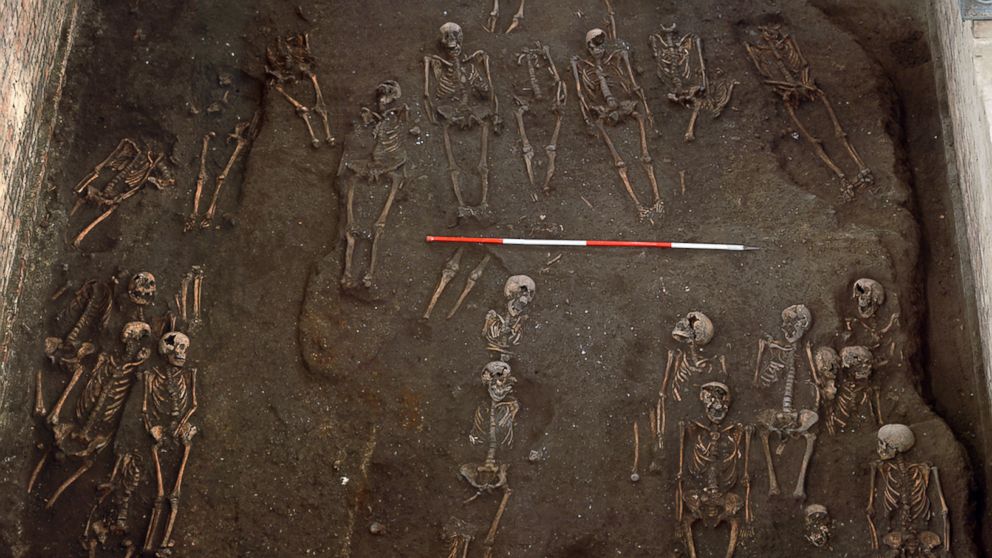
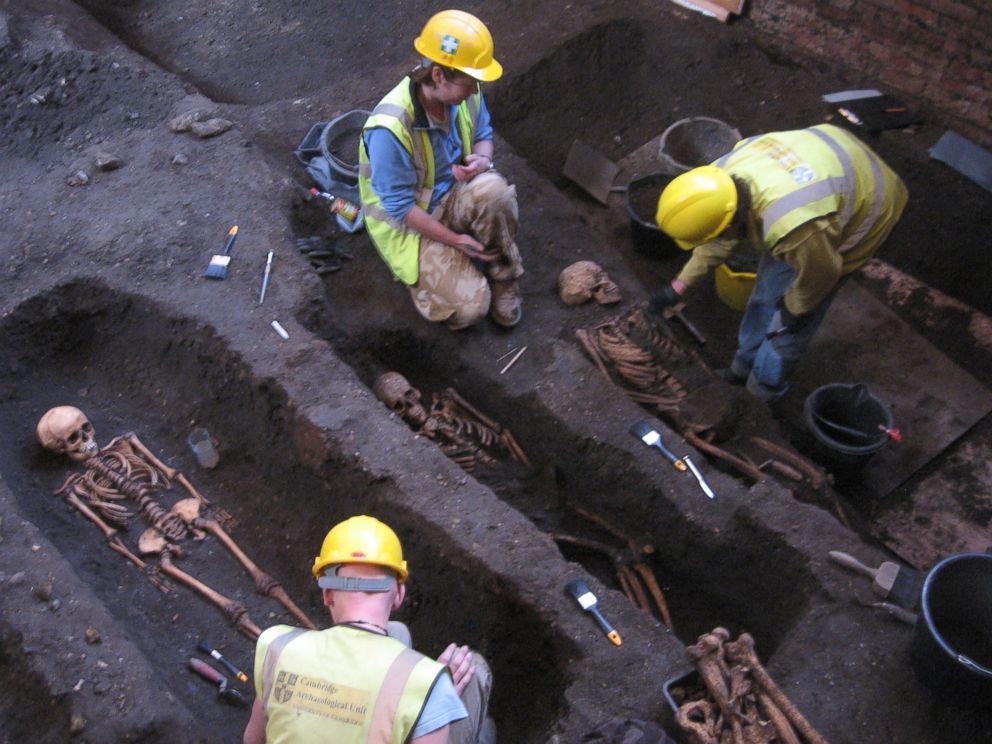
Pictures of a medieval burial site with over a thousand human remains has been discovered beneath the University of Cambridge, with over 400 still complete.
According to a research published on Thursday, April 2, 2015, the skeletons date as far back as between the 13th and 15th century and were left opposite the site of the Hospital of St. John the Evangelist, established to cater for the poor and sick in 1195.
The report said: “The bodies did not appear to exhibit any serious medical issues that could have required care. This could mean that the main role of the Hospital was spiritual and physical care of the poor and infirm rather than medical treatment of the sick and injured.”
See photos from the site below:
Hundreds of skeletons were found beneath the Old Divinity School at St John’s College, Cambridge, seen here in an undated handout photo. Photo Credit: Craig Cessford/Department of Archaeology and Anthropology/University of Cambridge)Hundreds of skeletons were found at an excavation site at St John’s College, Cambridge, seen here in an undated handout photo. (Photo Credit: Craig Cessford/Department of Archaeology and Anthropology/University of Cambridge)A skeleton that was found beneath the Old Divinity School at St John’s College, Cambridge, seen here in an undated handout photo. (Photo Credit: Craig Cessford/Department of Archaeology and Anthropology/University of Cambridge)The Cambridge Archaeological Unit excavated bodies that were found beneath the Old Divinity School at St John’s College, Cambridge, seen here in an undated handout photo. (Photo Credit: Craig Cessford/Department of Archaeology and Anthropology/University of Cambridge)
Used to monitor number of Google Analytics server requests when using Google Tag Manager
1 minute
_gid
ID used to identify users for 24 hours after last activity
24 hours
_ga_
ID used to identify users
2 years
_gali
Used by Google Analytics to determine which links on a page are being clicked
30 seconds
_ga
ID used to identify users
2 years
__utmx
Used to determine whether a user is included in an A / B or Multivariate test.
18 months
__utmv
Contains custom information set by the web developer via the _setCustomVar method in Google Analytics. This cookie is updated every time new data is sent to the Google Analytics server.
2 years after last activity
__utmz
Contains information about the traffic source or campaign that directed user to the website. The cookie is set when the GA.js javascript is loaded and updated when data is sent to the Google Anaytics server
6 months after last activity
__utmc
Used only with old Urchin versions of Google Analytics and not with GA.js. Was used to distinguish between new sessions and visits at the end of a session.
End of session (browser)
__utmb
Used to distinguish new sessions and visits. This cookie is set when the GA.js javascript library is loaded and there is no existing __utmb cookie. The cookie is updated every time data is sent to the Google Analytics server.
30 minutes after last activity
__utmt
Used to monitor number of Google Analytics server requests
10 minutes
__utma
ID used to identify users and sessions
2 years after last activity
_gac_
Contains information related to marketing campaigns of the user. These are shared with Google AdWords / Google Ads when the Google Ads and Google Analytics accounts are linked together.
90 days
You can find more information in our Cookie Policy and .