A fresh round of violence is currently building up in the streets of Johannesburg, South Africa, as armed protesters are out again, demanding that foreigners should return to where they came from.
According to Sowetan Live, a South African newspaper on Sunday, September 8, 2019, the protesters, who carried weapons such as knobkerries, are waiting to be addressed by Mangosuthu Buthelezi, a notable politician and Zulu tribe leader.
This is coming one week after attacks on foreigners sparked reactions across the continent.
Nigeria, Rwanda and Malawi had pulled out of the World Economic Forum which held in South Africa while Zambia cancelled an international friendly match with South Africa over the violence against foreigners.
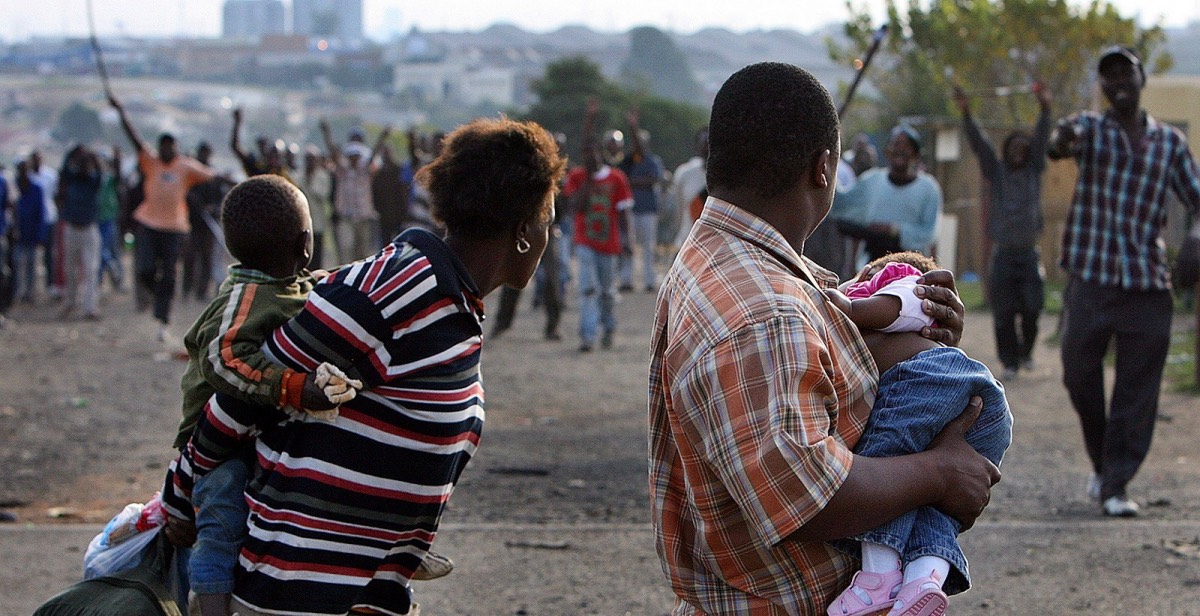
A family flees ongoing xenophobic attacks in Ramaphosa squatter camp east of Johannesburg, South Africa, 18 May 2008. (Photo Credit: John Hrusa)
South African looters take items from an alleged foreign-owned shops during a riot in the Johannesburg suburb of Turffontein. | AFP
A group of men gather in front of a police station in Johannesburg’s CBD as the unrest continues. | Guillem Sartorio/AFP/Getty Images
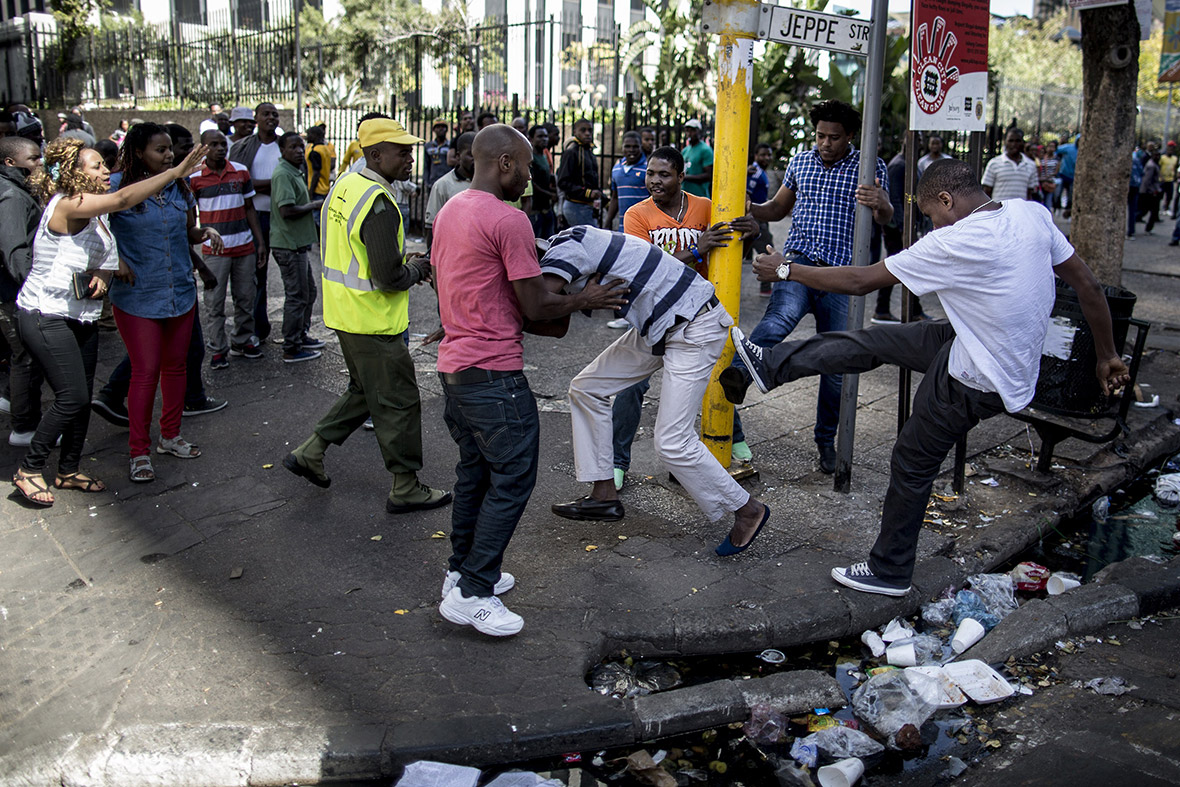
File: Aftermath of a wave of xenophobic attacks in Jeppestown, Gauteng | Vision Tactical/Twitter
Looters run off an alleged foreign-owned shop in Turffontein in Johannesburg on Monday. | Guillem Sartorio/AFP/Getty Images
File Photo: Scene from a xenophobic mob killing in South Africa
File photo of Xenophobic Attack in South Africa
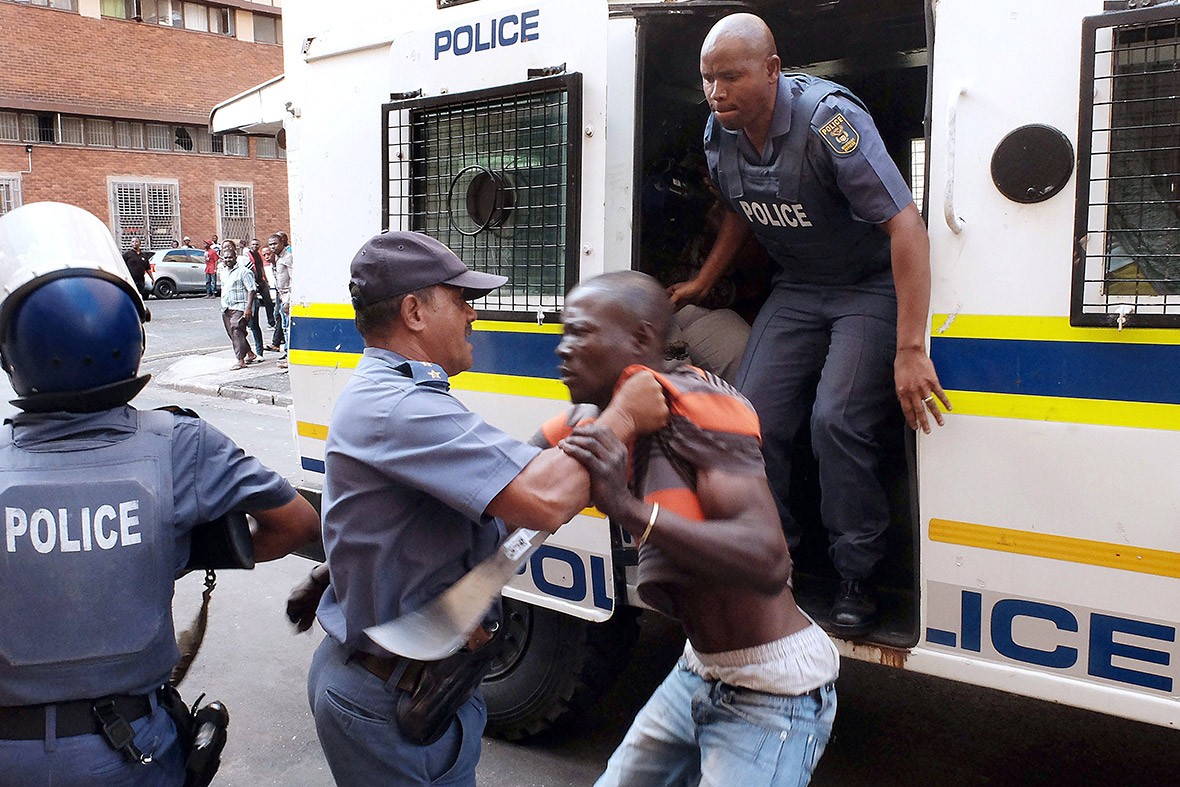
South African police officers arrest a man following reports of gunfire and a police chase through Du Noon Township outside Cape Town, South Africa, on Friday, May 23, 2008, amid xenophobic attacks in the Western Cape. | Pieter Bauermeister/AFP via Getty Images
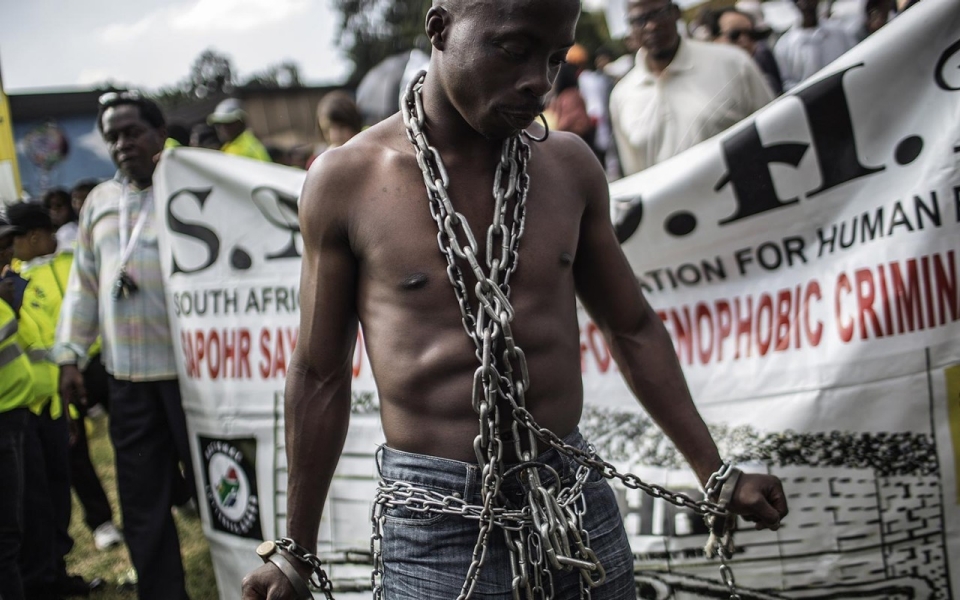
An anti-xenophobia activist stands chained in front of a banner, as thousands of people get ready to march against the recent wave of xenophobic attacks in South Africa on April 23, 2015. | Gianluigi Guercia/AFP/Getty Images
Anti-Xenophobic Protests outside South Africa’s Consulate in Lagos on Wednesday, April 22, 2015
Police clear the streets in an attempt to quell rioting and looting in Durban (Photo Credit: Rogan Ward/Reuters)
After being stalked down a street, taunted and hit with a wrench, Mozambique national Emmanuel Sithole was cornered by his attackers, stabbed in the heart and left to die on a rubbish-strewn Alexandra street early yesterday morning. The Sunday Times rushed him to Edenvale Hospital, where he succumbed to his injuries. (Photo Credit: James Oatway/Sunday Times)
Mozambique national Emmanuel Sithole tried to fend off his attackers in Alexandra township in Johannesburg on April 18, 2015. He later died from his wounds. (Photo Credit: James Oatway/Sunday Times)
Nhamuave after police doused the flames consuming his body. Sixty-two people died during the wave of xenophobic attacks in 2008, an orgy of violence directed at foreigners. (Photo Credit: Halden Krog)
Xenophobia attacks continue and spread to Johannesburg | Buzz South Africa
Mozambique national Emmanuel Sithole surrounded by men in Alexandra township in Johannesburg on April 18, 2015. (Photo Credit: James Oatway/Sunday Times)
Mozambique national Emmanuel Sithole tried to fend off his attackers in Alexandra township in Johannesburg on April 18, 2015. He later died from his wounds. (Photo Credit: James Oatway/Sunday Times)
Mozambique national Emmanuel Sithole after being attacked by men in Alexandra township in Johannesburg on April 18, 2015. He later died from his wounds. (Photo Credit: James Oatway/Sunday Times)
In reprisal attacks in Nigeria, South African-owned businesses were targetted. An MTN office was burnt down in Ibadan, Oyo state, while another office of the telecoms giant was vandalised in Abuja.
MTN had to shut its offices nationwide. Shoprite outlets were also targetted in Lagos, forcing the company to halt its operations across the country.
The South Africa High Commission in Nigeria also suspended operations.
During an assessment tour of some of the affected places, Babajide Sanwo-Olu, governor of Lagos state, said 5,000 people were currently out of jobs as a result of the reprisal.
The police announced that 125 persons were arrested in connection with the violence while South African authorities said over 400 persons were arrested.
But amid the rift between Nigeria and South Africa, Naledi Pandor, South African minister of foreign affairs, said many Nigerians in her country are involved in drug trafficking. A comment which irked Geoffrey Onyeama, her Nigerian counterpart, who accused her of fuelling xenophobia.
In its report on Sunday, Sowetan Live said the leadership of hostel dwellers in Johannesburg has asked the government to engage the citizens about finding solutions to the clashes with foreign nationals.
Siphiwe Mhlongo,the chairman of hostel headmen (izinduna) in Gauteng, was quoted as saying: “We are not happy with how government has tried to resolve the problems that the country is facing. The government must come speak to the people and explain what it is going to do with the foreign nationals who are here illegally.”
He said the residents were angry at jobs being take by foreign nationals, unhappy about drugs and RDP houses being owned by foreigners.
“Everyone who is in South Africa has that feeling that foreign nationals must go back home. But we don’t say foreign nationals must be beaten up; we are leaders,” he said.
Used to monitor number of Google Analytics server requests when using Google Tag Manager
1 minute
_gid
ID used to identify users for 24 hours after last activity
24 hours
_ga_
ID used to identify users
2 years
_gali
Used by Google Analytics to determine which links on a page are being clicked
30 seconds
_ga
ID used to identify users
2 years
__utmx
Used to determine whether a user is included in an A / B or Multivariate test.
18 months
__utmv
Contains custom information set by the web developer via the _setCustomVar method in Google Analytics. This cookie is updated every time new data is sent to the Google Analytics server.
2 years after last activity
__utmz
Contains information about the traffic source or campaign that directed user to the website. The cookie is set when the GA.js javascript is loaded and updated when data is sent to the Google Anaytics server
6 months after last activity
__utmc
Used only with old Urchin versions of Google Analytics and not with GA.js. Was used to distinguish between new sessions and visits at the end of a session.
End of session (browser)
__utmb
Used to distinguish new sessions and visits. This cookie is set when the GA.js javascript library is loaded and there is no existing __utmb cookie. The cookie is updated every time data is sent to the Google Analytics server.
30 minutes after last activity
__utmt
Used to monitor number of Google Analytics server requests
10 minutes
__utma
ID used to identify users and sessions
2 years after last activity
_gac_
Contains information related to marketing campaigns of the user. These are shared with Google AdWords / Google Ads when the Google Ads and Google Analytics accounts are linked together.
90 days
You can find more information in our Cookie Policy and .