


NASHVILLE, United States — Christa Pike is “angry and confused” and unable to move either arm after surviving Tennessee’s attempt to execute her, her lawyers said Wednesday, as a judge ordered the state to preserve virtually everything connected to the failed lethal injection.
Pike, 50, unexpectedly regained consciousness on Tuesday, nearly six days after receiving two doses of pentobarbital at Riverbend Maximum Security Institution.
Her lawyers said she remains seriously ill, has pneumonia and a blood clot in one arm, cannot swallow, and has not yet been able to eat.
They also said they had been told on Monday night that Pike was brain dead and that life support would be withdrawn the following day.
That account came from her legal team and has not been independently confirmed by the hospital.
“But on Tuesday, to the shock of everyone, including me, including her team, and including the medical team, Christa woke up and began talking,” attorney Randy Spivey said after a court hearing on Wednesday, October 7, 2026.
According to Spivey, one of Pike’s first questions after waking was: “Where am I and who are you?”

Judge Says Preserve ‘Anything That Was in the Actual Room’
Chancellor I’Ashea Myles of Davidson County Chancery Court granted Pike’s request for a sweeping order requiring Tennessee officials to preserve evidence from the execution attempt.
“This case is unique, to say the least,” Myles said.
The order covers drugs, syringes, intravenous lines, tubing, medical equipment, photographs, video and audio recordings, surveillance footage, witness accounts, emails, encrypted communications, execution logs, and materials relating to delays, equipment failures, or departures from protocol.
Myles said officials must preserve “anything that was in the actual room”, including trash.
She warned the state to take particular care not to lose, discard, or accidentally delete anything relevant to the litigation.
Reuters reported that the judge largely sided with Pike’s attorneys after they argued that the evidence could become crucial if Tennessee attempts to execute her again.
The judge has not yet ruled on a request allowing Pike’s lawyers to obtain residual traces of the execution drugs for independent chemical testing.

Pike Cannot Move Her Arms, Lawyers Say
After the hearing, Pike’s attorneys provided their most detailed account yet of her condition.
“Christa has a long road to recovery,” Spivey said.
“She has a blood clot in one of her arms. She has pneumonia. She is not able to swallow yet, so she has not eaten. She cannot move either of her arms.”
He said both hands and arms remained severely swollen and that doctors did not yet know how much function she might recover.
Spivey compared the appearance of her hands to inflated surgical gloves.
The Associated Press reported that Pike is speaking only “limitedly” and remains shackled to her hospital bed.
Her attorneys said medical personnel had asked for her restraints to be removed but that the Tennessee Department of Correction had rejected the request.
They asked Myles to intervene.
The judge did not immediately order the restraints removed.

‘She Is Very Aware That the State Tried to Execute Her’
Pike’s lawyers said she remains cognitively confused but understands that Tennessee attempted to put her to death.
“I think she is angry and confused about everything right now,” Spivey said.
“She is very aware that the state tried to execute her.”
He said Pike had asked about members of her legal team and about the family of Colleen Slemmer, the 19-year-old woman Pike was convicted of killing in 1995.
Before the execution attempt, Spivey said, Pike had been calm and cooperative.
“She was at peace,” he said.
According to her attorneys, Pike helped members of the execution team as they attempted for about an hour to gain access to her veins.
Her lawyers have said numerous needles were used before intravenous lines were established.
Pike subsequently complained that her arm was burning after the pentobarbital began flowing.

Execution Drugs May Have Entered Her Tissue
Pike’s attorneys contend that the intravenous lines were incorrectly positioned or that her veins failed during the execution.
They say the pentobarbital may therefore have entered surrounding tissue instead of reaching her bloodstream in sufficient quantities to stop her heart and breathing.
“Apparently at no point did any member of the execution team realize that the IV lines were not correctly placed or that the veins had blown,” her attorneys said in a court filing.
Medical experts have identified failed intravenous access as one possible explanation for her survival, but Tennessee’s investigation has not yet determined what happened.
The execution began at about 7:30 p.m. on September 30.
About five minutes later, Pike raised her head and said her arm hurt.
She subsequently appeared unconscious but continued breathing audibly while witnesses remained in the observation room.
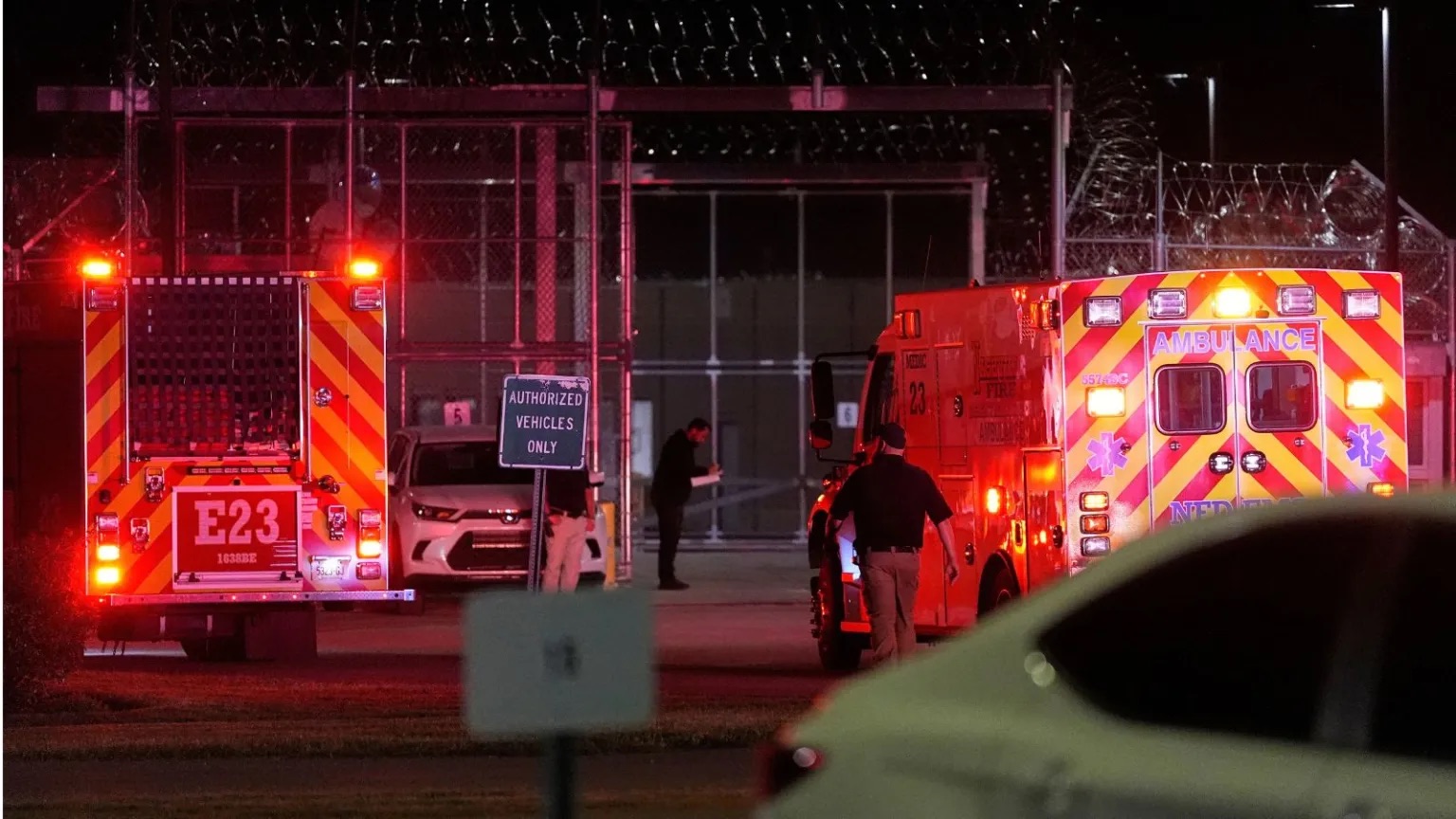
Media witnesses were removed at 8:53 p.m., and an ambulance arrived at the prison at 9:14 p.m.
Pike was transported to a Nashville-area hospital unconscious and critically ill.
She is believed to be the first person in the United States known to have survived after lethal-injection drugs were administered during a completed execution attempt.
State Says Evidence Was Already Being Preserved
The Tennessee Attorney General’s Office told the court that a preservation order was unnecessary because officials had already collected and logged evidence from the death chamber.
Assistant Attorney General John W. Ayers said the material included observation logs, medical waste, medical products, and electrocardiogram readings.
He said portions of the IV lines may have remained attached to Pike when she was transported to hospital and therefore might no longer be in the Department of Correction’s possession.
Ayers also rejected claims that prison officials were obstructing Pike’s access to her attorneys.
“TDOC does not intend to obstruct access to counsel,” he said.
Pike’s lawyers said they had experienced delays of several hours before being allowed to see her.
Myles said the attorneys would be required to comply with hospital visitation procedures.

Lawyers Prepare for ‘Long Legal Battle’
Pike’s attorneys said Wednesday’s preservation order was only the beginning of litigation expected to follow the failed execution.
“Until yesterday, Ms Pike was unable to speak,” attorney Luke Ihnen said.
“She was unconscious. She was not able to authorize us to file any sort of new lawsuits.”
He described the preservation request as “the very, very first step of what will be a long legal battle”.
The lawyers said Tennessee has not promised that it will abandon efforts to execute Pike.
“The state has made no promises that Ms Pike will not be subject to a future execution,” Ihnen told the court.
That possibility, he said, makes preserving evidence from the September 30 attempt particularly important.
Pike’s attorneys have argued that subjecting her to another execution could raise constitutional questions under the prohibition against cruel and unusual punishment.
They have again asked Gov. Bill Lee to commute her death sentence to life imprisonment without parole.

Lee Suspends Executions and Orders Review
Lee has described the failed execution as “deeply disturbing” and ordered an independent review of what went wrong.
He also postponed Tennessee’s only other execution scheduled for 2026.
Frank Strada, commissioner of the Tennessee Department of Correction, announced his resignation after Pike survived.
The department has maintained that execution personnel followed Tennessee’s approved protocol.
Pike was sentenced to death for her role in the January 1995 torture and killing of Slemmer in Knoxville.
She was 18 at the time.
Nothing in the latest proceedings changes that conviction or sentence.
The immediate questions now concern Pike’s recovery, what caused Tennessee’s execution process to fail, and whether the state will eventually seek to put her to death again.