
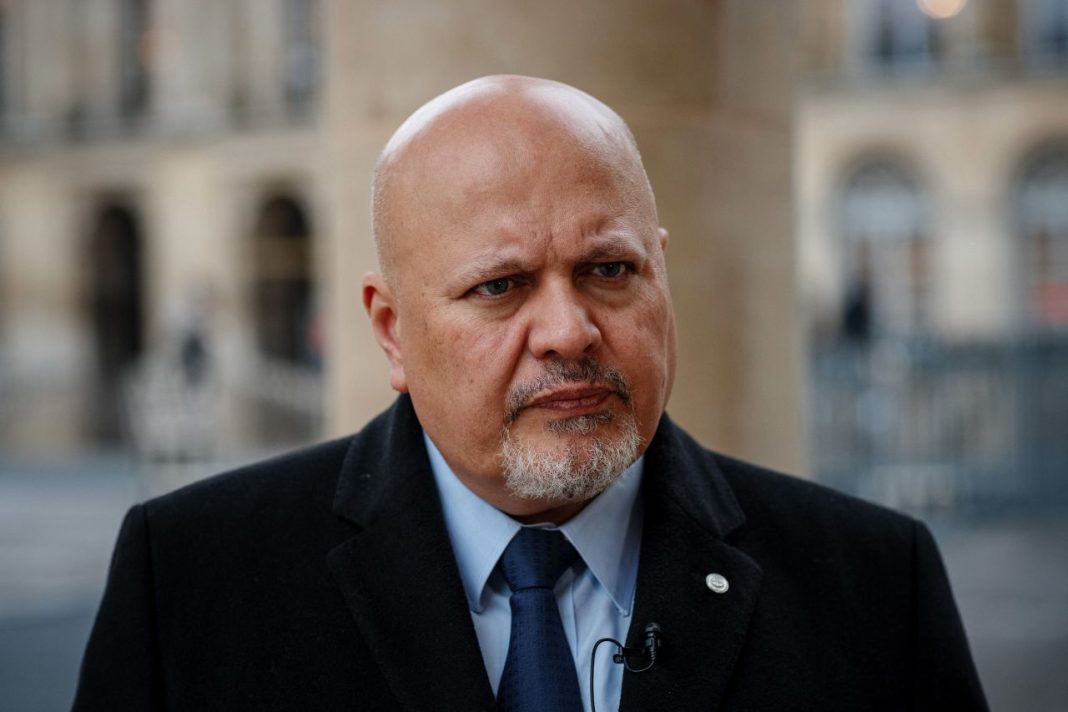

NEW YORK, United States — Member countries of the International Criminal Court have removed Karim Khan as chief prosecutor after the court’s governing body concluded that he committed serious misconduct involving a junior member of staff.
Eighty-two of the ICC’s 125 member states supported Khan’s dismissal in a secret ballot held at United Nations headquarters on Friday, July 24, 2026.
The vote brought his five-year tenure to an abrupt end and marked the first removal of a prosecutor in the court’s history.
Päivi Kaukoranta, president of the Assembly of States Parties, said the governments had determined that Khan “committed serious misconduct and a serious breach of duty.”
Khan, a 56-year-old British barrister, has denied the allegations throughout the disciplinary process.
His legal team said it would challenge both the validity of the vote and the procedures that produced it.
Tayab Ali, his lawyer, described the decision as “unsupported by any lawful or properly reasoned finding” and maintained that Khan had not been given a fair opportunity to defend himself.
A Complaint That Reached the Court’s Highest Levels
The case began after a female ICC lawyer accused Khan of abusing his authority and subjecting her to repeated sexual harassment and non-consensual conduct.
The woman, who has identified herself publicly only as Sarah, worked under Khan at the court.
The allegations emerged in 2024 and were later examined by the United Nations Office of Internal Oversight Services.
Sarah spoke publicly about the case shortly before the removal vote, telling Christiane Amanpour that Khan’s conduct had left her feeling “humiliated.”
She described a gradual erosion of professional and personal boundaries rather than a single incident.
Khan has denied having any sexual relationship with her and has rejected allegations that he harassed her or misused his office.
Khan cooperated with the United Nations inquiry, according to accounts of the investigation.
In an earlier interview, he said he had “completely denied engaging in any harassment, abuse of authority, inappropriate behavior whatsoever.”
The Assembly’s executive bureau later found that the evidence justified a finding of serious misconduct.
It also concluded that Khan had attempted to discourage the staff member from pursuing her complaint, a finding he disputes.
Khan had been away from his duties since May 2025 while the investigation continued.
The Assembly’s bureau formally suspended him in June 2026 and referred the question of permanent removal to the full membership.
Khan Says the Process Was Unfair
Khan’s lawyers have argued that the disciplinary proceedings failed to provide the safeguards required for a fair determination.
They have questioned the handling of evidence, the legal standard applied and the opportunity afforded to Khan to answer the findings before governments voted on his future.
“He has denied the allegations from the outset and continues to do so,” Ali said.
The lawyer said Khan would use every available legal mechanism to contest the decision.
It was not immediately clear which court or administrative forum would hear such a challenge, or whether any proceeding could reverse a vote taken by the Assembly of States Parties.
The member states required an absolute majority to remove the prosecutor. The 82 votes in favour comfortably exceeded the threshold of 63.
Before the ballot, Norway publicly said it would support dismissal.
Andreas Kravik, Norway’s deputy foreign minister, said the ICC needed leadership capable of preserving confidence in an institution responsible for pursuing genocide, crimes against humanity and war crimes.
“The world, and not least the victims of genocide, war crimes and crimes against humanity, needs an International Criminal Court that functions effectively,” Kravik said.
Allegations Became Entangled With Gaza Cases
The disciplinary case unfolded as Khan became one of the most politically contested figures in international law.
In May 2024, he sought arrest warrants for Israeli Prime Minister Benjamin Netanyahu, then Defence Minister Yoav Gallant and three senior Hamas leaders over alleged war crimes and crimes against humanity connected to the October 7 attacks and the war in Gaza.
ICC judges later issued warrants for Netanyahu and Gallant.
Israel, which does not recognise the court’s jurisdiction, rejected the allegations and accused Khan of conducting a politically motivated campaign.
Khan and some of his supporters suggested that the misconduct allegations may have been exploited by opponents seeking to discredit him after the warrant applications.
Sarah strongly rejected suggestions that she was working on behalf of Israel or another government. The court’s governing body also said it had found no evidence that she was being directed by intelligence services or other outside actors.
“My complaint was because of what happened to me, not for any other reason,” she said.
The removal does not cancel any arrest warrant obtained during Khan’s tenure. Those decisions belong to ICC judges and cannot be withdrawn by the prosecutor or by the Assembly of States Parties.
Court Faces Intensified Pressure From Washington
Khan’s departure comes as the ICC confronts an expanding campaign by the United States against its judges, prosecutors and investigations.
Washington is not an ICC member and has long opposed attempts by the court to exercise authority over American citizens.
Its objections intensified after the warrants involving Netanyahu and Gallant and because of an earlier investigation into alleged crimes by United States personnel in Afghanistan.
The United States has imposed sanctions on 11 ICC judges and prosecutors, including Khan.
The restrictions have affected travel, financial transactions and the court’s ability to work with outside institutions.
Secretary of State Marco Rubio said on Thursday that there were “lunatics and crazies” at the court and declared that American political and military officials would not be tried there.
The State Department welcomed Khan’s dismissal but said the vote would not alter the administration’s broader effort against the institution.
The court’s supporters argue that allowing governments outside the Rome Statute to dictate its work would undermine its independence.
Critics in Washington and Israel maintain that the ICC has exceeded its lawful authority.
Khan’s removal may address concerns about internal accountability, but it does not resolve the political pressure confronting the tribunal or the divisions among countries over its most prominent cases.
Search for a New Prosecutor Begins
Khan was elected in 2021 to a nine-year term and had been expected to remain in office until 2030.
His dismissal immediately begins the process of selecting a successor, although member states are not expected to complete the election before 2027.
The court’s two deputy prosecutors have been overseeing the Office of the Prosecutor during Khan’s absence.
That division employs about 400 people and manages investigations and prosecutions involving conflicts and alleged atrocities in several countries.
Member states must now decide whether to elevate one of the deputies or select an outsider to rebuild the office after nearly two years of internal turmoil.
The task extends beyond replacing one official. The next prosecutor will inherit a court facing strained staff confidence, sanctions from a major global power and intense disagreement over its investigations.
Khan’s removal settled the immediate question of whether he could continue to lead the prosecution office.
It left the ICC confronting a larger test: whether an institution created to demand accountability from political and military leaders can restore confidence in its own leadership.