
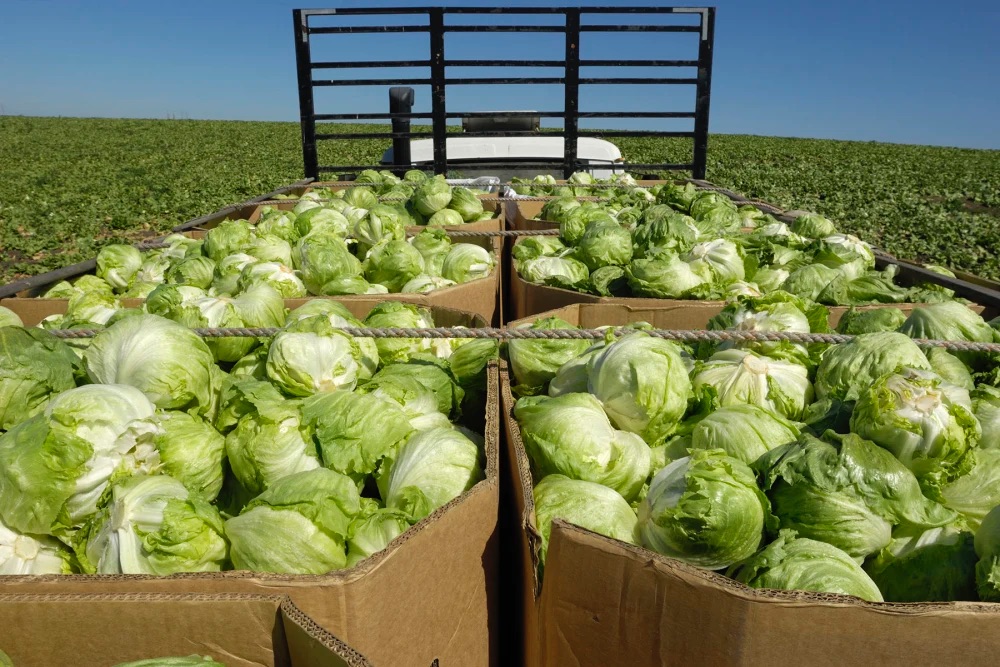

ATLANTA, United States — A foodborne illness outbreak linked to recalled iceberg lettuce has spread across nine American states, infecting at least 1,947 people and sending 98 to hospital, federal health officials said.
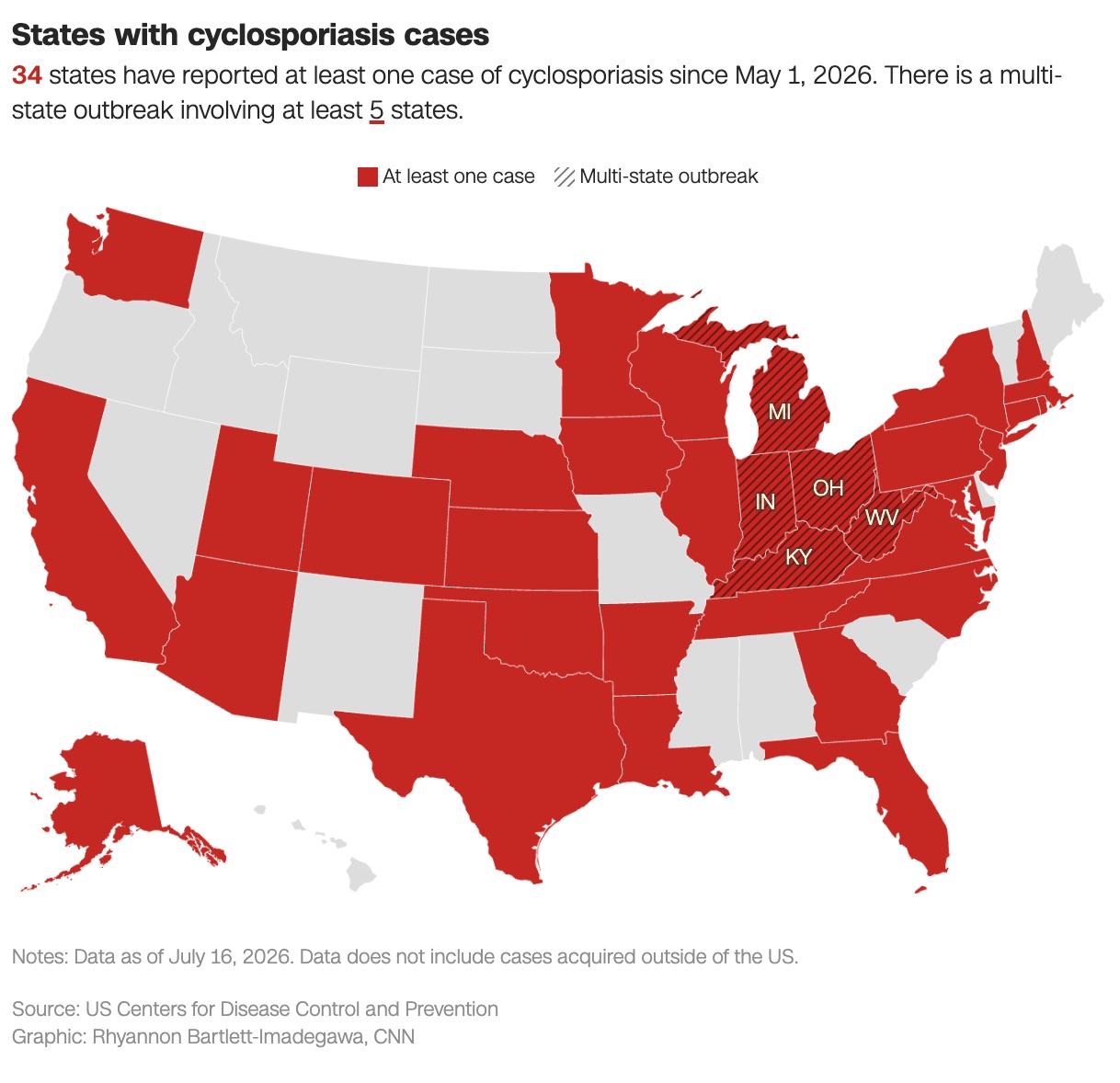
The Centers for Disease Control and Prevention added Illinois, Kansas, Oklahoma and Pennsylvania to the investigation on Friday, July 24, 2026.
The outbreak had previously been identified in Indiana, Kentucky, Michigan, Ohio and West Virginia.
No deaths have been reported.
The new states do not necessarily indicate a sudden rise in transmission.
Health departments have continued interviewing patients and reviewing what they ate before becoming ill, allowing investigators to connect cases that were previously recorded separately.
“We’re getting more complete case data that covers the range of the outbreak,” said Gwen Biggerstaff, deputy director of the CDC’s Division of Foodborne, Waterborne, and Environmental Diseases.
“States are completing interviews with people, and we’re filling in the data.”
The outbreak is one part of a much larger increase in cyclosporiasis across the United States. Since May 1, the CDC has received reports of 4,173 laboratory-confirmed domestic infections and is reviewing more than 7,400 additional cases that have not yet been fully confirmed or classified.
Illnesses Traced Through Taco Bell Meals
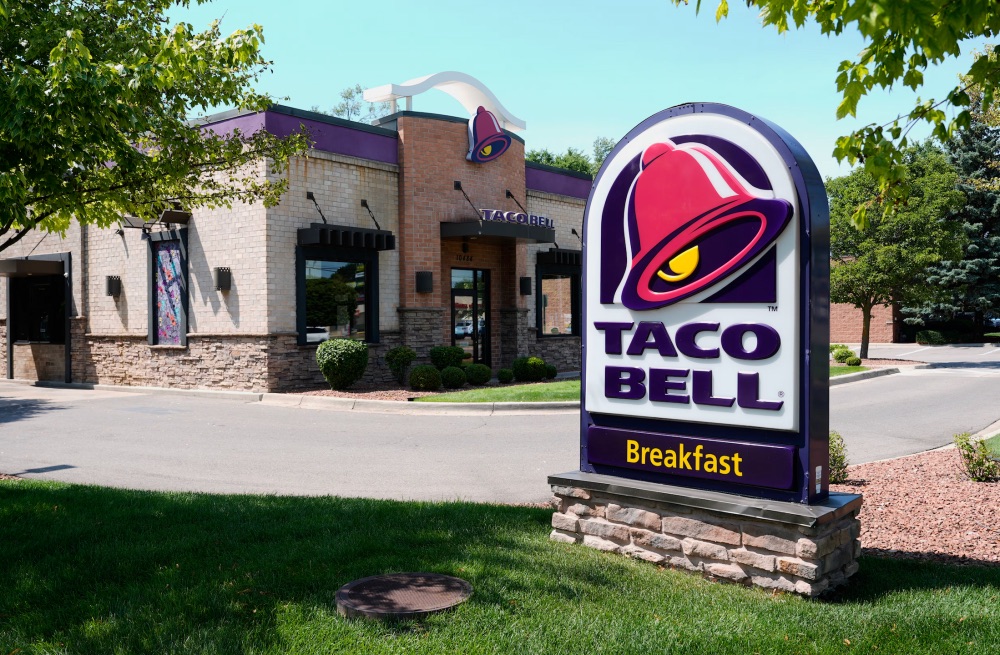
Investigators connected the nine-state outbreak through interviews with people who became ill after eating at Taco Bell restaurants.
Many of the patients reported visiting the chain in June, before the largest increases in cases were recorded.
An analysis of 190 Michigan patients who ate at Taco Bell found that 90 per cent had consumed iceberg lettuce.
The Food and Drug Administration traced the lettuce served at the restaurants to Taylor Farms de Mexico, a supplier based in Guanajuato.
Federal officials said the epidemiological evidence and supply-chain records continued to point towards shredded iceberg lettuce sourced from growers in central Mexico.
Taco Bell stopped using lettuce from the supplier by July 17.
Taylor Farms also withdrew all iceberg lettuce sourced from central Mexico from the American market.
The recall covers products supplied to restaurants, food-service operators and retailers.
“We know it went to many states, to many points of sale,” said Kari Irvin, deputy director of the FDA’s Coordinated Outbreak Response and Evaluation Network.
Irvin said investigators were monitoring newly confirmed infections “because it will help tell us if the recall is enough, that they’ve recovered all products that need to be removed from the market.”
The recalled food-service lettuce was distributed between June 29 and July 16 in 27 states, including several that have not been added to the confirmed Taco Bell-related outbreak.
The broader distribution does not mean infections have been identified in every state that received the products.
Walmart Lettuce Included in Recall
The recall includes Marketside iceberg products sold at selected Walmart stores.
The affected retail products include 12-ounce and 24-ounce packages of Marketside Iceberg Salad with “Best if Used By” dates from July 18 to August 3, as well as eight-ounce and 16-ounce packages of Marketside Shredded Lettuce carrying dates within the same period.
Those products were sold at selected stores in Alabama, Arkansas, Florida, Georgia, Indiana, Kansas, Kentucky, Louisiana, Missouri, Mississippi, Oklahoma, Tennessee, Texas, Virginia and West Virginia.
Consumers, restaurants and retailers have been advised to discard recalled lettuce or return it to the place of purchase.
Containers, refrigerator shelves, utensils and other surfaces that touched the products should be cleaned with hot, soapy water.
The FDA said a lettuce sample initially reported as positive for Cyclospora was later determined to be a false positive after laboratory experts reviewed the result.
No recalled product sample had produced a confirmed positive test as of July 19. The agency said that finding did not overturn the investigation because patient interviews and supply records continued to converge on the same lettuce source.
Investigators are also examining whether other farms or produce suppliers contributed to illnesses.
“The data that we have now really continues to home in on growers that were already identified,” Irvin said.
Thousands of Other Cases Under Investigation
The illnesses tied to the recalled lettuce account for only a portion of the cyclosporiasis cases reported nationally this summer.
CDC officials are investigating several separate clusters, some of which have not been connected to the nine-state outbreak or to Taco Bell.
The agency has cautioned that state totals may be higher because some health departments include probable cases that have not yet met the CDC’s laboratory-confirmation standard.
Michigan has reported 8,176 confirmed and suspected cases during its investigation period, including 160 hospitalisations.
State officials have said lettuce or salad greens may be involved, but have not attributed every Michigan infection to a particular supplier or product.
New York recorded 632 cases between May 1 and July 20, while North Carolina reported 561 cases and 16 hospitalisations during the same general period.
Those state investigations have not been added to the nine-state iceberg-lettuce outbreak.
North Carolina health officials have said fresh herbs such as parsley and coriander — known as cilantro in the United States — have appeared frequently in interviews with patients, but no final source has been announced.
“We have multiple investigations of cyclospora open,” Irvin said.
The differing totals illustrate the complexity of the national response. Some infections belong to identified clusters, while others remain unconnected because officials have not established a common restaurant, product or supplier.
A Parasite That Clings to Fresh Produce
Cyclosporiasis is an intestinal illness caused by Cyclospora cayetanensis, a microscopic parasite transmitted through food or water contaminated with human faeces.
The parasite has repeatedly been associated with fresh produce, including leafy vegetables, fruit and herbs.
It can adhere closely to uneven surfaces, meaning ordinary rinsing may reduce contamination but cannot guarantee its removal.
The most common symptom is watery diarrhoea. Patients may also experience a loss of appetite, weight loss, abdominal cramps, bloating, nausea, increased gas and fatigue.
Symptoms usually begin about a week after exposure, although the interval can range from two days to two weeks or longer.
Without treatment, the illness may persist for weeks, and symptoms can disappear before returning.
People with weakened immune systems may experience more prolonged or serious illness.
The CDC advised anyone with symptoms, particularly those who ate shredded iceberg lettuce during the two weeks before becoming ill, to contact a healthcare provider.
Standard stool examinations do not always test for Cyclospora, so patients may need to request a specific test.
Health authorities have also advised patients with persistent diarrhoea to drink enough fluids to reduce the risk of dehydration.
Cooking produce to at least 158 degrees Fahrenheit, or 70 degrees Celsius, kills the parasite. Washing fresh produce remains advisable, but federal officials said washing alone may not remove every organism.
The CDC and FDA said the investigation remained open and warned that additional products, restaurants or distribution routes could be identified as officials complete patient interviews and continue tracing the recalled lettuce.