


THE HAGUE, Netherlands — The International Court of Justice has ruled that Myanmar committed genocide against the Rohingya Muslim minority during a military campaign that killed thousands of people and drove hundreds of thousands from their homes.
The United Nations’ highest court delivered the judgment on Thursday, November 19, 2026, finding that Myanmar’s security forces deliberately sought to destroy a substantial part of the Rohingya population in northern Rakhine State.
The judges voted nine to six to hold Myanmar responsible for genocide under the 1948 Convention on the Prevention and Punishment of the Crime of Genocide.
The ruling is the first time the International Court of Justice has found a country responsible for committing genocide.
The court ordered Myanmar to investigate suspected perpetrators, prevent further violations, facilitate the return of displaced Rohingya, and compensate victims.
Its decision is final, legally binding, and cannot be appealed.

Judges Find Evidence of Deliberate Genocide
Delivering the judgment in The Hague, ICJ President Yuji Iwasawa said Myanmar’s military had carried out extensive violence against Rohingya civilians during operations in 2017.
The judges examined evidence of mass killings, rape, the destruction of villages, and attacks against civilians attempting to escape military operations.
The court concluded that approximately 10,000 Rohingya were killed during the campaign.
It found that Myanmar’s security forces had committed acts prohibited under the Genocide Convention, including killings, serious bodily and mental harm, and measures intended to prevent births within the Rohingya community.
The judges determined that the scale and character of the violence, considered alongside years of discriminatory government policies, established the specific intent required to prove genocide.
According to the BBC’s coverage of the judgment, the court also examined restrictions affecting Rohingya citizenship, movement, marriage, and family life.
The judges found that a coordinated campaign of hostility towards the Rohingya had contributed to the conditions in which the military operations occurred.
Myanmar had argued that its security forces were responding to attacks by the Arakan Rohingya Salvation Army, an armed insurgent group.
The court acknowledged those attacks but rejected Myanmar’s argument that its military response could not constitute genocide.
The judges concluded that the evidence demonstrated an intention to destroy a substantial part of the Rohingya population.

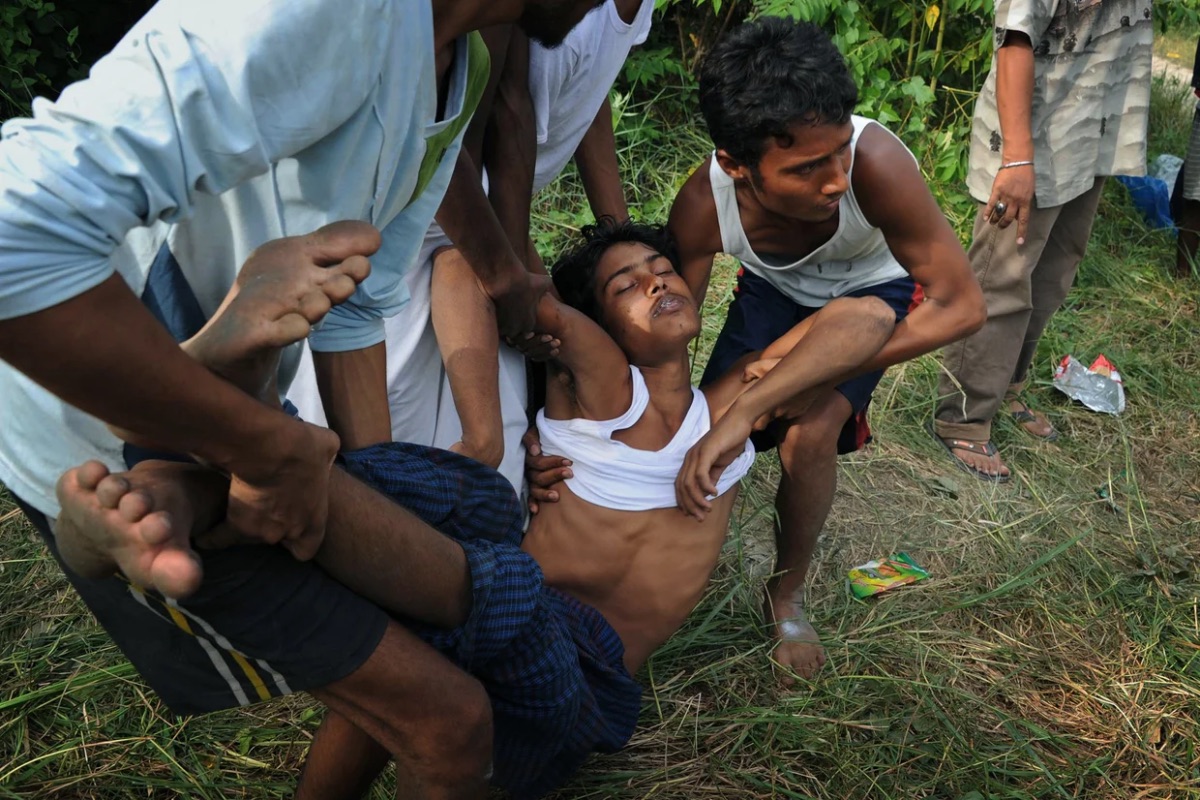
Malaysian police began the grisly job of exhuming dozens of graves found in a series of remote human-trafficking camps along the Thai border in the latest grim turn in the region’s migrant crisis. | Mohd Rasfan/AFP/Getty Images
Myanmar Ordered to Compensate Victims and Allow Refugees to Return
The court directed Myanmar to provide restitution and compensation for harm caused by its violations of international law.
Under the judgment summarised by the United Nations’ Independent Investigative Mechanism for Myanmar, the government must permit displaced Rohingya to return safely, voluntarily, and with dignity to their former places of residence.
It must also facilitate the reunification of families separated by the violence.
The court ordered Myanmar to investigate individuals reasonably suspected of involvement in genocide and, where warranted, prosecute and punish them.
It further directed the country to adopt legislation implementing its obligations under the Genocide Convention and provide assurances against future violations.
The judges found that Myanmar had failed to prevent and punish genocide and had violated an earlier court order requiring it to preserve evidence of alleged atrocities.
The amount of compensation payable to victims has not yet been determined.
Myanmar must report to the court within two years on the restitution measures it has adopted and provide information concerning the proposed compensation arrangements.
The court will consider the outstanding reparations questions in a subsequent stage of proceedings.

Myanmar Government Rejects Court’s Findings
Myanmar’s government disputed the ruling, maintaining that its military operations were directed against insurgents rather than the Rohingya population.
In a statement issued through its Foreign Ministry, the government expressed disappointment with the judgment and questioned the evidence relied upon by the judges.
The ministry drew attention to the six judges who dissented from the genocide finding and argued that the court had departed from established standards for proving genocidal intent.
Myanmar insisted that the military operations were undertaken in response to attacks by Rohingya militants.
The government also challenged reports produced by United Nations investigators and human rights organisations, disputing their reliability.
The court’s majority nevertheless found sufficient evidence to establish Myanmar’s responsibility under the Genocide Convention.
The Gambia Brought Case Against Myanmar in 2019
The proceedings began when The Gambia, a West African country, filed a case against Myanmar in November 2019.
The action was supported by the Organisation of Islamic Cooperation, which argued that Myanmar had failed to comply with its international obligations to prevent and punish genocide.
The case concerned military operations launched in August 2017 after attacks on security installations in Rakhine State.
During the subsequent crackdown, Myanmar’s armed forces burned villages, killed civilians, and carried out widespread sexual violence, according to United Nations investigations.
More than 700,000 Rohingya fled across the border into Bangladesh.
Many joined refugees who had escaped earlier episodes of persecution.
Approximately 1.2 million Rohingya now live in refugee settlements in Bangladesh, principally in the Cox’s Bazar region.
The International Court of Justice initially ordered Myanmar in January 2020 to take measures to prevent genocide and preserve relevant evidence while the case proceeded.
In 2022, the court rejected Myanmar’s preliminary objections to its jurisdiction, allowing the case to continue.
Public hearings on the substantive allegations took place in January 2026.
The judgment follows years of international investigations into Myanmar’s treatment of the Rohingya, a predominantly Muslim minority that has faced longstanding restrictions on citizenship and other rights.

Rohingya Refugees Welcome Genocide Ruling
The decision prompted celebrations among Rohingya refugees in Bangladesh, where groups gathered to follow the proceedings.
According to Reuters, more than 1,000 people watched the judgment on a screen at a refugee settlement in Cox’s Bazar.
Wai Wai Nu, executive director of the Women’s Peace Network and a former political prisoner, welcomed the decision.
She said the ruling had rejected years of official denials concerning the Rohingya’s treatment.
The verdict also drew a response from United Nations Secretary-General António Guterres, who urged Myanmar to comply with the court’s orders.
In an official statement, Guterres said the judgment recognised the experiences of Rohingya victims and affirmed the importance of accountability under international law.
He called for investigations, reparations, and measures to ensure that similar violations do not occur again.

Court Ruling Does Not Automatically Lead to Criminal Prosecutions
The International Court of Justice determines disputes between countries and establishes their responsibilities under international law.
It does not conduct criminal trials of individuals or impose prison sentences on military officers and government officials.
Criminal accountability for individual perpetrators would require proceedings before courts with the appropriate jurisdiction.
Although ICJ judgments are legally binding, the court has no independent enforcement force.
The implementation of its orders depends on action by Myanmar and, where necessary, other institutions within the United Nations system.
The situation in Rakhine State also remains affected by continuing conflict between Myanmar’s military and armed groups.
Fighting intensified after Myanmar’s military seized power in a coup in February 2021, further complicating efforts to secure the return of displaced communities.
The court’s decision establishes Myanmar’s responsibility for genocide under international law, while questions about individual prosecutions, compensation, and the return of refugees remain unresolved.