
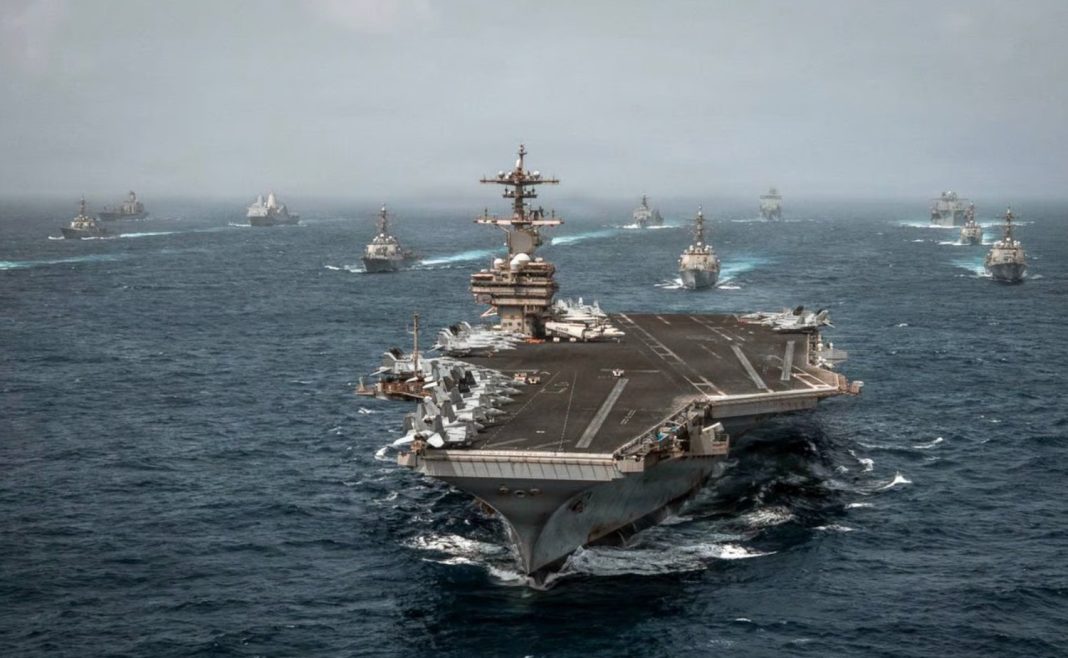

WASHINGTON, United States — The United States military struck three Iranian crude oil tankers in and near the Persian Gulf on Saturday, September 5, 2026. US Central Command said the operation followed ballistic missile attacks on two American warships by Iran’s Islamic Revolutionary Guard Corps.
The missiles were directed towards an aircraft carrier and a guided-missile destroyer patrolling regional waters, according to CENTCOM’s statement.
“A U.S. aircraft carrier and guided-missile destroyer successfully evaded multiple unprovoked Iranian attacks,” the command said. No American personnel were injured.
The strikes marked another escalation in the confrontation over maritime traffic through the Strait of Hormuz, following an exchange of attacks earlier in the week.
Three Tankers Targeted
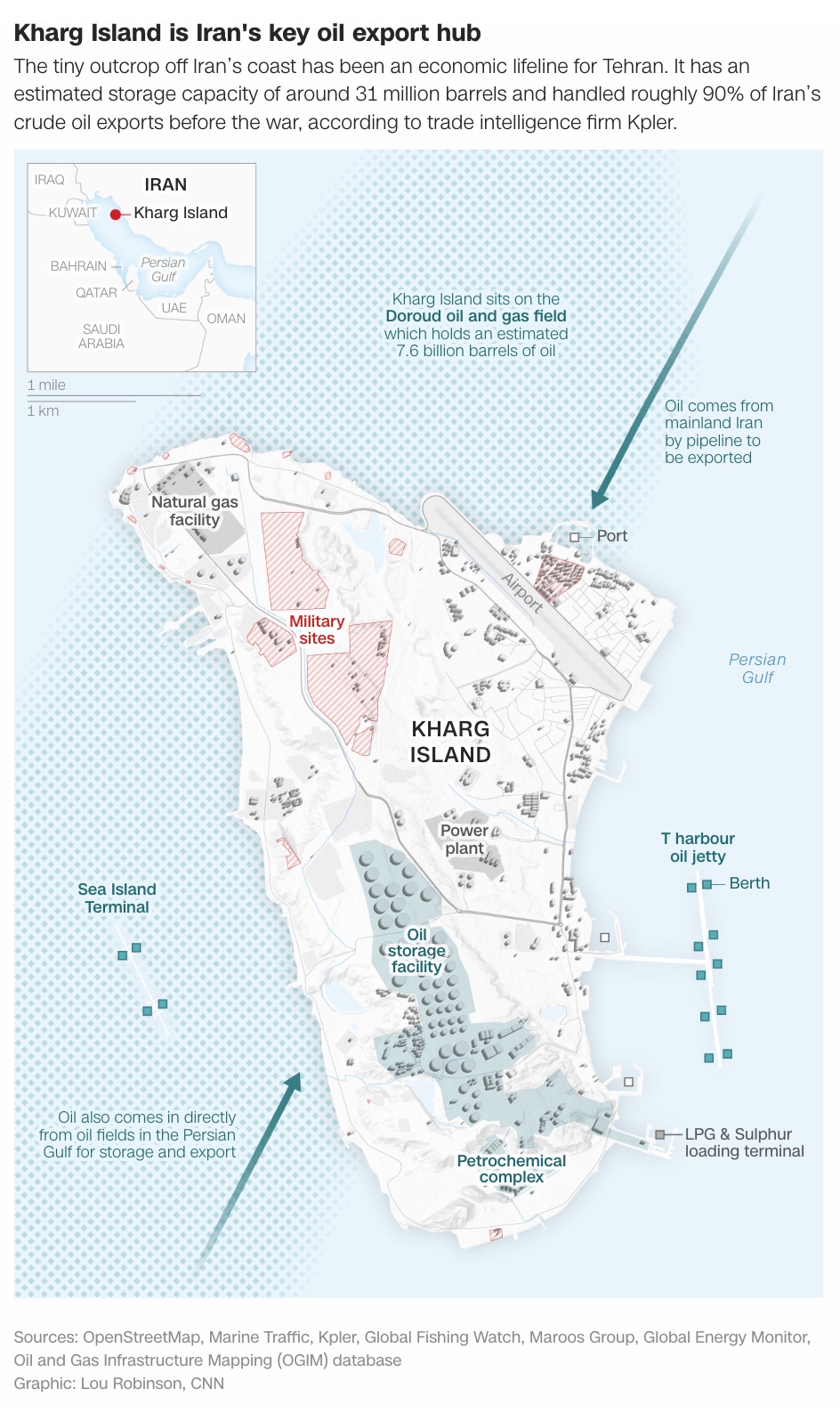
CENTCOM said its forces rendered the M/T Downy inoperable off Kharg Island and disabled the M/T Stark 1 near Jask, on Iran’s southern coast.
A third vessel, the M/T Kylo, was attacked outside the Persian Gulf. The military said the unladen crude carrier was struck repeatedly and destroyed after its crew had been instructed to leave the ship.
The US military described the three vessels as components of a network that generates billions of dollars for the Revolutionary Guard and armed groups it supports in the region.
Adm. Brad Cooper, the CENTCOM commander, said the United States had responded to the attacks on its two warships by imposing “an even higher economic cost” on Iran through strikes against three tankers.
Pete Hegseth, the US defence secretary, issued a further warning in a post on X.
“It’s simple: if Iran shoots at U.S. ships, we will destroy (and sink) their oil tankers,” Hegseth wrote.
He said American forces could attack Iranian oil carriers operating in the Middle East or the Indo-Pacific region and asserted that Iran lacked the naval and air capabilities to protect the fleet.
It’s simple: if Iran shoots at U.S. ships, we will destroy (and sink) their oil tankers. All they have to do is not shoot at @USNavy.
Iran’s oil tanker fleet is defenseless — Iran has no navy or air force. Our planes, ships & subs can strike them all, in @CENTCOM & @USPACOM. https://t.co/lr5TaxloBw
— Pete Hegseth (@PeteHegseth) September 5, 2026
Iran Condemns the Attacks
Iran’s Foreign Ministry denounced the operation as “illegal and aggressive,” describing the tanker strikes as an “overt threat to international peace and the security of commercial shipping.”
In a statement carried by Iranian state media, the ministry said the attacks violated the United Nations Charter. It also said Iran would defend its sovereignty and national interests against further American military action.
Iranian officials warned that the country would respond forcefully to additional attacks.
Tasnim, an Iranian news agency, reported that four American projectiles struck a tanker near Kharg Island. The agency said there were no casualties.
Audio reviewed by CNN recorded a US military aircraft warning the M/T Stark 1 before the vessel was attacked. The crew was initially instructed to move away from the ship’s stern and was later ordered to enter lifeboats and abandon the tanker.
“This was your final warning … get into your lifeboats and abandon the ship immediately,” an American-accented voice said in the recording.
Pressure on Shipping Around Hormuz
The United States and Iran exchanged strikes earlier in the week for the first time in more than a month.
The latest attacks have increased the prospect of further retaliation as both countries seek to influence shipping through and around the Strait of Hormuz.
Iran has sought to prevent vessels from passing through the strait without its approval, while the United States has imposed a naval blockade and intensified attacks on ships connected to the country’s oil trade.
Kharg Island has historically handled about 90 per cent of Iran’s crude oil exports. It has been attacked during the conflict, and President Donald Trump has previously threatened to seize it.
Shipping information and satellite images indicate that nearly 20 Iranian tankers are anchored near the island. Many are carrying oil but cannot leave the Persian Gulf because of the American blockade.
Ship-tracking services have identified more than 50 Iranian tankers across the Persian Gulf and the neighbouring Gulf of Oman.
The Strait of Hormuz remains critical to international energy markets because of the volume of oil transported through the waterway.
The tanker strikes followed six months of conflict that began with joint American and Israeli air attacks on Iran.
Vice President JD Vance said on Thursday that the confrontation should not be described as a war and maintained that there was “no active shooting.” He did not provide a timetable for ending the hostilities, saying Iran was responsible for bringing the conflict to a close.