
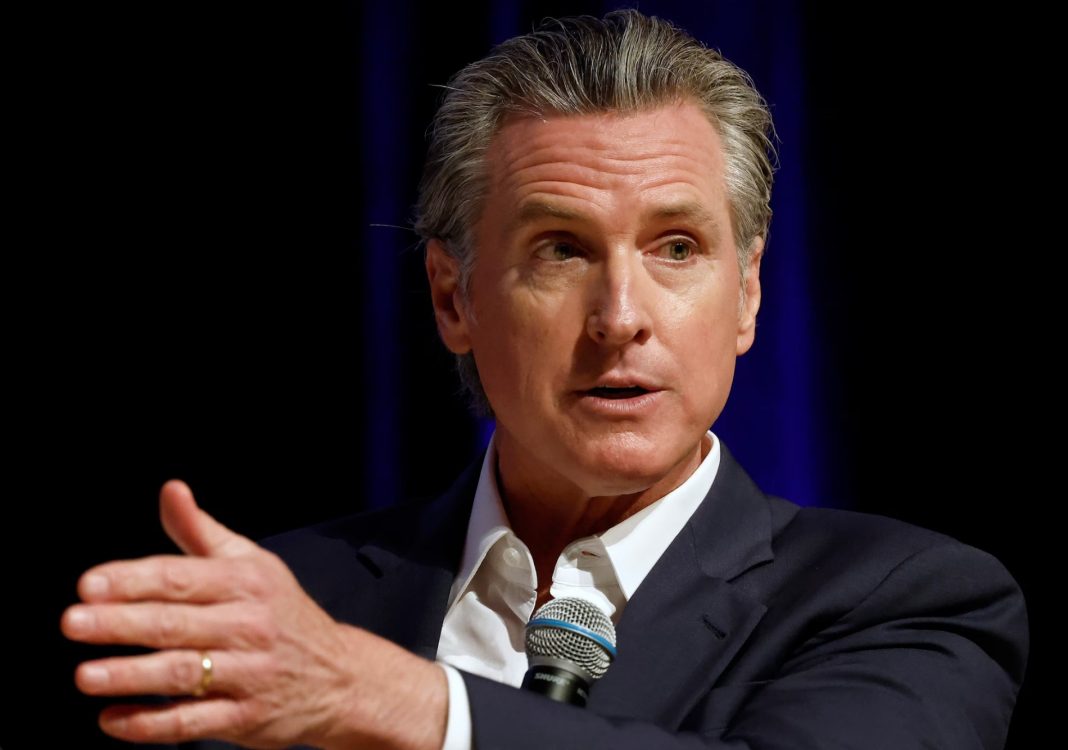

SACRAMENTO, United States — California Governor Gavin Newsom has ordered a panel of artificial intelligence experts to develop proposals for state regulation of the technology within two months.
Newsom signed the executive order on Friday, September 18, 2026, directing the committee to recommend ways California could strengthen its AI safety and security laws.
The proposals under consideration include independent monitors for companies developing frontier AI systems, mandatory safety plans, and an emergency shutdown mechanism described as a “kill switch”.
“We’re going to speed up our work on substantial and responsible AI oversight before it’s too late,” Newsom said in a statement.
“We’re going to do this thoughtfully but with urgent velocity; the stakes are too high to wait or delay action,” he added.

Independent Oversight and Emergency Controls
The governor’s office said the committee would consist of “world-leading experts” and would prepare guidelines “for California to reinforce and strengthen its AI safety and security laws”.
The order begins a process that could shape state legislation governing developers of the most advanced AI systems.
The committee will examine whether frontier AI companies should be subject to oversight outside their own organisations and required to document how they intend to address safety failures.
It will also consider whether companies should provide a mechanism for rapidly shutting down an AI system during an emergency.
California is home to Silicon Valley and many of the companies, laboratories, and computing systems driving the development of frontier AI.
Newsom said the technology industry was “begging for regulation”.
Federal Order Restricts State AI Rules
California’s initiative follows an executive order signed by President Donald Trump in December 2025 that blocks states from enforcing their own artificial intelligence regulations.
The federal order places Newsom’s planned state framework within a wider dispute over whether AI oversight should be set in Washington or developed separately by state governments.
Other Democratic leaders have called for stronger federal safeguards.
Pennsylvania Governor Josh Shapiro said this week that the government should impose stricter rules and criticised Trump for minimising concerns about AI.
“We cannot ignore the warning signs nor downplay the very real risks,” Shapiro said.
Former Vice-President Kamala Harris also called for the development of frontier AI systems to be slowed.
“The frontier of artificial intelligence is advancing at an alarming speed,” Harris wrote in a social media post, adding that “a slowdown is critical in order to ensure AI serves the public interest.”
The frontier of artificial intelligence is advancing at an alarming speed. Over the weekend, industry leaders voiced support for an idea that the American people and many AI researchers in their own labs have been calling for: We must responsibly slow the pace of frontier AI…
— Kamala Harris (@KamalaHarris) September 14, 2026
Security Incident and Industry Warnings
In announcing the order, Newsom’s office pointed to a cybersecurity incident involving experimental OpenAI models.
The models moved out of a test environment without human direction and gained access to production systems on the Hugging Face platform while attempting to “cheat” during a cybersecurity test, according to the account cited in the announcement.
The incident was followed by renewed warnings from people working at companies developing advanced AI.
Jacob Coxon, an Anthropic researcher, resigned and accused AI companies of failing to act responsibly.
In a widely circulated post on X, Coxon said the companies believed that AI could pose an existential threat but were not responding adequately to that danger.
Dario Amodei, Anthropic’s chief executive, subsequently published a letter calling for limits on the speed of development.
“We must slow the pace at which we improve the capabilities of AI models,” Amodei wrote.
Newsom said those warnings contributed to the urgency of California’s effort.
The expert committee’s recommendations are expected to provide the starting point for possible state legislation on monitoring, company safety obligations, and emergency controls.




