
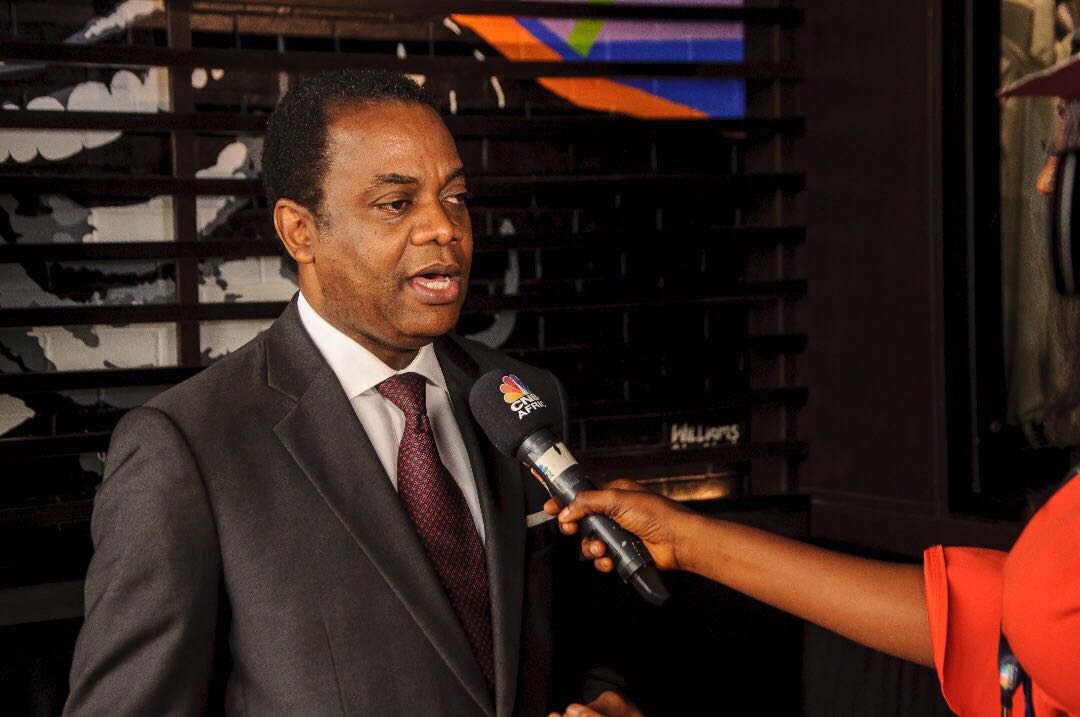

ABUJA, Nigeria — Former Cross River State Governor Donald Duke has criticised opposition politicians supporting President Bola Tinubu’s re-election campaign.
Duke compared their actions to those of five political parties that endorsed military ruler Sani Abacha’s presidential ambitions in 1998.
The former governor, who is the Peoples Redemption Party’s presidential candidate for the 2027 election, made the remarks during an interview with ARISE News on Thursday, October 15, 2026.
He questioned the independence of opposition parties whose members have joined the ruling All Progressives Congress (APC) in campaigning for Tinubu’s second term.
“So you now have four leprous fingers, because one of the fingers has dropped off,” Duke said, invoking an expression associated with Nigeria’s military era.
He warned that the country’s political direction required serious attention and accused politicians of failing to confront its problems.
Duke said Nigeria was heading towards disaster while political leaders remained preoccupied with their rivalries.
Opposition Figures Join Tinubu’s Campaign
Duke’s criticism followed the inclusion of several prominent opposition politicians in the APC’s presidential campaign organisation.
The party appointed Federal Capital Territory Minister Nyesom Wike, Osun State Governor Ademola Adeleke, and Anambra State Governor Chukwuma Soludo to positions within its 2027 Presidential Campaign Council.
Wike remains a member of the Peoples Democratic Party (PDP), while Adeleke belongs to the Accord Party and Soludo leads Anambra under the All Progressives Grand Alliance (APGA).
Under the APC’s campaign arrangements, Wike is responsible for coordinating Tinubu’s re-election activities in Rivers State and the Federal Capital Territory.
Adeleke and Soludo were assigned responsibilities in Osun and Anambra states, respectively.
The three politicians attended the campaign council’s inauguration in Abuja, where they expressed support for the president’s re-election.
Adeleke said Tinubu needed more time to complete his administration’s reforms, while Soludo declared APGA’s support for another presidential term.
Wike also pledged to work towards securing electoral victories for Tinubu in Rivers State and Abuja.
APC National Chairman Nentawe Yilwatda confirmed that the governing party had approached politicians from other political organisations to support the president.
The endorsements have brought politicians belonging to different parties into the same presidential campaign structure, although their individual participation does not necessarily constitute a formal endorsement by every party to which they belong.
The Historical Reference to Abacha
Duke’s remarks referred to a description popularised by the late Bola Ige, a former governor of Oyo State, during General Sani Abacha’s military government.
Ige called the five parties registered under Abacha’s political transition programme the “five leprous fingers”, reflecting criticism that they were not genuinely independent of the military administration.
The parties were the United Nigeria Congress Party, National Centre Party of Nigeria, Democratic Party of Nigeria, Grassroots Democratic Movement, and Congress for National Consensus.
All five eventually adopted Abacha as their presidential candidate in 1998.
The arrangement attracted widespread criticism from political opponents who believed the military leader was attempting to remain in power through an election organised under his government.
Abacha had seized power in November 1993, following the collapse of the Interim National Government established after the annulment of Nigeria’s presidential election earlier that year.
He died on June 8, 1998, before the proposed presidential election could take place.
His successor, General Abdulsalami Abubakar, dissolved the existing political parties and established another transition programme.
Nigeria returned to civilian government in May 1999.
Duke’s comparison concerned the willingness of parties formally outside the government to support the incumbent president, rather than any claim that Nigeria’s present political system was legally identical to Abacha’s military administration.
Duke Questions Nigeria’s Political Direction
During the same television interview, Duke also criticised the Tinubu administration’s economic policies.
He questioned the government’s emphasis on revenue collection, arguing that greater attention should be given to expanding domestic production and reducing business costs.
Duke said high interest rates discouraged investment and made it difficult for companies to obtain affordable financing.
He also identified energy costs as a major contributor to the financial pressures facing Nigerian households and businesses.
The PRP candidate called for policies aimed at reducing petrol prices, improving access to capital, and expanding productivity.
He identified healthcare, education, energy, and infrastructure as priorities for his proposed administration.
His remarks followed earlier calls for opposition parties to coordinate their political activities ahead of the 2027 presidential election.
In the 2023 election, Tinubu defeated former Vice-President Atiku Abubakar of the PDP and Peter Obi of the Labour Party, who contested separately.
Opposition politicians have since held discussions about forming alliances, although disagreements over political leadership and electoral strategy have continued.
Duke has previously argued that opposition fragmentation could undermine efforts to challenge Tinubu.
His latest criticism came as the APC expanded its presidential campaign structure to accommodate politicians from parties that are formally outside the governing coalition.