
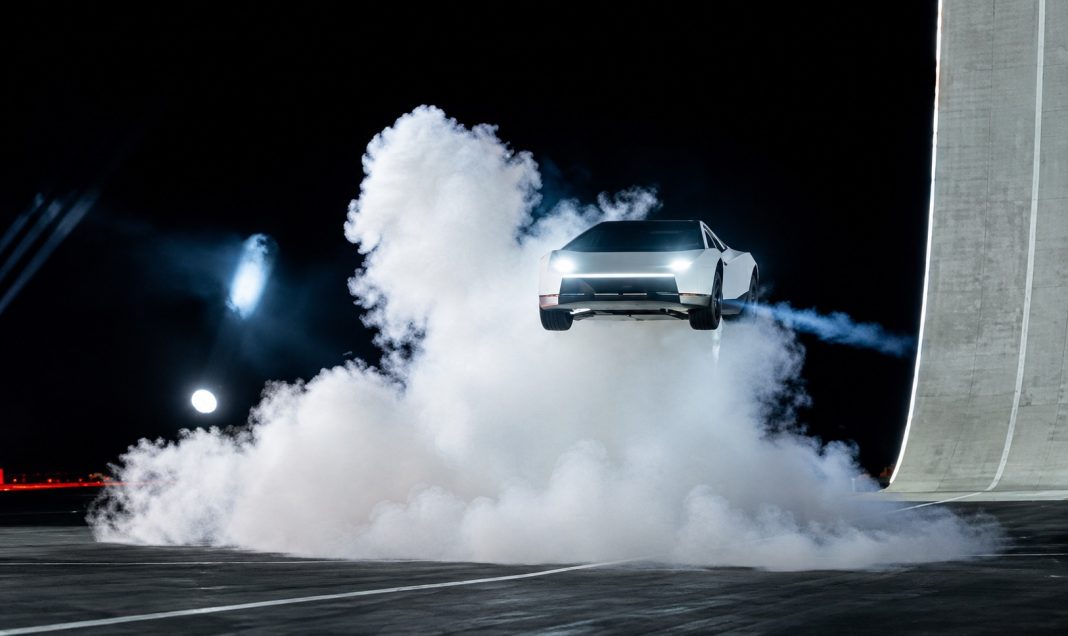

McGREGOR, United States — Tesla has unveiled a new electric sports car capable of briefly flying through the air using technology developed with Elon Musk’s rocket company, SpaceX.
The redesigned Tesla Roadster demonstrated aerial flips, upside-down driving, and acceleration from zero to 60 miles per hour (97 kilometres per hour) in less than one second.
Musk presented the vehicle at a SpaceX testing facility in McGregor, Texas, on Thursday, October 15, 2026.
The billionaire described it as a flying car, although the demonstration did not establish that it could sustain flight over long distances.
Tesla plans to begin production in 2028, nearly a decade after Musk first announced the second-generation Roadster.
Roadster Flies, Flips and Lands During Demonstration
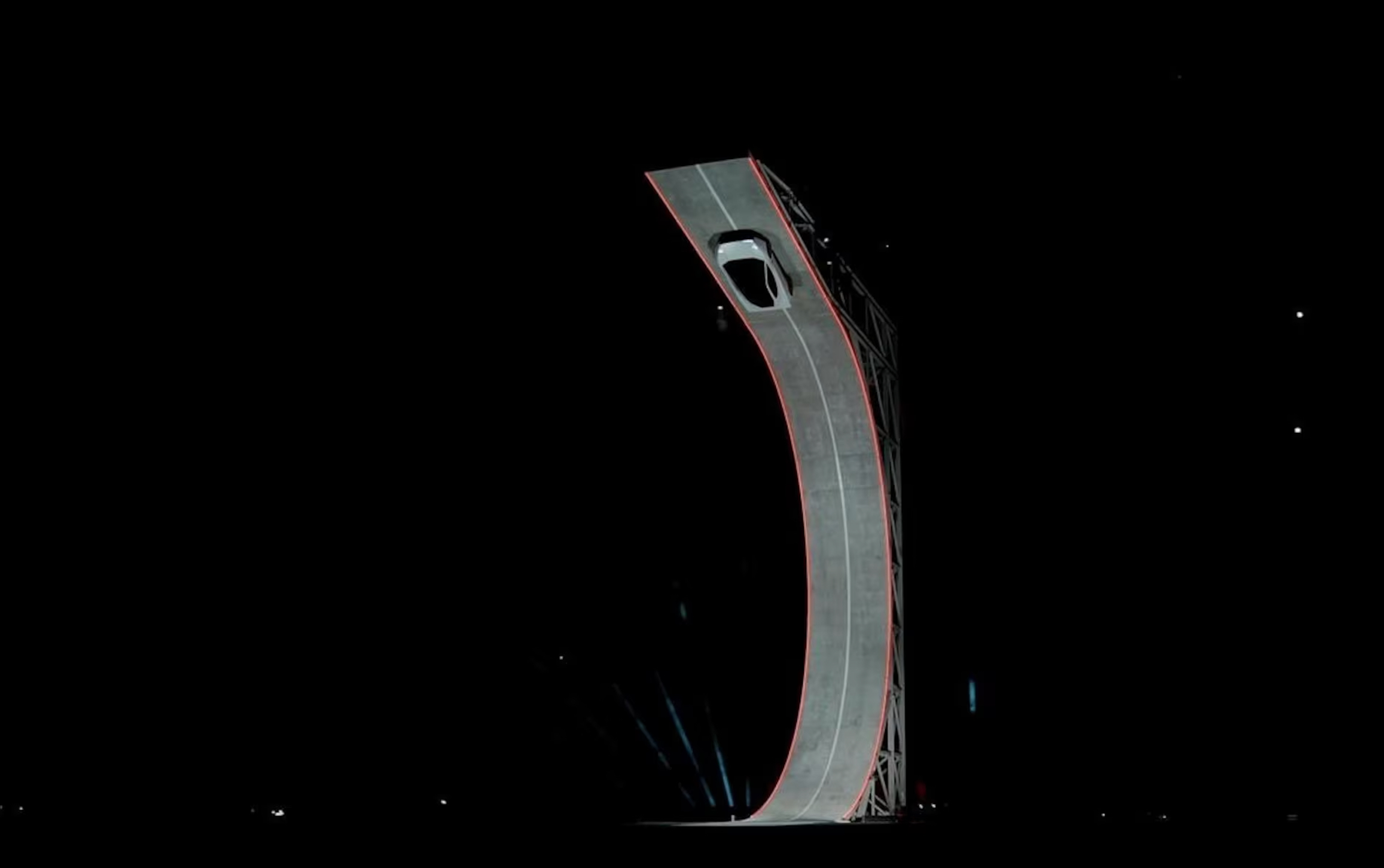
During the livestreamed demonstration, a white Roadster travelled up a steep, curved ramp before turning upside down.
A suction system beneath the vehicle kept it attached to the surface.
The car then launched from the ramp, rotated in mid-air, and landed on its wheels using powerful air thrusters.
In a second demonstration, it jumped over a row of Tesla vehicles, including a truck.
The prototype operated without a driver throughout the demonstration.
Musk said the decision was made “to make sure we don’t kill anyone”.
Before the first stunt, he acknowledged that the manoeuvre might fail.
“Success is not guaranteed,” he told the audience.
After the vehicle landed successfully, Musk remarked, “Well, it worked.”
The presentation also included an acceleration test in which Tesla said the Roadster reached 60 mph in less than a second.
According to Tesla the company claims the car can exceed 230 mph (370 kilometres per hour) and travel more than 300 miles (480 kilometres) on a charge.
How Tesla’s Flying Car Works
The Roadster uses technology developed through cooperation between Tesla and SpaceX.
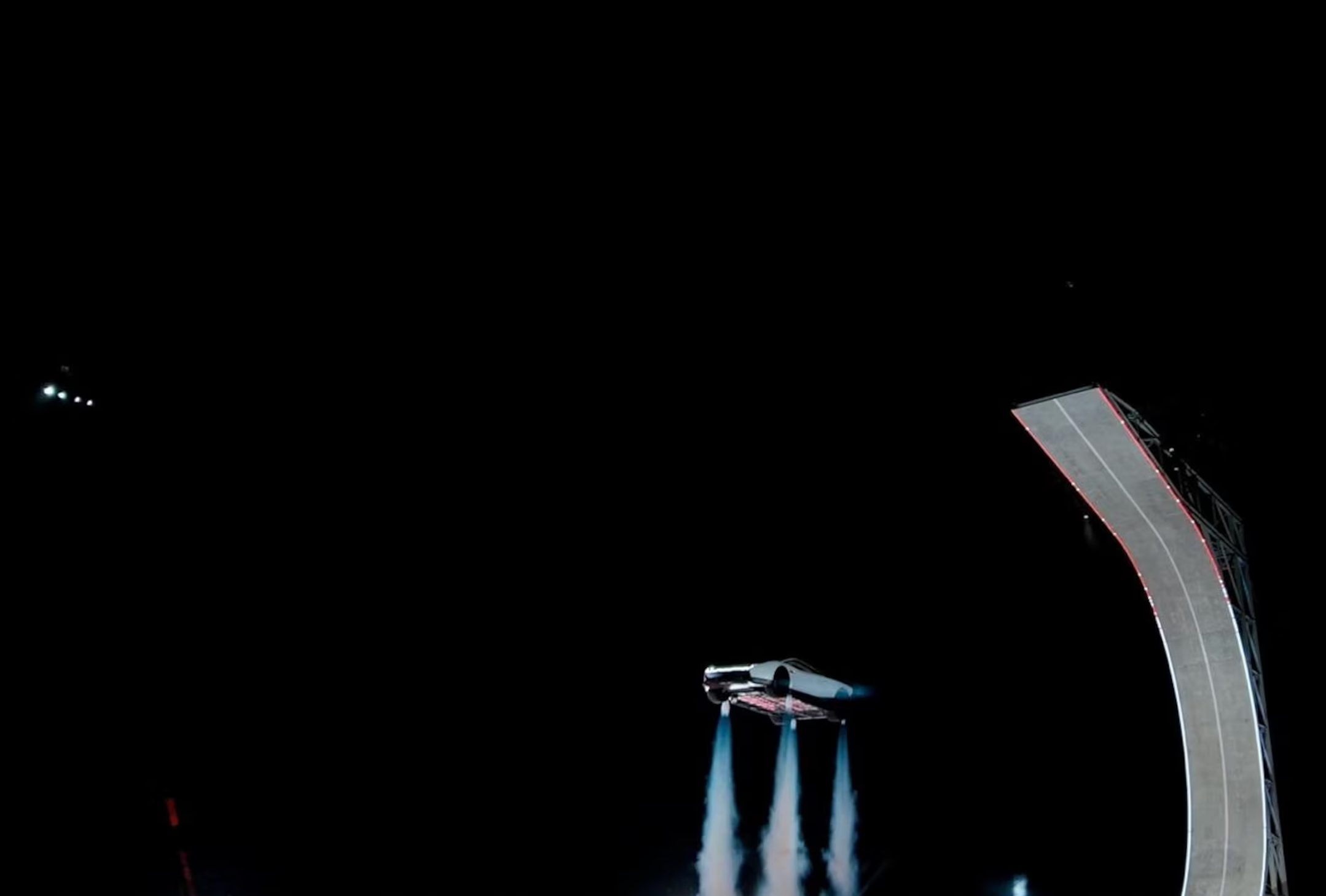
Its propulsion system includes 10 nozzles connected to tanks containing highly compressed air.
The jets provide thrust for acceleration and allow the vehicle to lift off the ground and adjust its position while airborne.
A separate fan-powered suction system enables it to remain attached to surfaces while driving upside down.
Tesla’s vice-president of vehicle engineering, Lars Moravy, said the company had adapted technology from SpaceX to achieve the unusual manoeuvres.
However, aviation specialists have questioned whether the vehicle should be considered a flying car in the conventional sense.
Roger Connor, a curator at the Smithsonian National Air and Space Museum, told CNN that short airborne movements were substantially different from sustained flight.
“We are literally talking about hopping,” he said.
The demonstration did not establish whether the Roadster could take off vertically, travel significant distances through the air, or operate as a conventional aircraft.
Tesla Targets 2028 Production
Musk said production would begin in 2028, although Tesla has previously missed several deadlines for the Roadster.
The company originally unveiled its second-generation electric sports car in 2017, promising deliveries beginning in 2020.
Tesla has not announced a final selling price for the redesigned model.
Its reservation website lists several configurations, including a Performance model requiring a $50,000 deposit and a Thrust version requiring $250,000.
A more advanced, single-seat Rocket model, described as having a complete flight system, is available by invitation only.
Tesla states that the Rocket configuration is not approved for use on public roads.
The company has not confirmed when production vehicles will receive the necessary regulatory approvals.
The new Roadster arrives as Tesla expands its investments in autonomous driving, robotics, and its Cybercab robotaxi.
Unlike those autonomous vehicles, Musk said the Roadster would remain designed for human drivers.
Whether customers will eventually be able to operate its airborne capabilities outside controlled demonstrations remains uncertain.




