


NEW YORK, United States — Luigi Mangione returned to a Manhattan courtroom on Tuesday, less than a month before his state murder trial.
The hearing on Tuesday, August 11, 2026, was the last scheduled pretrial conference in Mangione’s New York state case.
The judge ordered that jurors’ identities be withheld to protect them from harassment and outside influence.
Mangione, 28, has pleaded not guilty to charges stemming from the killing of UnitedHealthcare chief executive Brian Thompson, who was shot outside a Manhattan hotel in December 2024.
Justice Gregory Carro confirmed that jury selection will begin on September 8 and said an additional courtroom would be made available to accommodate intense public and media interest in the proceedings.

Mangione Appears in Grey Suit With New Haircut
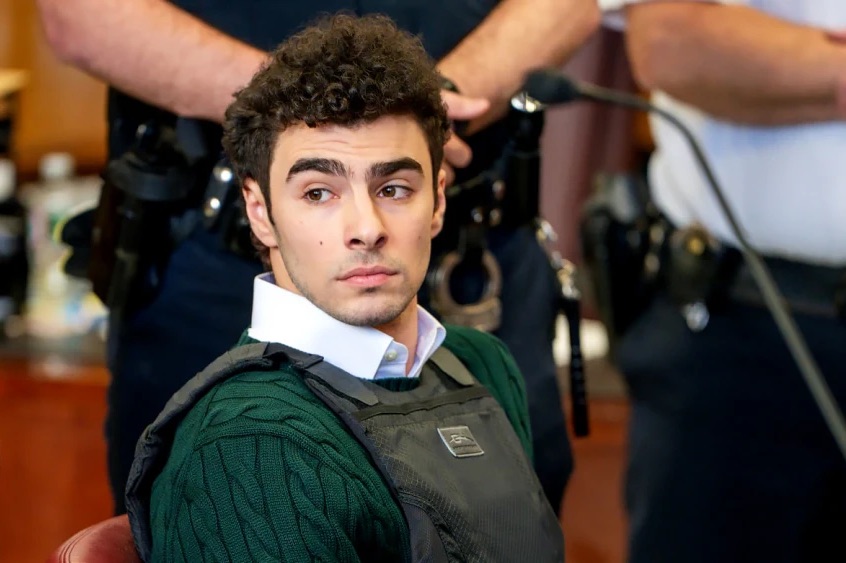
Mangione entered the courtroom in handcuffs wearing a grey suit, white shirt and laceless shoes instead of detention clothing.
He also appeared with a freshly cut fade and was seen smiling at points while speaking with members of his legal team.
His appearance quickly attracted attention online, continuing a pattern in which his clothing, hairstyle and courtroom demeanour have generated unusual levels of interest alongside the criminal proceedings themselves.
Reports that Mangione previously received grooming assistance from other prisoners date back to his brief detention in Pennsylvania following his arrest in 2024.
There has been no reliable confirmation that fellow inmates were responsible for the haircut he displayed at Tuesday’s hearing.
Mangione is currently being held at the Metropolitan Detention Center in Brooklyn while facing separate state and federal prosecutions.
Judge Orders Jurors’ Names Kept Secret
Carro’s most consequential decision concerned the people who will decide the case.
The judge ruled that jurors’ names and addresses will not be disclosed publicly, although prosecutors and defence lawyers will have access to their identities.
He cited the enormous publicity surrounding the case and conduct by some people identifying themselves as Mangione supporters.
Carro said there was a risk of “harassment, intimidation, or improper outside influence” if jurors could be publicly identified.
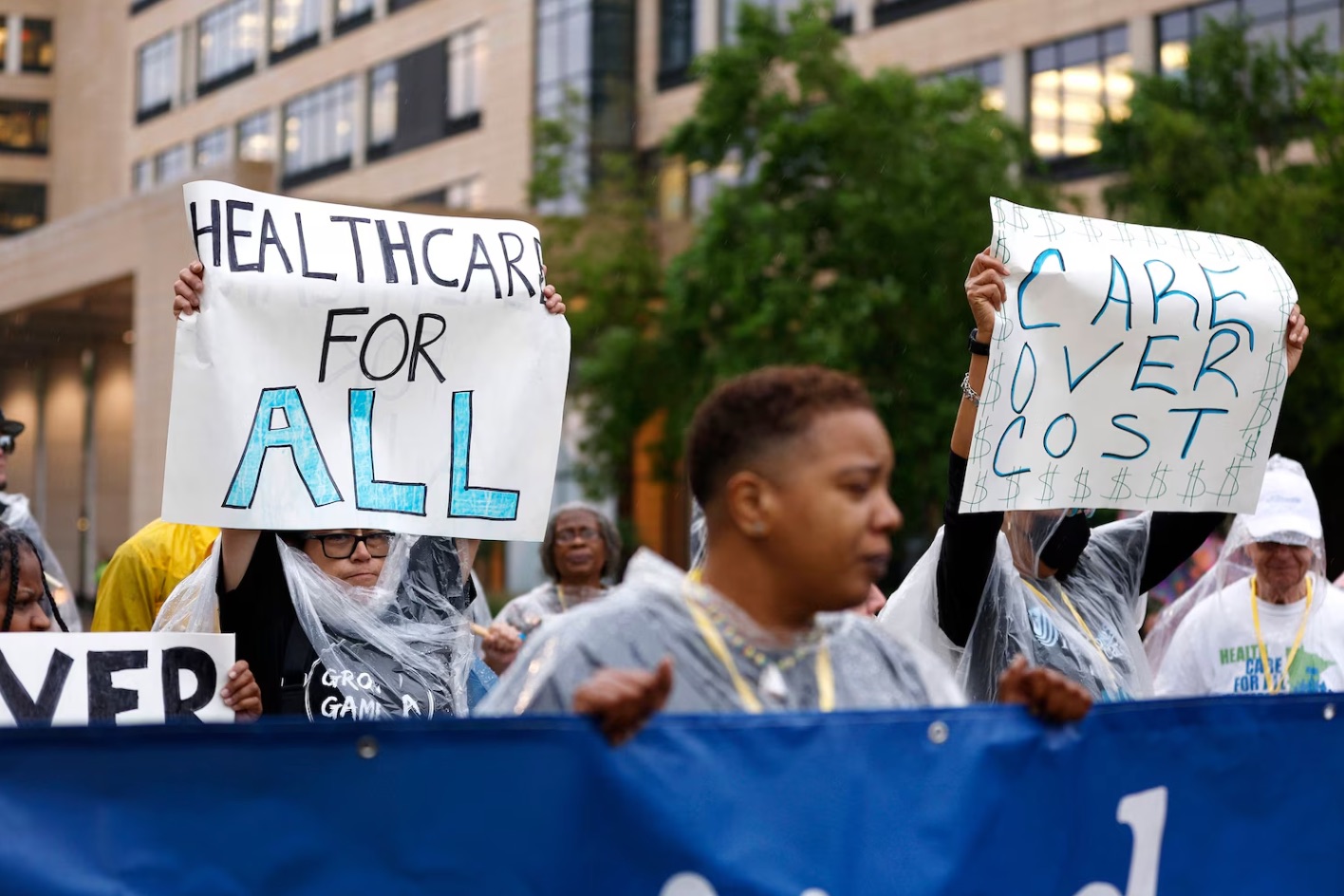
Some supporters have gathered repeatedly outside the courthouse during Mangione’s appearances, while authorities have expressed concern about public statements suggesting attempts could be made to communicate with prospective jurors.
The anonymity order is intended to protect the jury-selection process from outside interference while allowing Mangione’s lawyers access to the information necessary to evaluate prospective jurors.

Overflow Courtroom Approved
The hearing also addressed a dispute over how journalists and members of the public will be able to follow what is expected to be one of the most heavily watched criminal trials in the United States this year.
Mangione’s lawyers had complained that proposed limits on courtroom access could prevent significant numbers of journalists from observing the proceedings.
They sought broader access, including an overflow courtroom where proceedings could be followed on an internal video feed.
Carro confirmed that an overflow room would be provided.
“There has never been a discussion or decision by this court to exclude or limit the public or press,” the judge said.
“Quite the opposite is true.”
Carro also rejected suggestions from the defence that Manhattan prosecutors had influenced decisions about which journalists would be admitted.
“At no time did the District Attorney’s Office play any role,” he said.

Defence Had Sought Wider Broadcast Access
Mangione’s lawyers have pushed for an unusually open trial, including a request for proceedings to be livestreamed.
New York generally restricts cameras from broadcasting criminal trials, making a public livestream difficult under existing rules.
The defence has argued that exceptional public interest in the case justifies broader access and that the public should be able to observe proceedings without competing for the limited seats inside the main courtroom.
An internal overflow feed represents a more limited accommodation.
Similar arrangements have been used during other major Manhattan proceedings, including the criminal trial of Donald Trump.
The overflow courtroom will allow additional accredited journalists and members of the public to follow proceedings without changing New York’s broader restrictions on televised criminal trials.
Murder Charge Remains After Terrorism Counts Dismissed
Mangione is accused of shooting Thompson outside the New York Hilton Midtown as the executive arrived for an investor conference.
He was arrested five days later at a McDonald’s restaurant in Altoona, Pennsylvania.
Manhattan prosecutors subsequently charged him with murder, firearms offences and forgery.
Carro previously dismissed terrorism-related counts against Mangione, finding that prosecutors had not presented sufficient evidence to support those charges.
The second-degree murder prosecution remains.
Mangione has denied the charges and is presumed innocent unless convicted.
Prosecutors say their evidence includes surveillance footage, forensic material and a firearm recovered following Mangione’s arrest that they allege is connected to the shooting.
They also intend to introduce writings attributed to Mangione that they say are relevant to establishing motive.
Judge Allows Contested Evidence
Mangione’s lawyers spent months attempting to prevent prosecutors from introducing some of the most important physical evidence in the case.
They challenged the search of the backpack found with Mangione when he was arrested in Pennsylvania, arguing that officers had conducted an unlawful warrantless search.
The defence sought to suppress the firearm and notebook recovered from the bag.
Carro rejected key parts of that challenge and ruled that prosecutors could use the disputed evidence at trial.
The defence is expected to continue contesting how individual pieces of evidence are presented and interpreted before the jury.

Psychiatric Strategy Withdrawn — for Now
Mangione’s legal strategy has also shifted during the run-up to trial.
His lawyers previously notified the court that they were considering presenting evidence that he was suffering from an “extreme emotional disturbance” at the time of Thompson’s killing.
Under New York law, successfully establishing such a defence can reduce criminal responsibility for murder and permit a conviction for manslaughter instead.
The defence later withdrew its formal notice that psychiatric evidence would be presented.
The withdrawal does not constitute an admission about what happened, and Mangione continues to plead not guilty.
His lawyers have not publicly disclosed the complete defence they intend to put before the jury when the trial begins.

Separate Federal Case Remains
Mangione also faces a separate federal prosecution arising from Thompson’s killing.
A federal judge previously dismissed murder and firearms counts that could have exposed him to the death penalty, leaving stalking charges that still carry the possibility of a life sentence.
That trial has been postponed until January 2027 to avoid clashing with the state proceedings.
Mangione has pleaded not guilty in the federal case as well.
An additional federal court conference has now been scheduled for Friday, meaning Tuesday’s appearance will not, as some earlier reports suggested, be his final courtroom appearance of any kind before the state trial.
The purpose of the newly scheduled conference has not been fully disclosed publicly.

September Trial Approaches
The attention surrounding Mangione has extended well beyond the evidence prosecutors intend to present.
His case has drawn vocal supporters, critics of the American health insurance industry, social-media communities and large numbers of journalists to virtually every court appearance.
Carro’s anonymous-jury order shows that managing that attention has itself become part of preparing the case for trial.
When hundreds of prospective jurors begin arriving in September, the court will have to identify people capable of deciding the case solely on evidence presented inside the courtroom despite more than a year of extraordinary publicity.
Mangione will then face the jury on the remaining New York charges as prosecutors attempt to prove that he was responsible for Thompson’s killing and his lawyers challenge the case against him.