
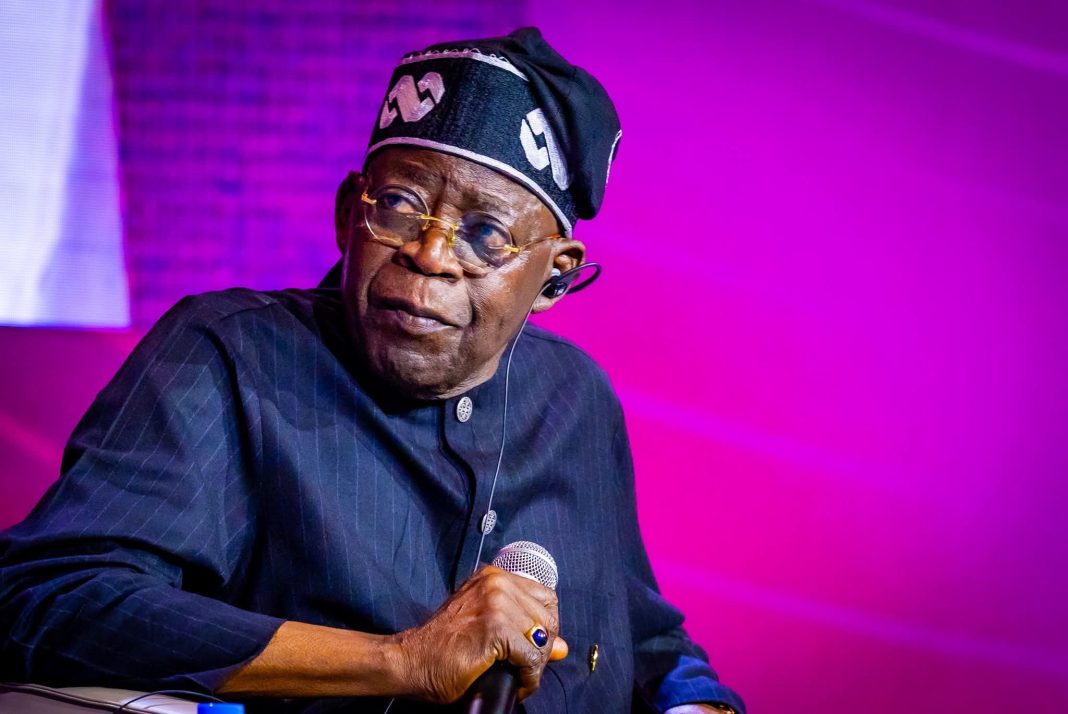

ABUJA, Nigeria — Northern organisations are over President Bola Tinubu’s assertion that the region would benefit most from his economic reforms.
The disagreement coincided with a dispute between the governing All Progressives Congress and the African Democratic Congress over restoring Nigeria’s fuel subsidy before the 2027 election.
The African Democratic Congress has made the return of the subsidy a central part of its proposed response to Nigeria’s cost-of-living crisis.
Bolaji Abdullahi, the party’s national publicity secretary, said restoring the subsidy was “not negotiable”.
He acknowledged that the position could complicate efforts to assemble an opposition coalition if prospective partners disagreed over the policy.
The pledge has placed the ADC and former Vice-President Atiku Abubakar at odds with the governing party.
Isa Yuguda, chairman of the Board of Trustees of the APC Professionals Forum and a former governor of Bauchi State, said the previous subsidy system consumed public funds that could have supported education, healthcare, agriculture, security, and infrastructure.
Yuguda said removing the subsidy required a difficult political decision that earlier governments had avoided.
He claimed that the measure had saved the country more than ₦15 trillion and warned that restoring the policy without correcting weaknesses in the former system would renew pressure on public finances.
Tinubu Cites Investment and Trade
Tinubu defended the subsidy removal and his administration’s other economic measures through Prof Nentawe Yilwatda, the APC national chairman, at a policy round-table organised by the APC Professionals Forum in Abuja held on Abuja on Tuesday, September 1, 2026.
The president said the changes were required to address economic distortions, lost revenue and insufficient investment.
He pointed to increased foreign reserves, higher non-oil revenue, improved trade figures, economic growth and declining inflation as evidence of progress.
Tinubu also predicted that northern Nigeria would gain more than other regions from the administration’s programme.
“The biggest beneficiaries of this economy will be the Northern part of Nigeria,” he said.
The president cited planned investments in roads, railways, gas and maritime infrastructure. He said the projects would support commerce between northern Nigeria and Niger, Chad, Burkina Faso, South Sudan, Cameroon and the Central African Republic.
He added that “the North is the next business destination of Nigeria.”
Regional Forums Challenge the Claim
The Arewa Consultative Forum rejected the president’s assessment.
Prof Tukur Muhammad Baba, the forum’s spokesman, described Tinubu’s statement as “surreal,” “cynical” and “in sour taste”.
He said the assertion was inconsistent with conditions facing residents of the region, including poverty, insecurity, declining agricultural activity, inadequate infrastructure and the large number of children outside school.
“Perhaps he’s mistaking Lagos for the North,” Baba said.
Baba also criticised the Federal Government’s handling of insecurity and agricultural decline.
He raised questions about the regional distribution of federal appointments, infrastructure expenditure and government resources, and said the North’s poverty figures contradicted the president’s description of the region as the leading beneficiary.
The Middle Belt Forum also disputed Tinubu’s position.
Dr Bitrus Pogu, the forum’s president, said the removal of the fuel subsidy and the government’s CNG initiatives were national measures whose effects extended across Nigeria.
“For him to say that Northern Nigeria is the greatest beneficiary is a funny assertion. Politics should go along with some sincerity,” Pogu said.
He also questioned whether removing the subsidy had improved living conditions, saying the measure had not provided the relief promised by the government.
Christian Leaders Point to Federal Projects
The Northern Christian Association offered a different assessment.
The organisation’s chairman, Rev John Hayab, said northern Nigeria had received substantial federal investments under Tinubu.
He cited work on the Akwanga-Maiduguri, Jos-Jalingo and Kaduna-Birnin Gwari-Mokwa-Lagos road corridors.
Hayab also compared Tinubu’s performance with the eight-year administration of former President Muhammadu Buhari.
“Buhari didn’t perform and they are doing better than his. So, why don’t you acknowledge it?” Hayab said.
He pointed to northern representation in the administration, including the APC chairmanship and important ministerial appointments.
Hayab nevertheless acknowledged that insecurity, hunger and poverty remained serious problems. He said recognising federal projects should not prevent northern residents from pressing the government to take further action.