
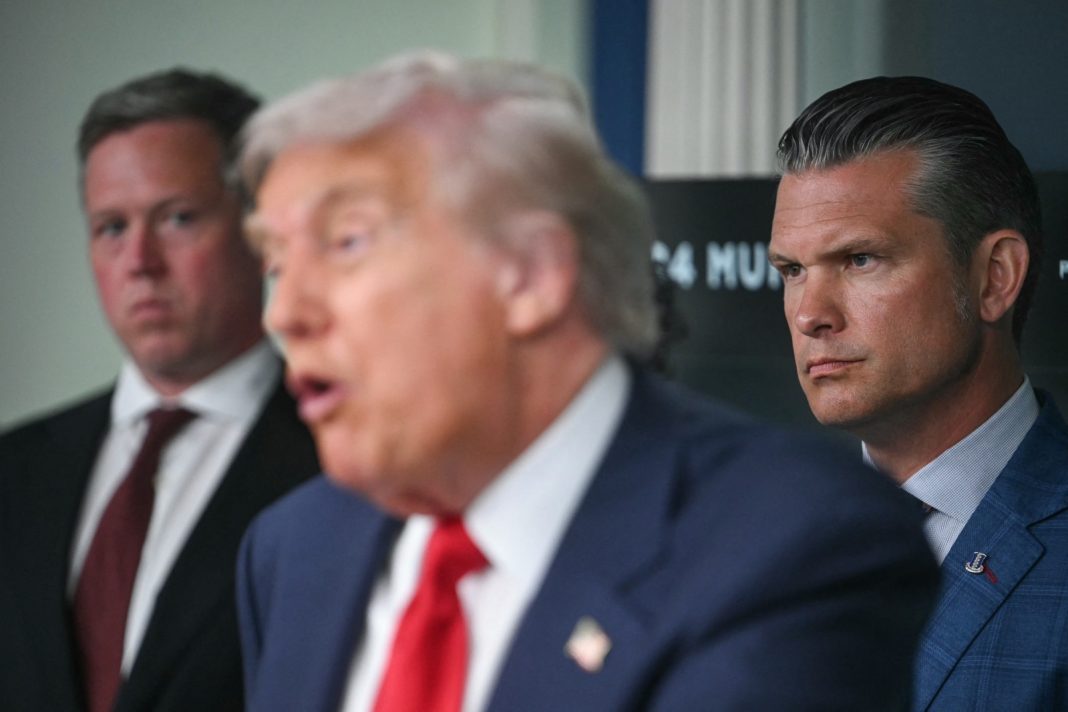

WASHINGTON, United States — President Donald Trump has ordered the US Army to execute a former military psychiatrist by firing squad, reviving a method of military capital punishment last used in 1945 and advancing his administration’s effort to expand the use of the death penalty.
Nidal Malik Hasan, who was convicted of killing 13 people and wounding 32 others during a shooting at Fort Hood, Texas, in 2009, is scheduled to be executed on December 3 at the same military installation.
The decision follows the Trump administration’s expansion of federal execution methods beyond lethal injection and a broader policy intended to accelerate the carrying out of death sentences.
Defence Secretary Pete Hegseth has also proposed making Hasan’s execution available through a public livestream, arguing that it would demonstrate the consequences of serious crimes.
The proposal has prompted criticism from religious leaders, human rights organisations, and Republican and Democratic lawmakers.
Trump, however, has indicated that he is reconsidering the livestream, although he continues to support carrying out Hasan’s death sentence.

Why the Administration Is Reviving the Firing Squad
Trump’s decision follows a series of measures introduced since he returned to the White House to strengthen the federal death penalty.
On April 24, 2026, the Justice Department announced changes intended to accelerate capital punishment and provide alternatives to lethal injection.
The department directed the Federal Bureau of Prisons to expand its execution protocols to include firing squads and other methods.
It said the measures were intended to ensure that lawful death sentences could be carried out following the conclusion of appeals, provide justice for victims, and deter serious crimes.
The department also reinstated the lethal injection protocol used during Trump’s first administration.
The changes followed longstanding difficulties associated with lethal injections, including restrictions on access to execution drugs and concerns about complications during procedures.
Several pharmaceutical manufacturers have restricted the supply of their products for use in executions, complicating efforts by American authorities to obtain the drugs.
Some states have consequently introduced or restored alternative methods of execution.
Firing squads are permitted in five US states, including Utah, South Carolina, Idaho, Oklahoma, and Mississippi.
South Carolina resumed executions by firing squad in 2025 after a 15-year absence of the method in the United States.
The federal government’s expansion of permissible execution methods preceded the announcement concerning Hasan.
However, the military justice system operates separately from the civilian federal prison system, and the administration has not publicly provided a detailed explanation of why a firing squad was selected specifically for Hasan instead of lethal injection.
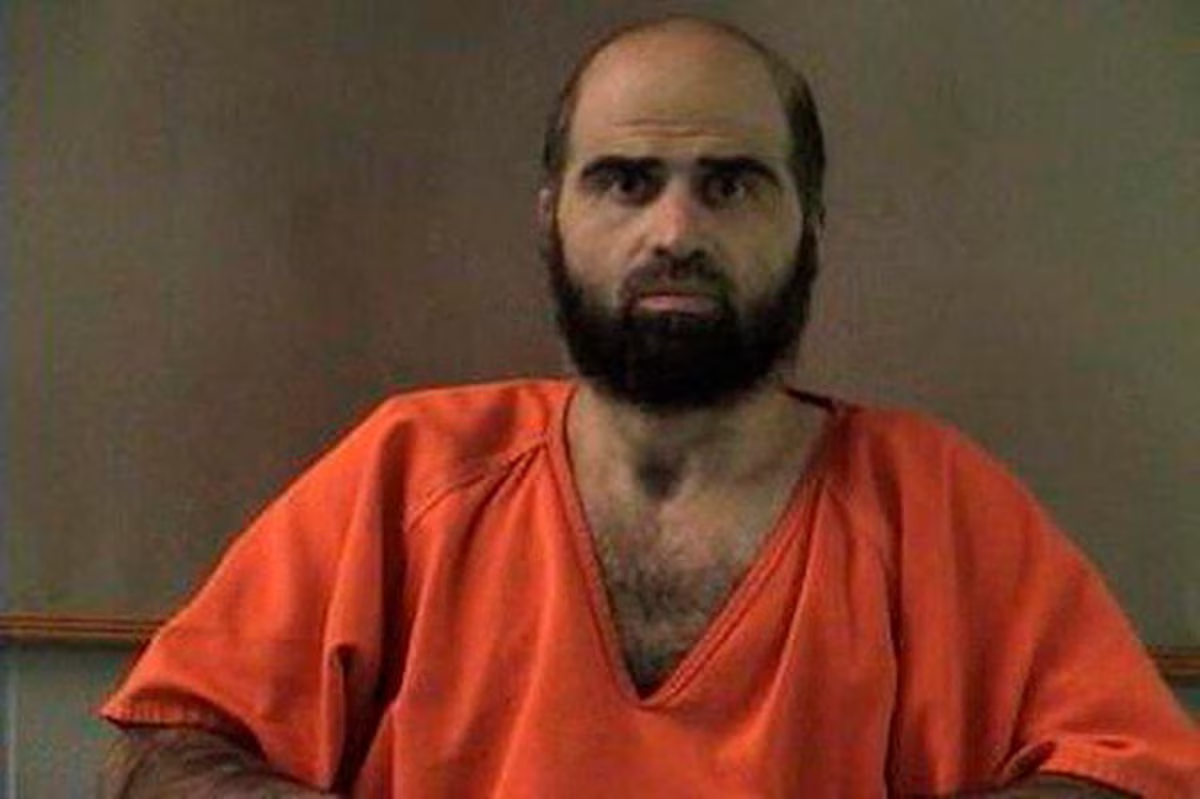
Nidal Hasan, charged with killing 13 people and wounding 31 in a November 2009 shooting spree at Fort Hood, is pictured in an undated handout photo obtained by Reuters on June 29, 2012. | REUTERS/Bell County Sheriff’s Office/Handout./File Photo
Army Had Prepared to Use Lethal Injection
Documents examined by ABC News revealed that Army officials had spent months preparing for a possible military execution using lethal injection.
The preparations, undertaken as part of an operation called Resolute Justice, envisaged carrying out an execution at the federal prison complex in Terre Haute, Indiana.
The Army had previously designated lethal injection as its preferred execution method, although regulations were amended in 2023 to give the Army secretary broader discretion.
Trump’s decision to require a firing squad meant that the Army would have to develop procedures for a method it had not employed for more than eight decades.
The last recorded US military execution by firing squad took place on November 9, 1945, following the Second World War.
The military’s last execution by any method occurred in April 1961, when Army Private John Bennett was hanged after being convicted of rape and attempted murder.
In Hasan’s case, the military must determine how the execution squad will be assembled and what procedures its members will follow.
Army regulations do not contain detailed modern instructions specifically governing firing-squad executions.
The Pentagon has not publicly explained how those procedures will be developed or which personnel will participate.
Hegseth Says Victims Deserve Justice
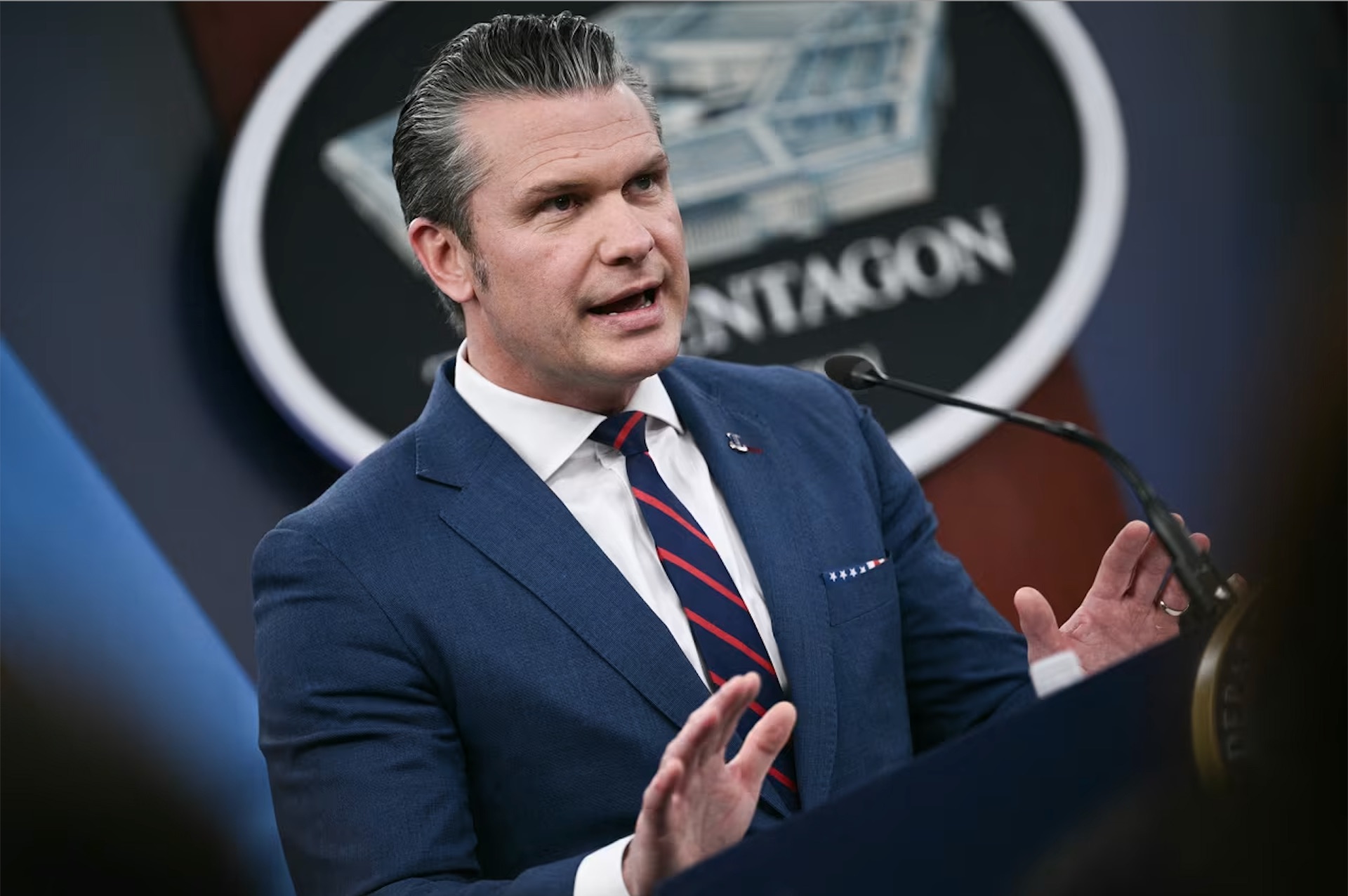
Hegseth has repeatedly advocated carrying out Hasan’s death sentence.
In September 2025, he told The Hill that he was committed to ensuring the execution took place, arguing that the victims and survivors had waited long enough for justice.
Following Trump’s approval, Hegseth announced that the execution would take place at Fort Hood at 1 p.m., approximately the same time of day as the original attack.
The defence secretary said he wanted the public to witness the punishment.
“Because people need to understand that there’s serious consequences for these types of things,” Hegseth said during an interview with Real America’s Voice.
A Pentagon official subsequently confirmed that the execution would be livestreamed, although the department has not identified a broadcasting platform or released details about public access.
The proposed broadcast would be unprecedented in the modern American military justice system.
The last widely recognised public execution in the United States took place in Kentucky in 1936, decades before executions became restricted to designated facilities and authorised witnesses.

Robert Daemmrich Photography Inc/Corbis via Getty Images
Trump Reconsiders Public Broadcast
The proposal to livestream Hasan’s execution has encountered opposition within Trump’s administration as well as from lawmakers.
Vice-President JD Vance questioned whether the Pentagon’s plan would ultimately proceed and said he would not watch the broadcast.
Trump initially expressed approval of the proposed livestream but subsequently acknowledged that competing arguments had been presented to him.
Speaking to reporters on Saturday, he said he would make the final decision.
The president suggested that publicising the execution might discourage others from committing similar crimes.
However, according to an Axios report published on October 12, Trump has privately expressed reservations after receiving criticism from advisers and lawmakers in both political parties.
The report cited four people who had spoken with the president about the matter.
The administration has not announced a final decision on whether the broadcast will proceed.
Religious Leaders Condemn Execution Plans
The proposed execution and livestream have also drawn criticism from Catholic leaders.
Archbishop Timothy Broglio, who oversees pastoral services for Catholics serving in the American military, called on Catholic soldiers assigned to the execution squad to seek exemption from the duty.
In a statement reported by the Associated Press, Broglio said participation would conflict with Catholic teaching against capital punishment.
He also questioned whether broadcasting the execution of a prisoner who uses a wheelchair would serve any legitimate purpose.
Hasan was paralysed from the waist down after being shot by officers responding to the 2009 attack.
Broglio, who conducted the funeral of one of the victims, civilian physician assistant Michael Grant Cahill, acknowledged the gravity of Hasan’s crimes while opposing the proposed broadcast.
Amnesty International and other human rights organisations have also condemned the plan, arguing that displaying an execution publicly would compound the cruelty of capital punishment.
Some legal scholars have questioned the government’s decision to make an execution available for general viewing.
Others have argued that public access could increase transparency by showing how the death penalty is carried out.
Execution Could Still Face Legal Challenge
Hasan was convicted in August 2013 by a military court after representing himself during much of his trial.
He acknowledged carrying out the shooting, which took place at a processing centre where soldiers were receiving medical examinations before deployment.
He described the attack as an attempt to prevent American troops from participating in military operations against Muslims overseas.
The Supreme Court declined to review his military conviction in March 2025.
Trump approved the death sentence on October 2, and Acting Army Secretary Adam Telle subsequently set the execution date.
Under Army regulations, an execution must be scheduled between 60 and 150 days after presidential approval.
The Army’s official announcement placed Hasan’s execution within that required period.
Legal specialists say he may still seek relief through a habeas corpus petition in civilian federal court.
Such proceedings could delay the execution if a court agreed to review unresolved legal questions.
Hasan’s former lawyer, John Galligan, has also questioned whether the Army followed proper notification procedures when informing the prisoner of the execution arrangements.
No court has yet ordered a suspension of the scheduled execution.
The decision to restore the firing squad for Hasan therefore remains in place, even as Trump weighs whether the government should allow the public to watch it.




