

WASHINGTON, United States — The United States military has prepared plans for possible new attacks on Iran using its largest non-nuclear bomb.
The plans include strikes against Iranian nuclear facilities and energy infrastructure, according to American officials familiar with the discussions.
President Donald Trump would have to authorise the operations, which could take place before or after the November midterm elections.
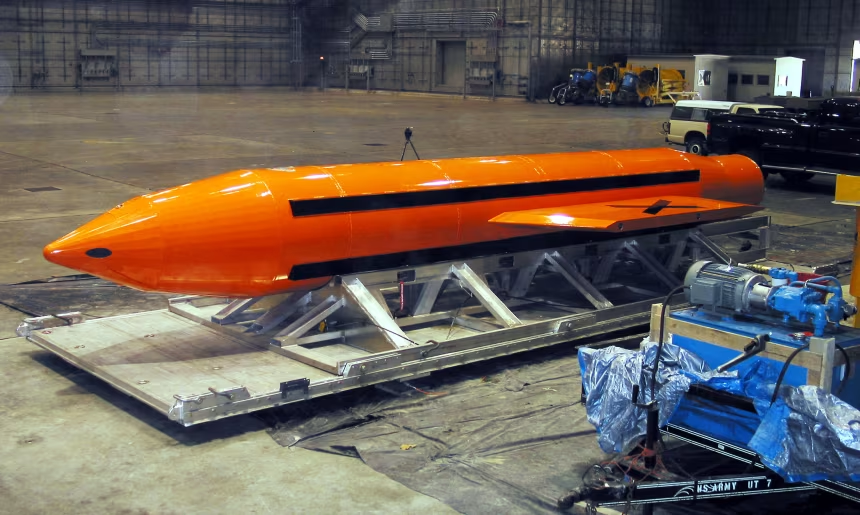
The proposed use of the GBU-43/B Massive Ordnance Air Blast bomb, widely known as the “mother of all bombs”, was disclosed in a CNN investigation published on Thursday, October 15, 2026.
The weapon, weighing approximately 21,600 pounds, has been used in combat only once, during an American attack on Islamic State positions in Afghanistan in 2017.
Its possible deployment against Iran comes as the Trump administration considers additional military action following more than six months of conflict.
No decision to launch the proposed strikes has been announced.
Iran’s Nuclear and Energy Facilities Among Potential Targets
American military planners have developed several options for renewed attacks against Iran, including operations targeting oil and other energy facilities.
One US official familiar with the discussions told CNN that Trump had ordered additional strike plans covering a substantial number of Iranian energy installations.
The options also included deploying the GBU-43/B bomb.
A second source said plans for attacking Iran’s remaining nuclear facilities specifically identified the weapon as a potential option.
Among the possible targets is Pickaxe Mountain, a heavily fortified underground site where American and Israeli officials believe Iran may be storing components of its nuclear programme.
Trump has repeatedly threatened to attack the facility, even after suspending full-scale combat operations earlier this year.
The president has maintained that preventing Iran from acquiring nuclear weapons remains a central objective of American military policy.
The proposed operations are among several alternatives being examined by the Pentagon.
One planning option involves carrying out further strikes before withdrawing American military personnel from the US Central Command’s area of responsibility, according to the CNN investigation.
Such an operation would allow the administration to combine additional military action with a possible reduction in its regional deployment.
However, officials involved in the discussions have questioned whether the proposed attacks would achieve Washington’s objectives.
Powerful Bomb May Not Reach Underground Nuclear Sites
Although the GBU-43/B is among the most destructive conventional weapons available to the United States, military specialists have questioned its effectiveness against deeply buried facilities.
The GPS-guided bomb is designed primarily to produce an enormous explosion over a wide area.
Its blast can devastate an area estimated to cover as much as nine city blocks, according to officials familiar with its capabilities.
However, the weapon is not specifically designed to penetrate thick layers of rock and reinforced underground structures.
Pickaxe Mountain is believed to be protected by substantial layers of granite, potentially placing its underground installations beyond the bomb’s effective reach.
One official familiar with military planning told CNN that the weapon was more suitable for destroying large areas and surface-level targets than penetrating heavily fortified underground bunkers.
Military planners have therefore questioned whether the bomb could destroy sensitive nuclear infrastructure concealed deep beneath the mountain.
Its extensive blast radius has also raised concerns about civilian casualties, particularly if it were deployed against energy facilities near populated areas.
The Pentagon has not publicly identified specific targets for a new operation.
Bomb Previously Used Against ISIS in Afghanistan
The GBU-43/B was developed during the preparations for the American invasion of Iraq in 2003.
Its enormous explosive force was intended partly to intimidate opposing forces and encourage surrender.
Unlike bombs designed to penetrate deeply into the ground before exploding, the weapon detonates above the surface, producing a powerful blast across a broad area.
It was initially developed for use against large concentrations of troops, military equipment, and fortified positions.
Its potential applications were subsequently expanded to include caves and tunnel networks beneath relatively soft ground.
Trump became the first American president to authorise its use in combat in April 2017.
The US military dropped the bomb on an Islamic State tunnel complex in eastern Afghanistan.
Afghan officials reported that 36 ISIS fighters were killed.
American and Afghan officials said three underground tunnels were destroyed, along with weapons and ammunition.
They reported no civilian casualties.
The attack attracted international attention because of the size and destructive capacity of the weapon.
Its possible use against Iran would mark its first deployment in the continuing conflict between Washington and Tehran.
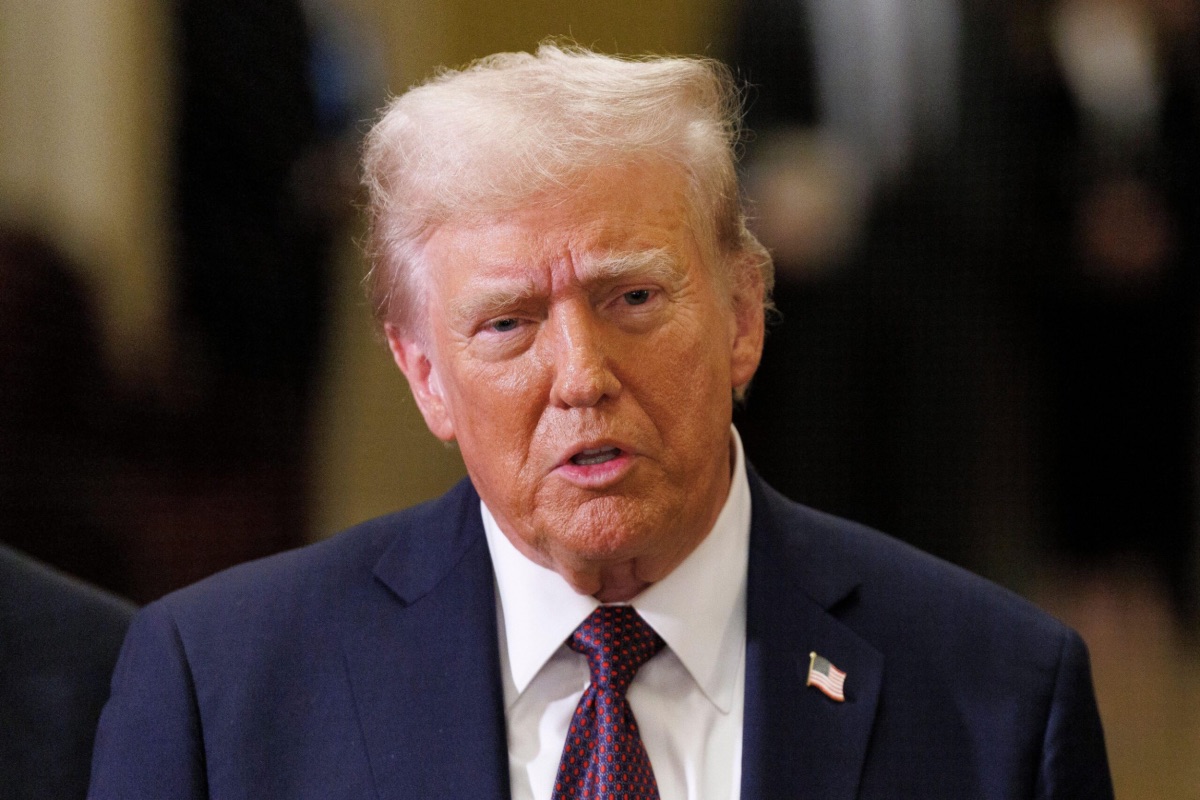
Donald Trump is seen at a public event as pressure mounts over calls for his resignation. | Aaron Schwartz/SIPA UA/Alamy
Trump Weighs Further Strikes Before Midterm Elections
The military planning comes as Trump faces pressure to bring the conflict with Iran to an end.
The president has publicly indicated that he does not intend to order further attacks before the November midterm elections.
However, some White House advisers told CNN that they were uncertain whether the decision would remain unchanged.
Officials have held discussions about possible military measures that could allow Trump to declare progress towards ending the conflict without committing American forces to a prolonged ground operation.
The administration has struggled to secure a negotiated settlement after more than six months of military action.
Trump has stopped short of declaring victory and has indicated that American objectives in Iran remain unfinished.
According to CNN, some officials have questioned whether additional airstrikes would substantially alter the military situation or persuade Tehran to accept Washington’s demands.
Others have considered whether a major display of American military power could influence Iranian decision-making.
Military planners have also discussed options intended to demonstrate American capabilities without resuming the full scale of previous combat operations.
Trump has expressed little interest in deploying ground troops to Iran.
The Pentagon nevertheless maintains plans covering a range of military scenarios, including operations more extensive than the airstrikes currently under consideration.

White House Says All Military Options Remain Available
The White House declined to confirm the reported plans when contacted by CNN.
A White House official said the administration does not discuss sensitive operational proposals, including plans that might never be implemented.
“President Trump keeps all options on the table to ensure that Iran can never have a nuclear weapon,” the official said.
The Pentagon also declined to address the specific proposals.
A defence official said military planners routinely examine a broad range of potential operations to ensure that they can carry out presidential and senior military directives.
The administration’s discussions come amid diplomatic efforts to reopen the Strait of Hormuz, a vital international shipping route that has been affected by the conflict.
American officials have been considering possible agreements that could allow commercial shipping to resume while creating conditions for broader negotiations with Tehran.
According to CNN, senior administration officials have discussed whether further military action could be followed by a withdrawal or reduction of American forces.
Preparations for the next rotation of US troops stationed in the Central Command region are also underway.
One American official told the network that some personnel scheduled to leave the region in the coming weeks might not be replaced.
The military is simultaneously preparing for possible Iranian retaliation if Trump authorises new strikes.
A separate Reuters report said the news agency had not independently verified CNN’s account of the planning.
For now, the proposed use of the massive bomb remains an option under consideration rather than an authorised military operation.




