
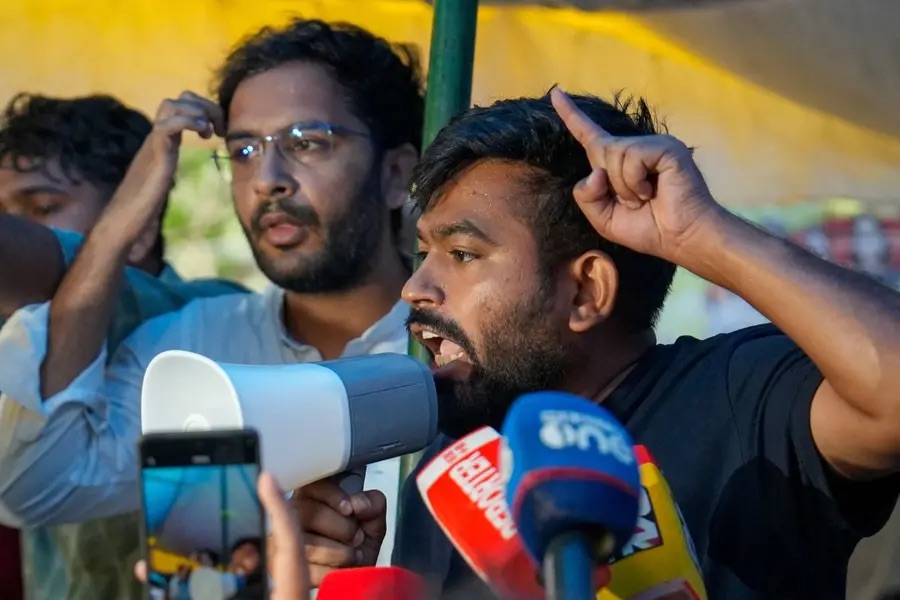

With the growing support for CJP, we are fully aware that attempts will be made to dismantle us and portray us as anti-social elements.
We want to make it absolutely clear that CJP firmly believes in the Constitution of India and will always work towards protecting its values. pic.twitter.com/PsWw8LYQaV
— Cockroach Janta Party (@CJP_2029) May 17, 2026
How the Movement Got Its Name
The name emerged from a remark made in May by Chief Justice of India Surya Kant during an unrelated Supreme Court proceeding.
Kant compared some unemployed youths to cockroaches, provoking anger among young people who believed they were being blamed for an economic and employment crisis they did not create.
Dipke, an Indian student at Boston University, responded by establishing the Cockroach Janta Party on social media. The term Janta means people or public, making the name a satirical variation on the language used by several Indian political organisations.
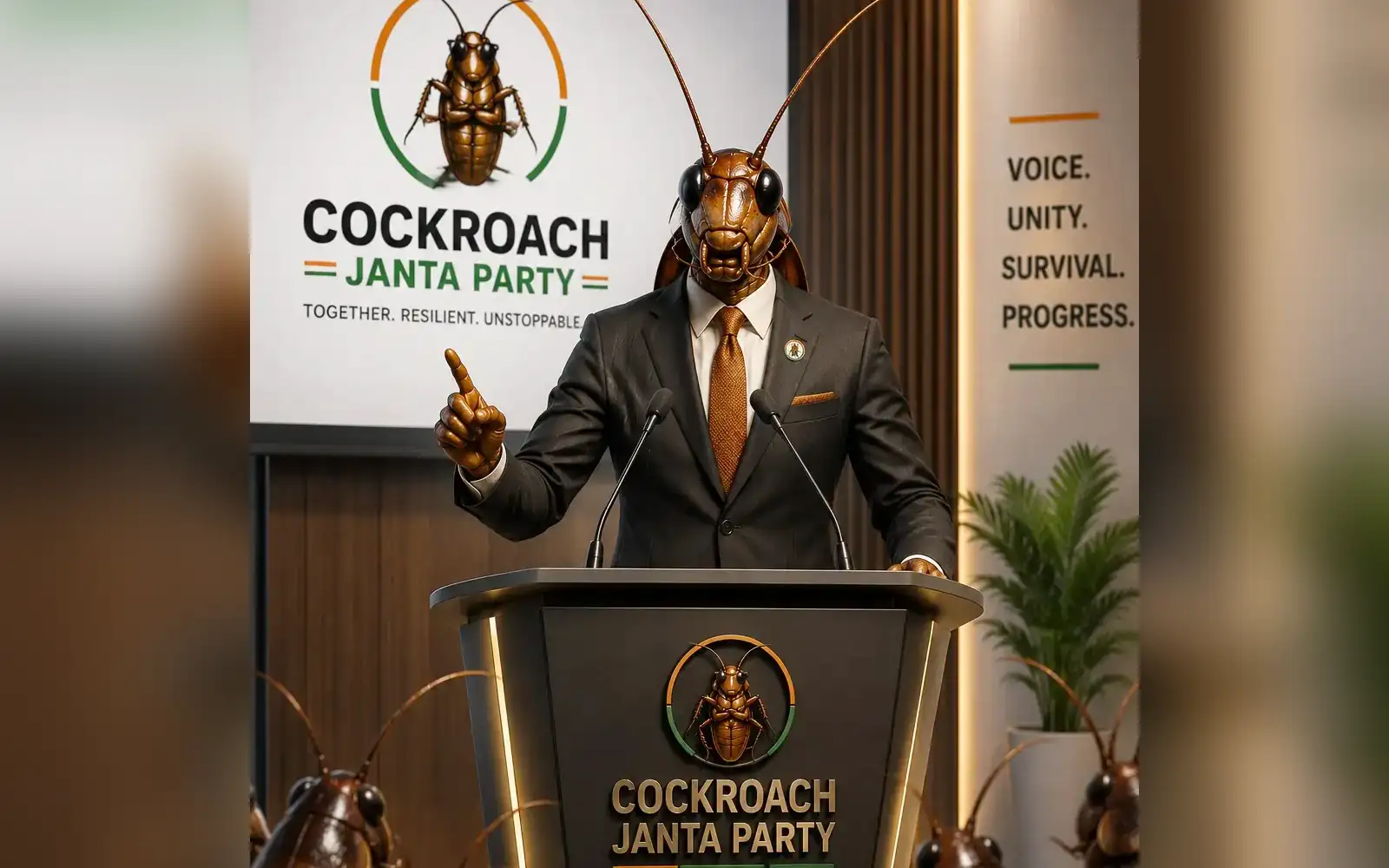
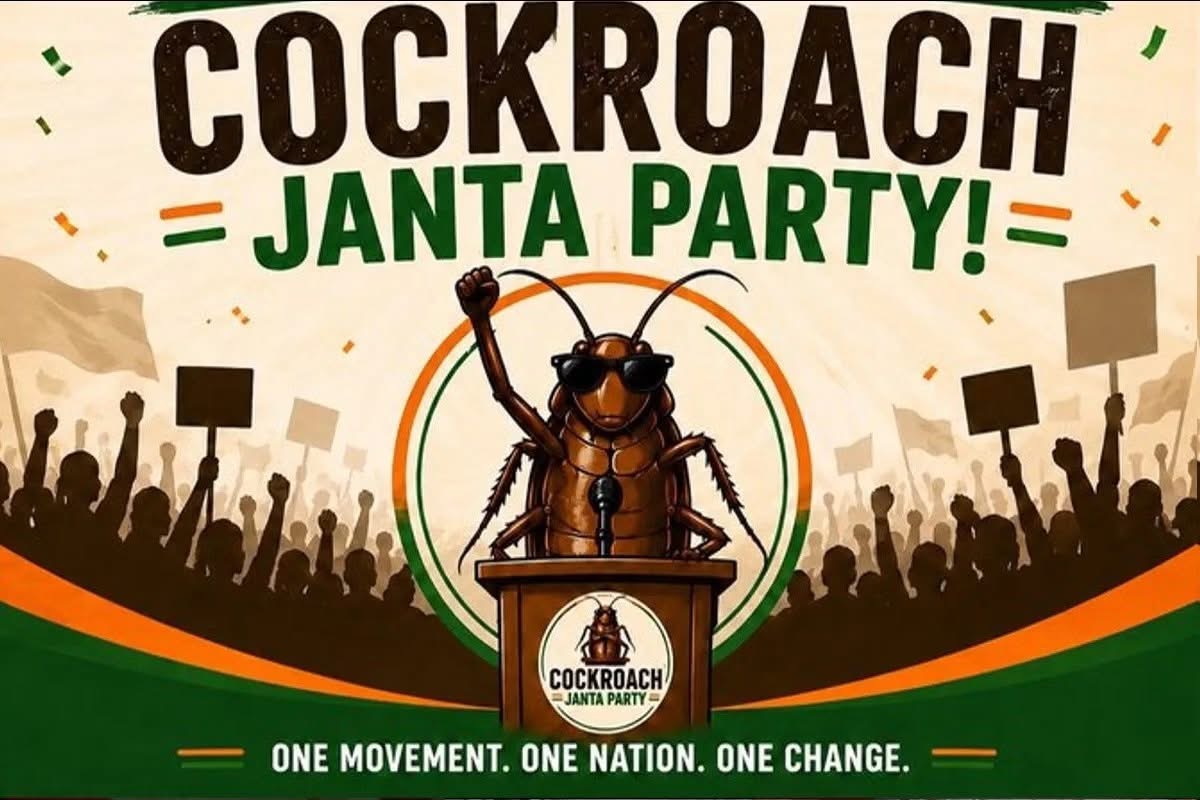
Rather than reject the insult, supporters adopted the cockroach as their emblem. The animal came to represent a generation that felt dismissed but remained difficult to silence or eliminate.
The movement’s online pages used mock manifestos, political parody, artificial-intelligence-generated images, comic videos and deliberately irreverent posts to challenge the government. Its following grew into the millions within days.
An Examination Crisis Turned Satire Into Protest
The CJP might have remained an internet phenomenon without a national examination scandal that affected millions of students.
Allegations that a medical entrance examination paper had been leaked created uncertainty for more than two million candidates. The examination was cancelled or rescheduled, requiring students to repeat a test for which many had spent months or years preparing.
Competitive examinations are especially important in India because they determine access to medical schools, universities and government employment. For many families, education is regarded as the most dependable route to economic security and social advancement.
The scandal therefore became larger than a dispute over one examination. It came to represent a system in which students said effort and academic merit could be defeated by corruption, administrative failures and the sale of examination papers.
The CJP demanded Pradhan’s resignation, a transparent inquiry, reforms to protect examinations and compensation for families of students reported to have died by suicide following previous leaks and cancellations.
Dipke Brought the Campaign Onto the Streets
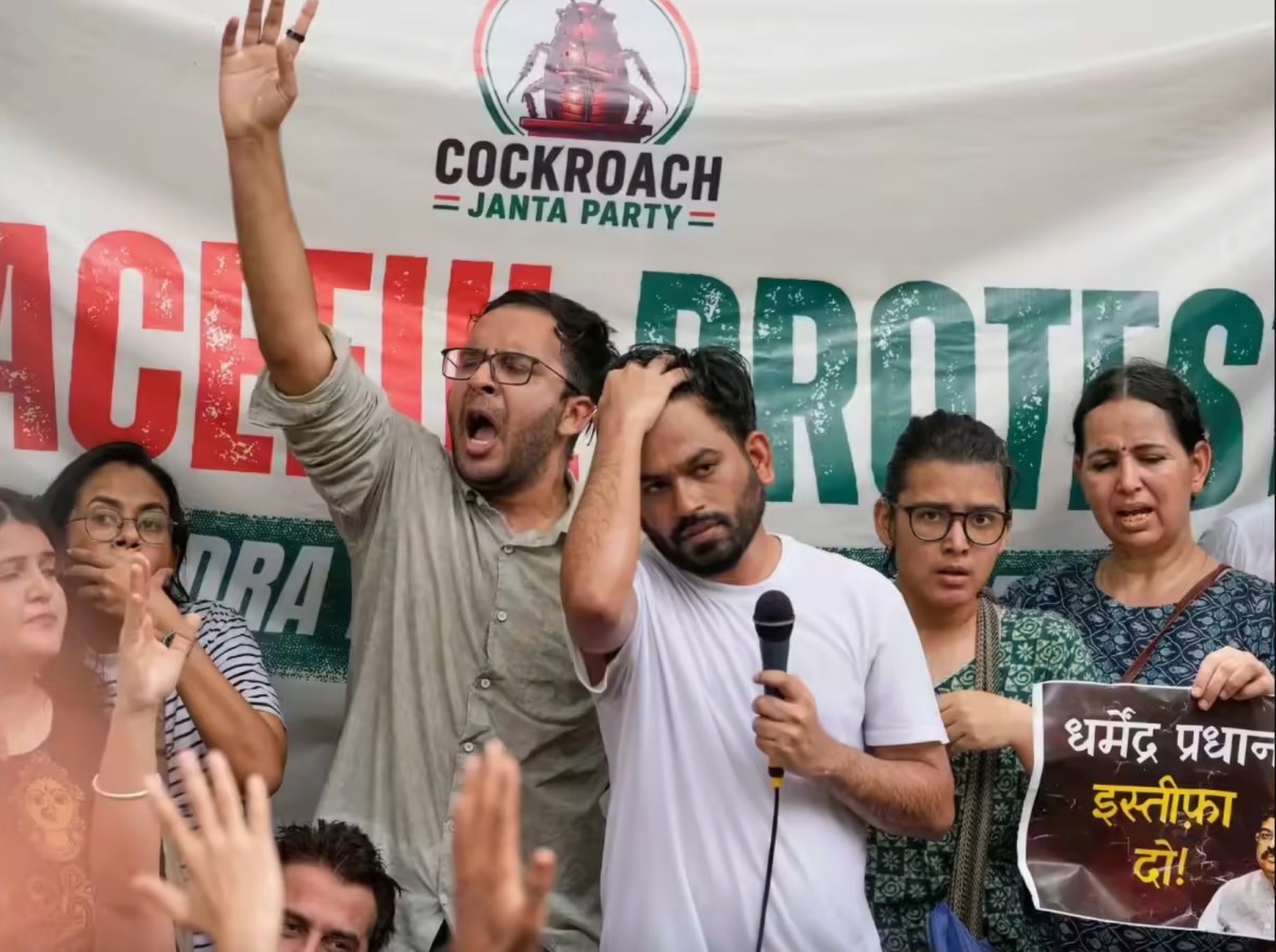
Dipke returned to India from the United States in June and began organising physical demonstrations.
The movement held an early rally at Jantar Mantar, a designated protest site near Parliament in New Delhi. What began with hundreds of participants gradually attracted thousands of students, graduates, families and working professionals.
The CJP did not rely on the conventional structure of an established political party. Supporters arranged their own transportation, raised money independently and used social media to publicise gatherings.
People who could not attend sent food to the protest camps through delivery services, while volunteers distributed supplies among demonstrators. The absence of a traditional hierarchy allowed the movement to present itself as a campaign belonging to ordinary young Indians rather than to the established opposition.
Its first major demand remained deliberately narrow: Pradhan had to leave office. Organisers argued that without personal accountability, promises of reform would have little meaning.
A Hunger Strike Expanded the Movement
The campaign gained further national attention when engineer and environmental activist Sonam Wangchuk joined the demonstrations and began a hunger strike.
Wangchuk continued for 26 days, becoming a rallying point for protesters beyond the CJP’s young social-media audience. His removal to hospital by police, officially because of concerns about his health, generated further criticism of the authorities.
The authorities’ treatment of demonstrators became a turning point.
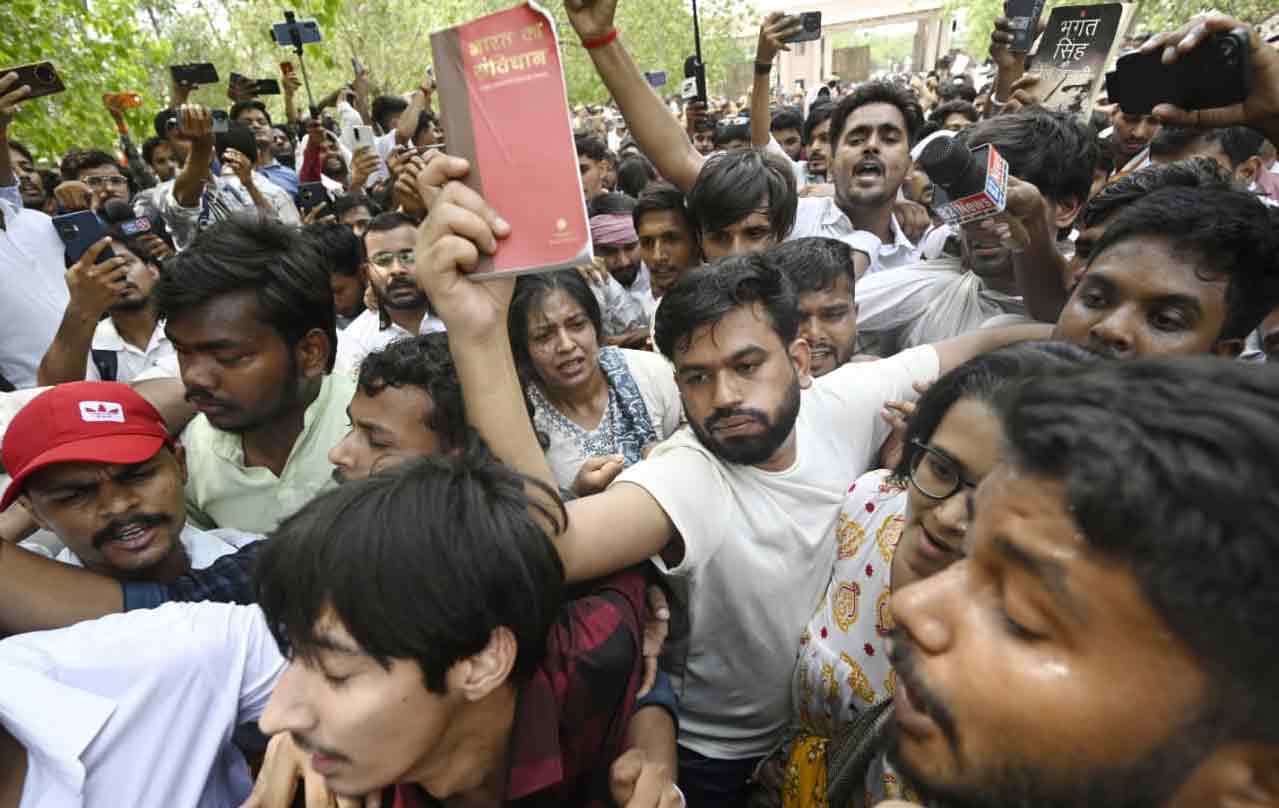
Police used tear gas and batons when protesters attempted to move beyond barricades during a march towards Parliament. Images and recordings of the confrontations spread rapidly online, bringing more people into the campaign rather than dispersing it.
The government restricted access to parts of central New Delhi, closed Metro stations and deployed officers around Jantar Mantar. Protesters nevertheless returned to the site and continued calling for the minister’s resignation.
The Movement’s Humour Became a Political Weapon
The CJP retained its comic identity even as the demonstrations became more serious.
Its supporters responded to official statements with memes, caricatures and videos that portrayed the government as detached from the experiences of students. When Prime Minister Narendra Modi announced new measures but did not remove Pradhan, Dipke posted an image of the minister carrying the caption, “Hi, my name is Nothing.”
The humour made the campaign accessible to people who had not previously participated in politics. It also reduced the effectiveness of attempts to portray the protesters as threatening or subversive.
Instead of communicating through lengthy ideological speeches, the movement used short videos and jokes designed to spread quickly across Instagram and other platforms. The approach allowed its supporters to bypass television channels and newspapers they regarded as too sympathetic to the government.
How the Government Responded
The Modi administration initially resisted calls for Pradhan to step down.
Pradhan said the examination problem had been addressed by ordering fresh tests and accused some participants in the campaign of working against the national interest. The government later offered talks and promised special courts to accelerate cases involving leaked papers.
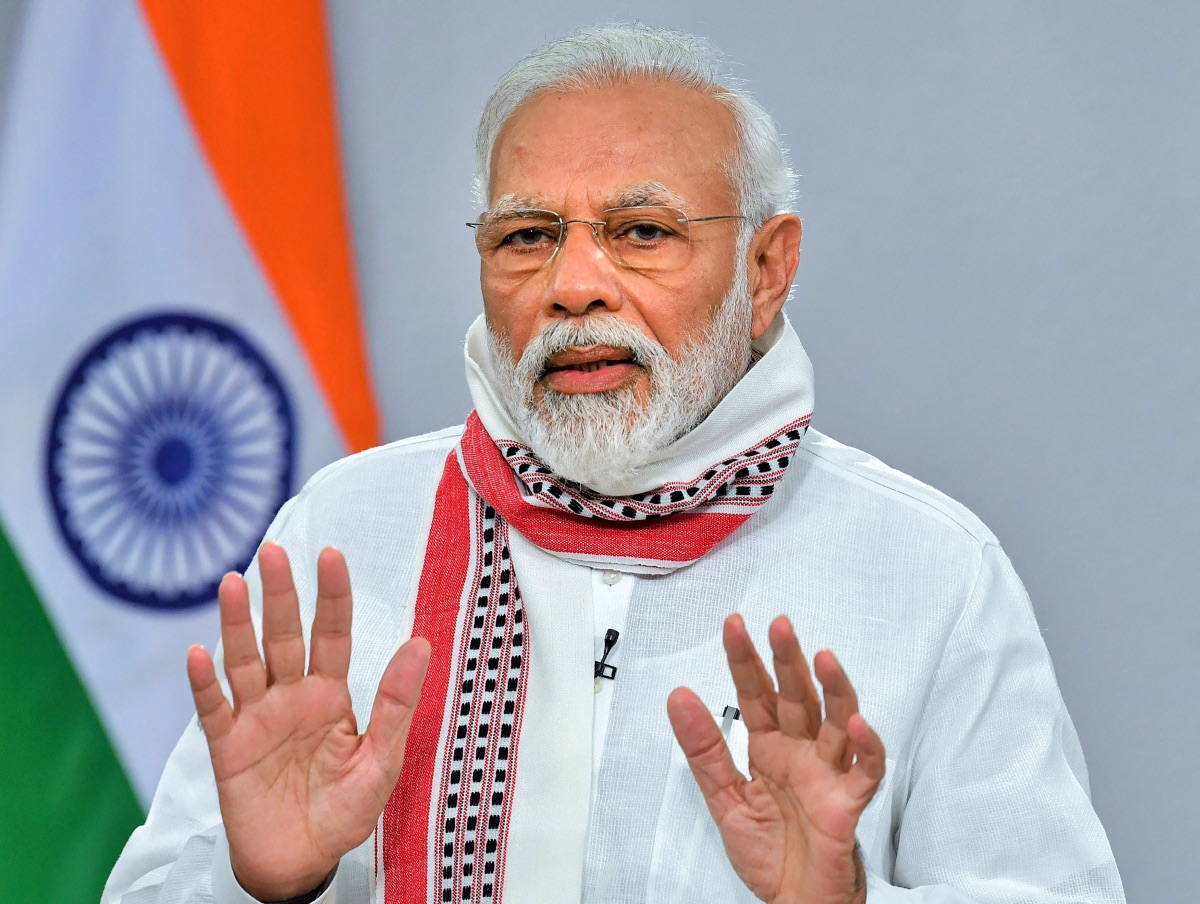
Modi eventually addressed the controversy publicly, writing that “Nothing is more important than the welfare and future of our youth!”
The statement did not immediately satisfy protesters, who maintained that investigations and future safeguards could not replace political responsibility for failures that had already occurred.
Opposition politicians, including Rahul Gandhi, supported the demonstrations. Organisers nevertheless sought to maintain their independence and avoided allowing existing parties to assume control of the campaign.
Pradhan’s Resignation Delivered a Rare Victory
Pradhan resigned on July 25 after weeks of pressure and several days of large demonstrations.
He said he respected the expectations of young Indians and was accepting responsibility amid the national controversy. The resignation represented an unusual concession from a government that had resisted the campaign’s central demand.
Dipke told supporters, “We have done it,” but described the development as “just the beginning.”
The CJP suspended its major demonstrations after the resignation and discussions with government officials. Supporters celebrated at Jantar Mantar and in other cities, presenting the outcome as proof that a loosely organised youth movement could compel a powerful administration to change course.
Pralhad Joshi was named as the new education minister. Protest participants have said they will judge the government by whether it carries out lasting reforms rather than by the change of personnel alone.
What Reforms Have Been Promised?
The government has proposed stronger punishments under India’s Public Examinations Act.
The proposed changes would increase minimum prison sentences for examination fraud, substantially raise maximum fines and extend the length of bans imposed on companies found responsible for malpractice.
Modi also announced a panel led by technology executive Nandan Nilekani to examine how digital systems could improve the security and credibility of national examinations.
The government has said recommendations will be implemented quickly, but the movement’s supporters argue that previous scandals demonstrate the need for independent scrutiny and measurable results.
The CJP’s broader concerns also include the scarcity of suitable employment. Recent research cited by ABC found particularly high joblessness among younger Indian graduates, reinforcing the belief that educational qualifications no longer guarantee economic opportunity.
Why the Protests Could Return
Although large-scale demonstrations have been suspended, the dispute has not been completely settled.
The CJP accused authorities of detaining or filing cases against protesters in Delhi, Assam, West Bengal and Bihar after government representatives had reportedly promised that participants would not be punished.
The movement said at least 100 people had been arrested and warned that it would resume protests unless detainees were released and cases withdrawn. Those figures were attributed to the CJP and had not been independently confirmed in the reporting reviewed by The Trent.
The tension has left the campaign in an uncertain position. Its most visible demand has been achieved, but disputes over arrests, compensation and examination reform could return supporters to the streets.
Is the CJP a Political Party?
Despite its name, the CJP developed as a satirical civic movement rather than through the conventional machinery of electoral politics.
It has attracted supporters across regions, religions and social groups and has not announced candidates for public office. Its organisers have instead concentrated on protests, digital campaigns and demands directed at government institutions.
Dipke has warned supporters against building a personality cult around him. After Pradhan’s resignation, he cautioned the crowd not to turn one leader into a national hero, arguing that the movement’s achievements belonged to its participants.
Whether the organisation will remain an activist network, become a permanent pressure group or enter electoral politics has not been settled.
What the Movement Means for India
The Cockroach campaign’s immediate significance lies in its ability to turn a dismissive label into a national organising tool.
It drew politically inexperienced young people into demonstrations, forced examination failures into parliamentary debate and secured a ministerial resignation. It also showed how quickly online satire can become an organised street movement when it connects with widespread economic and institutional grievances.
Its long-term influence is less certain.
Chatham House said the demonstrations had diminished after the government met major demands, but noted that the underlying problems — weak employment prospects, examination scandals and distrust of institutions — remained unresolved.
The movement must now decide whether to preserve its decentralised character or create the structure required for a sustained national campaign.
For India’s young protesters, the resignation of one minister demonstrated that pressure could produce a result. The next test is whether the “cockroaches” can turn that single concession into lasting reform.