
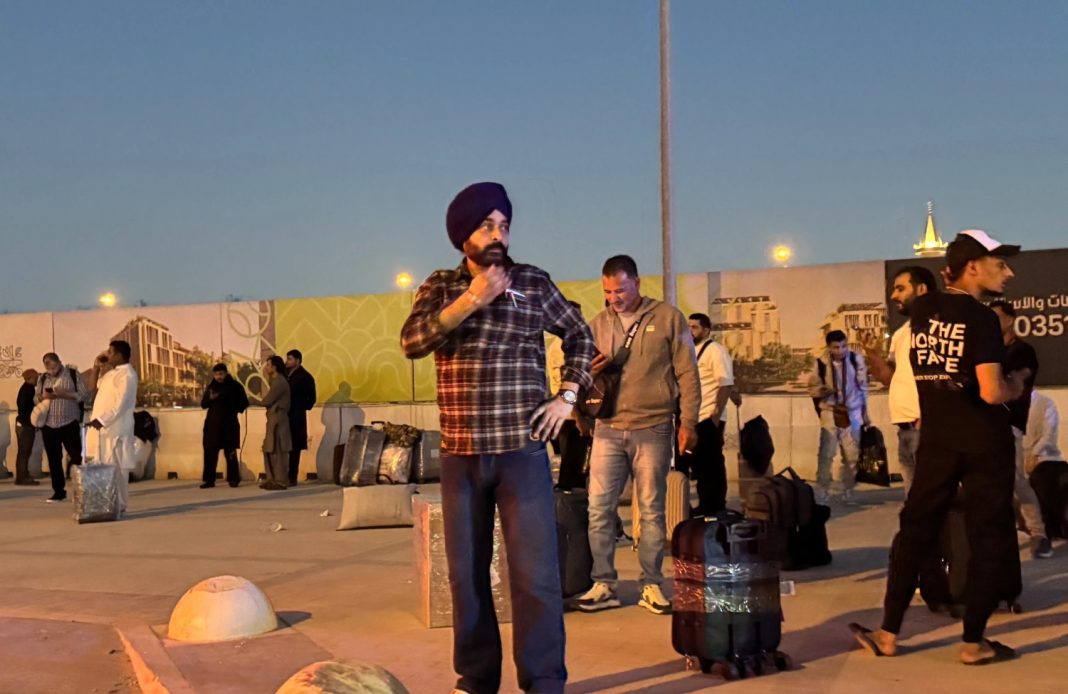

RIYADH, Saudi Arabia — Saudi Arabia has kept Riyadh’s international airport closed after a series of attacks by Yemen’s Houthi rebels killed at least 20 people and wounded hundreds over the past week.
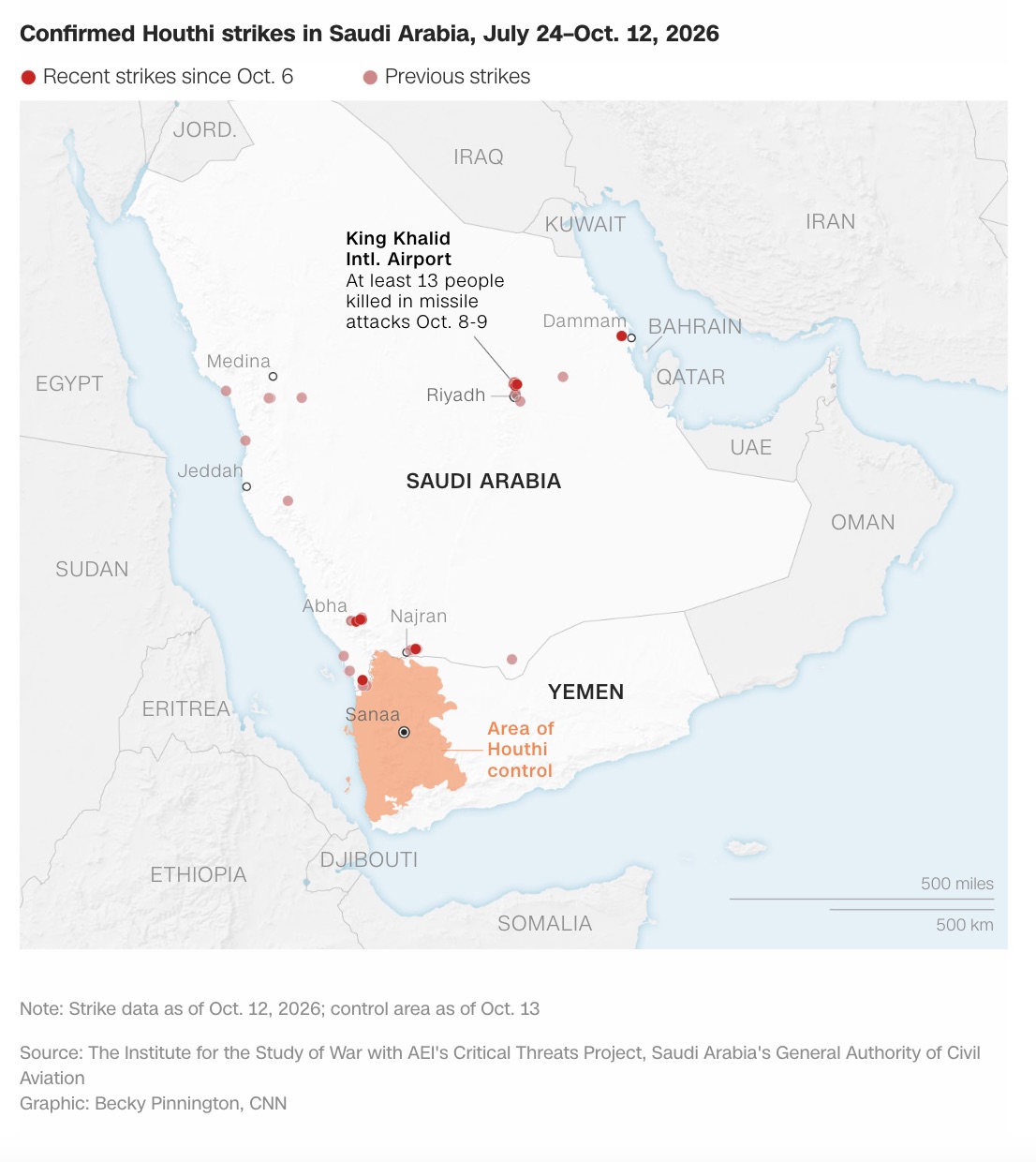
The deadliest strike killed 13 people and injured 309 others when an explosion tore through a passenger terminal at King Khalid International Airport on Saturday, October 10, 2026.
The airport remains closed as Saudi authorities inspect damaged facilities and assess the continuing threat from missiles and drones.
The Saudi-led military coalition said it intercepted another ballistic missile heading towards Riyadh on Wednesday, while the Houthis renewed threats to attack airports and oil installations across the kingdom.
Aviation notices indicate that King Khalid International Airport will remain closed until at least Saturday, although authorities have not announced a confirmed reopening date.
The disruption has forced international airlines to cancel or divert hundreds of flights and prompted several governments to issue warnings to their citizens.
Passengers Flee as Explosion Hits Airport Terminal
Saturday’s attack struck an airport crowded with travellers, causing part of the ceiling near a departure gate to collapse.
Video footage obtained by Al Arabiya television showed passengers running for shelter as debris fell and dust spread through the terminal.
Some travellers covered their heads with their hands while others scrambled away from the damaged section of the building.
Witnesses described seeing injured passengers lying on the floor as emergency responders arrived.
One traveller told Reuters that an object had passed across the sky shortly before the explosion.
Ambulances and helicopters transported casualties to hospitals, where some of the wounded were reported to be in critical condition.
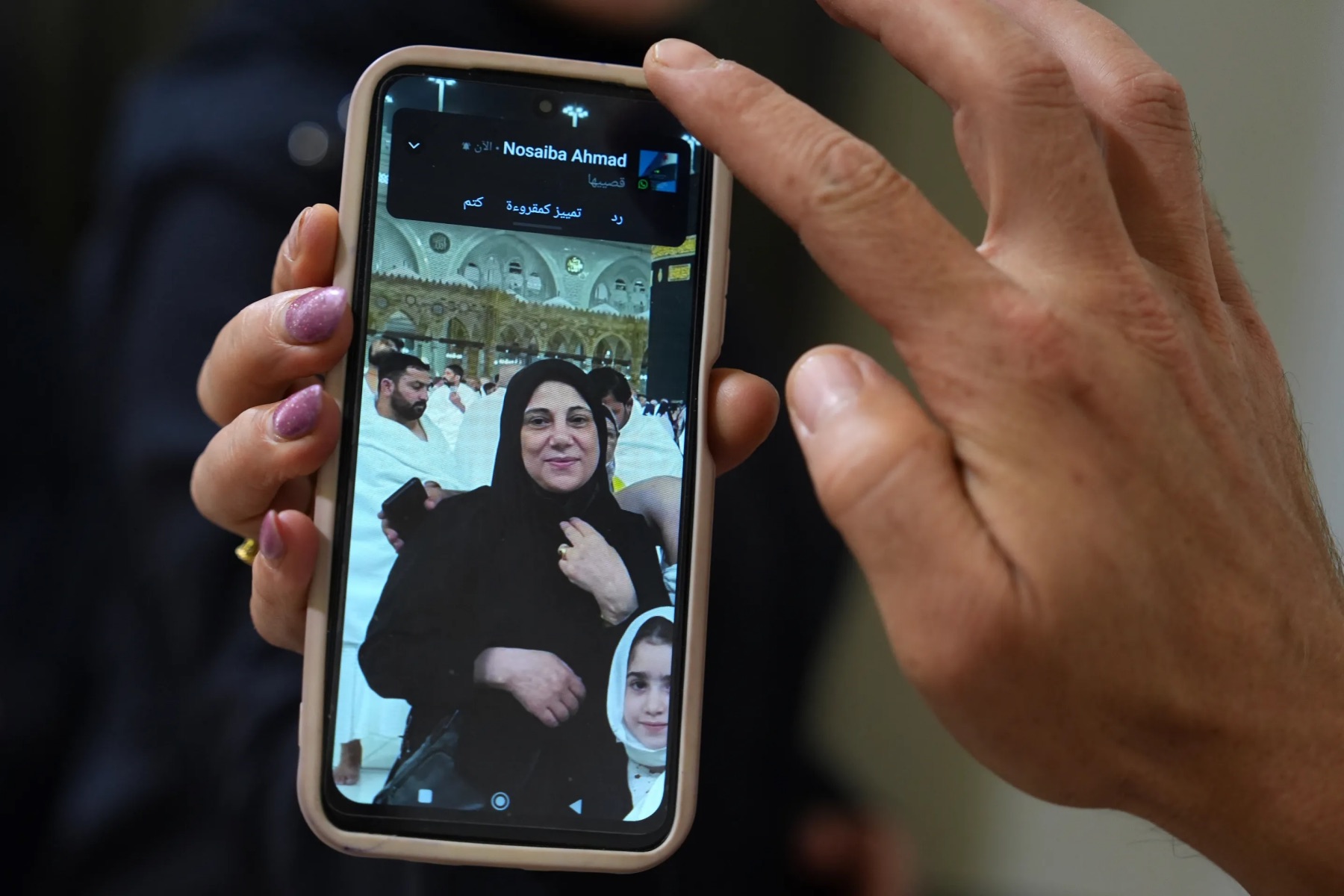
The Saudi General Authority of Civil Aviation initially reported 12 deaths, including four Saudi citizens, two Bangladeshis, and nationals of the United States, Egypt, Jordan, Syria, Palestine, and Sudan.
The death toll subsequently rose to 13 after an Indian national who had been wounded in the attack died.
The strike was the deadliest attack on Saudi Arabia in more than a decade, according to CNN.
It followed earlier assaults on the same airport that had already killed six people and damaged a Saudi commercial aircraft parked on the tarmac.
Another attack on Sunday struck Terminal 4, killing a Pakistani resident and injuring 11 others.
Saudi authorities blamed the Houthis for the attacks, describing the targeting of civilian aviation facilities as a serious violation of international humanitarian law.

Airport Closure Disrupts International Travel
King Khalid International Airport, one of Saudi Arabia’s busiest aviation hubs, serves Riyadh, a city of approximately eight million people.
Saudi aviation authorities suspended operations after Saturday’s strike and subsequently extended the closure to allow safety inspections and operational assessments.
Aviation notices indicate that the airport will remain unavailable until 9 p.m. GMT on Saturday.
However, the expiry of the current notice does not guarantee that normal flights will resume immediately.
International airlines, including Lufthansa, Air France-KLM, Qatar Airways, and several Indian carriers, have suspended or altered services to Saudi Arabia.
Delta Air Lines has also postponed the introduction of its planned direct service between Atlanta and Riyadh until March 2027.
The US Federal Aviation Administration has advised American airlines to exercise caution when operating in Saudi airspace because of security threats and potential interference with navigation systems.
The United States, Britain, Spain, and Canada have issued travel warnings following the attacks.
British authorities have advised against all but essential travel to several Saudi destinations and warned travellers about the risks of using the country’s airports.
The US Embassy in Riyadh has also tightened restrictions on official travel, requiring government personnel to obtain special authorisation before using Saudi airports.
The disruption comes as Saudi Arabia seeks to expand its position as a destination for international business, tourism, and major global events.
Riyadh hosted the World Petroleum Congress this week, although several major international energy companies were not represented.
Saudi Arabia is also preparing for its annual Future Investment Initiative conference, which attracts senior executives, financial institutions, and government officials.
According to Reuters, organisers are considering arrangements that would allow some executives to participate remotely because of the security situation.

Trump Considers Military Support for Saudi Arabia
President Donald Trump has said the United States is considering whether to join Saudi military operations against the Houthis.
Speaking to reporters after the deadly airport strike, Trump said Washington had not reached a decision.
“We may. We’re going to look at it,” he said.
Trump also said he intended to speak with Saudi Crown Prince Mohammed bin Salman about the attacks.
The president later confirmed that the conversation had taken place but did not disclose details of their discussions.
The Trump administration had previously resisted Saudi requests for direct American military intervention against the Houthis.
US Secretary of State Marco Rubio condemned the attacks, citing the loss of civilian lives, including that of an American national.
United Nations Secretary-General António Guterres also condemned the airport strike and called for an immediate end to attacks targeting civilians and civilian infrastructure.
The Saudi-led coalition has pledged to respond to the attacks, while Gulf governments have expressed concern about the threat to regional security.
Houthis Expand Attacks on Saudi Infrastructure
The Houthis, an Iranian-backed armed movement that controls substantial territory in Yemen, have intensified attacks on Saudi targets during renewed fighting between the rebels and forces supporting Yemen’s internationally recognised government.
The group says its operations are retaliation for Saudi military strikes in Yemen.
On Wednesday, the Houthis threatened further attacks against airports and oil facilities, urging civilians, employees, and international shipping companies to avoid the targeted sites.
The warning followed an attack on the headquarters of Saudi Aramco in Dhahran on Tuesday.
Sources familiar with the incident told Reuters that the strike caused extensive damage and a fire that spread across several floors.
Saudi Arabia’s energy ministry had initially described the fire as limited.
The Houthis said their operations involved ballistic missiles, cruise missiles, and drones targeting oil facilities and Riyadh airport.
Saudi authorities said their air defences intercepted another missile near the capital on Wednesday.
The continued attacks have raised questions about Saudi Arabia’s ability to defend widely dispersed airports, energy facilities, and other infrastructure against Houthi missiles and drones.
The kingdom operates advanced American-made military systems, including Patriot air defences, but its extensive territory creates difficulties in protecting all potential targets.
Yemen War Returns After Years of Relative Calm
The latest confrontation follows the collapse of a prolonged period of reduced fighting in Yemen.
Saudi Arabia entered the country’s civil war in 2015, leading a military coalition supporting Yemen’s internationally recognised government against the Houthis, who had seized the capital, Sanaa.
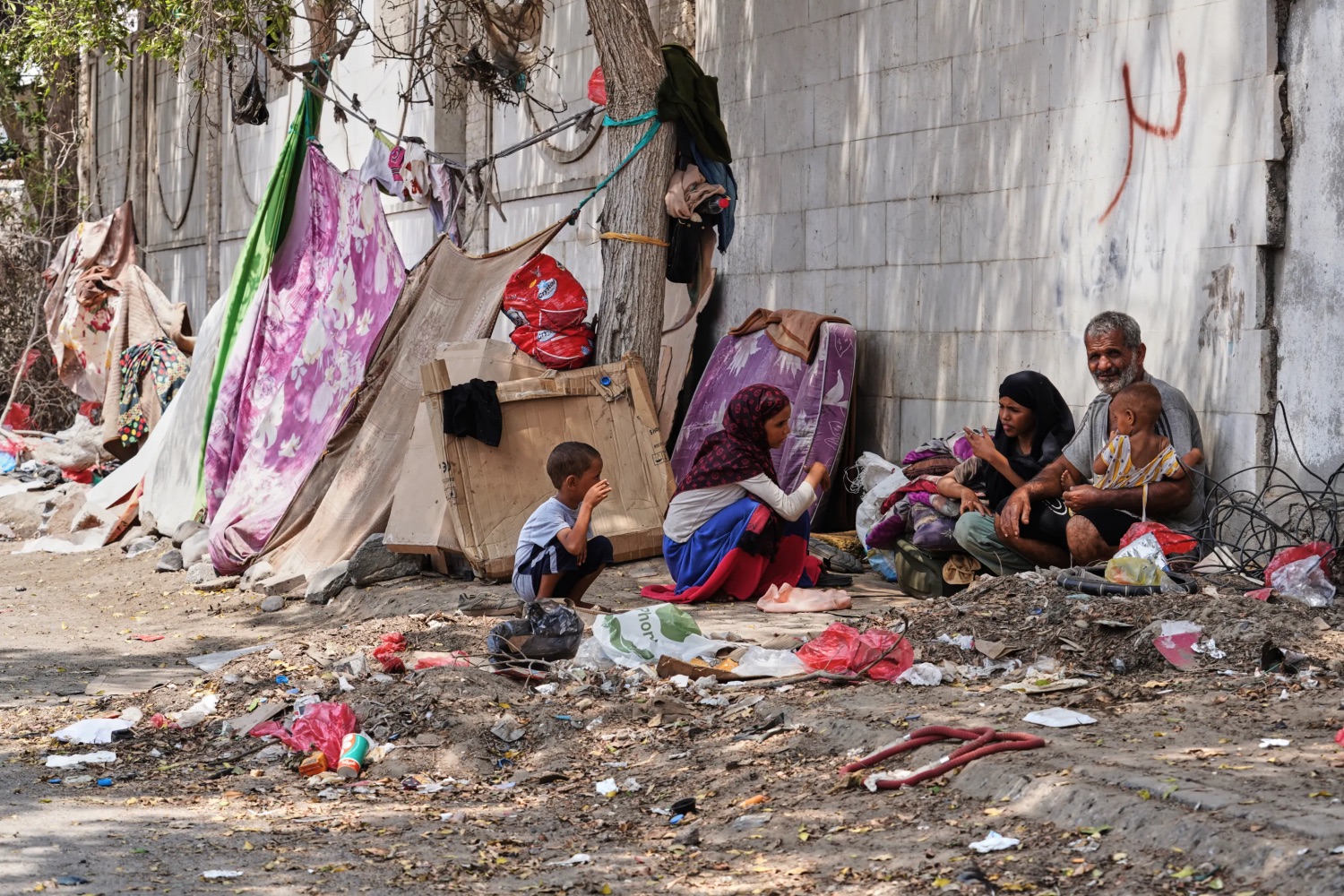
The conflict subsequently developed into a prolonged war that devastated Yemen’s economy and created one of the world’s most severe humanitarian emergencies.
A United Nations-brokered truce in 2022 brought a substantial reduction in hostilities, although the parties failed to reach a comprehensive peace agreement.
Fighting intensified again this year as Houthi forces advanced along Yemen’s Red Sea coast and captured strategically important territory.
The Saudi-backed Yemeni government subsequently launched an offensive to recover those areas.
The conflict has also affected the Bab el-Mandeb Strait, a narrow maritime passage connecting the Red Sea with the Gulf of Aden and an important route for international shipping.
The Houthis have threatened shipping and energy infrastructure as part of their military campaign.
Their operations have intensified against the backdrop of wider regional tensions involving Iran, the United States, and Israel.
Meanwhile, the humanitarian consequences of renewed fighting in Yemen are worsening.
The International Committee of the Red Cross said on Wednesday that hospitals across the country were struggling to manage the growing number of war casualties.
The UN World Food Programme also warned that fighting around Taiz, Yemen’s third-largest city, had cut off humanitarian access to more than 600,000 people.
More than 200,000 women and children are among those affected, according to the agency.
The Houthis have insisted that their attacks will continue while Saudi military operations in Yemen persist.
Saudi Arabia has not announced an end to its campaign, and its main international airport in Riyadh remains closed amid continuing security threats.




