
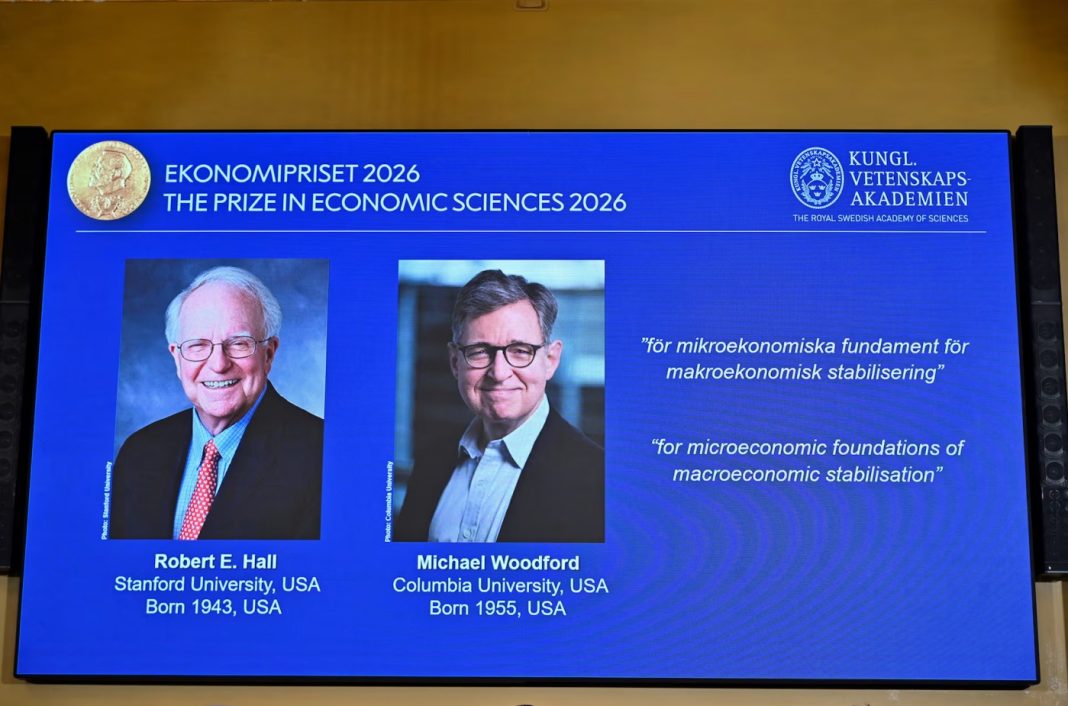

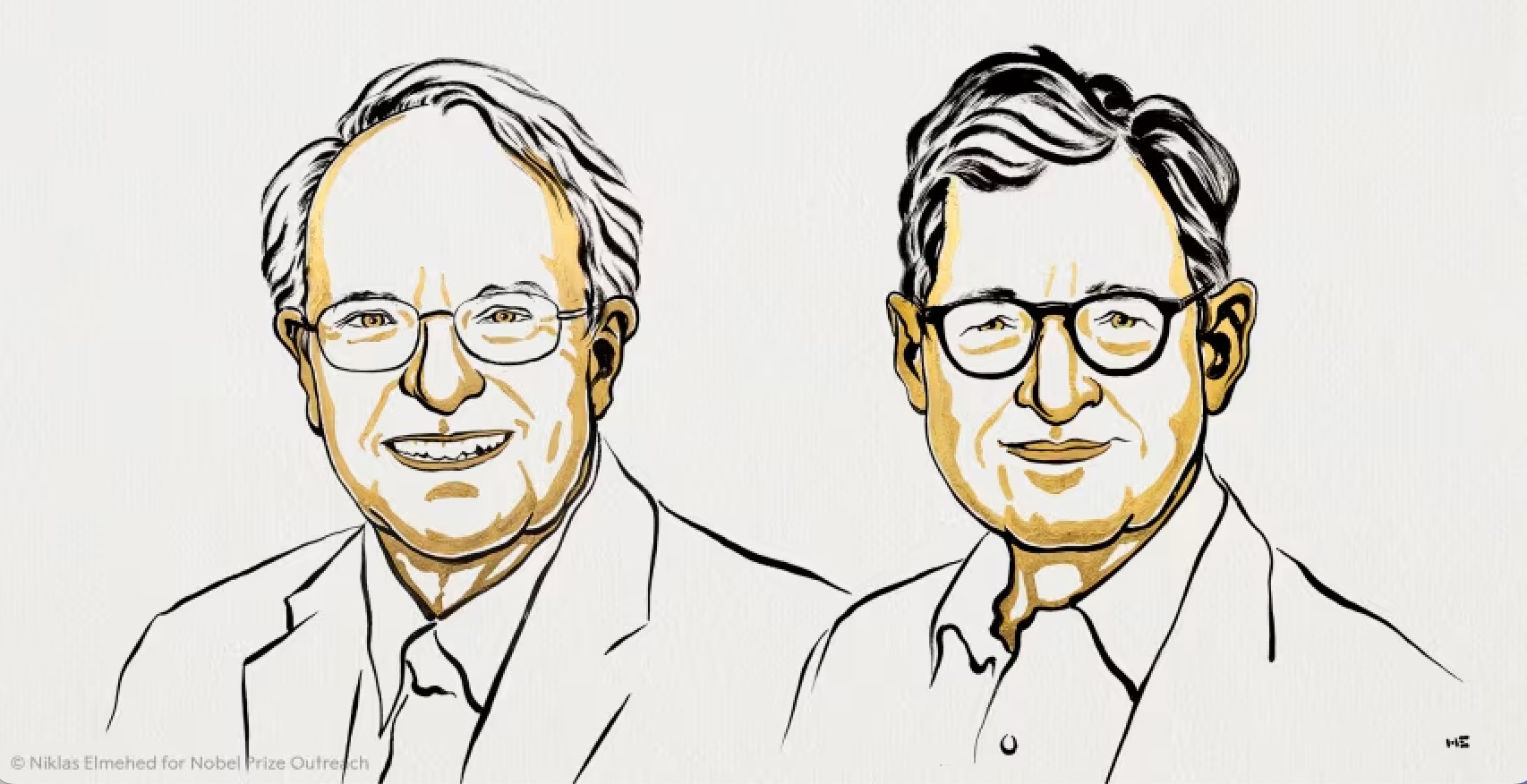
STOCKHOLM, Sweden — Two American economists, Robert E. Hall and Michael Woodford, have won the 2026 Nobel Prize in Economics for research that transformed how governments and central banks respond to inflation, recessions, and other economic disruptions.
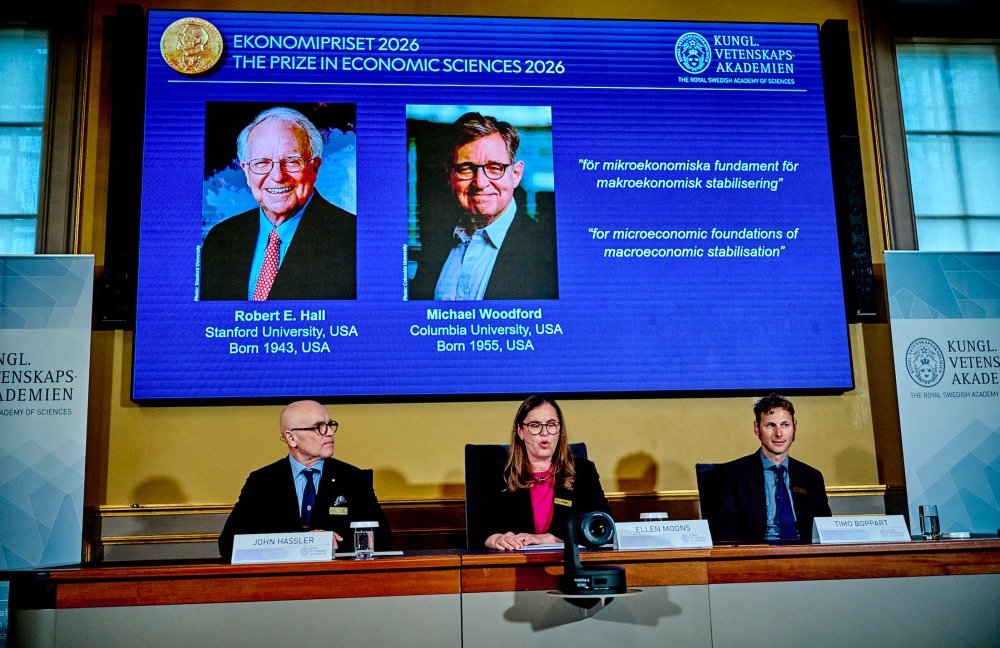
The Royal Swedish Academy of Sciences announced the award on Monday, October 12, 2026, recognising the economists for developing models that explain how household and business decisions influence the wider economy.
The academy cited their contributions to the “microeconomic foundations of macroeconomic stabilisation”, a field that examines how government spending, taxation, and interest-rate policies can be used to manage economic fluctuations.
Hall, 83, is a professor at Stanford University in California, while Woodford, 70, teaches at Columbia University in New York.
They will share the prize of 12 million Swedish kronor, approximately $1.2 million, receiving six million kronor each.
“The laureates’ work has provided us with a stable theoretical foundation for the models that are now used by central banks and governments around the world,” said John Hassler, chairman of the Nobel economics prize committee.
How Their Research Changed Economic Policy
The two economists helped establish a framework that allows policymakers to examine how individual spending, saving, and investment decisions influence inflation, employment, and economic growth.
Earlier approaches to economic management often relied heavily on relationships between broad indicators, including unemployment, inflation, consumption, and national production.
Those approaches encountered difficulties during the economic crises of the 1970s, when high inflation and high unemployment occurred simultaneously.
The developments challenged assumptions associated with conventional Keynesian economic models and prompted economists to reassess how governments should respond to recessions and price instability.
Hall and Woodford addressed those limitations by examining how people and businesses anticipate future economic conditions and adjust their behaviour accordingly.
Their research showed that expectations about future income, prices, and interest rates influence economic activity long before those conditions materialise.
According to the Royal Swedish Academy of Sciences, understanding these decisions has allowed economists to develop more useful models for evaluating the effects of government and central bank policies.
Hall Examined How Consumers Make Spending Decisions
Hall’s research focused on the relationship between household consumption and expectations about future income.
In a landmark paper published in 1978, he examined how consumers make spending decisions based on information about their anticipated financial circumstances.
His findings challenged the assumption that consumption responds predictably to changes in current income.
Instead, Hall demonstrated how expectations about the future influence spending patterns, with unforeseen information playing an important role in changes to household behaviour.
The research helped economists understand why government measures intended to stimulate consumption may produce different results depending on how households interpret their economic prospects.
In subsequent work with economist Frederic Mishkin, Hall examined differences between households able to plan consumption around future income and those whose spending depended more directly on their immediate earnings.
His work became an important foundation for economic models used to analyse the effects of fiscal and monetary policies.
Woodford Helped Transform Central Banking
Woodford’s research examined how businesses respond to anticipated changes in interest rates, production costs, and competitors’ prices.
His work helped develop modern monetary policy models that central banks use to assess inflation and economic activity.
One important contribution was the recognition that central banks can influence the economy not only by changing interest rates but also by communicating their expectations about future monetary policy.
This approach, known as forward guidance, became particularly important after the 2008 global financial crisis, when interest rates in several major economies approached zero.
With limited room to reduce borrowing costs further, central banks increasingly relied on public statements about their future policy intentions to influence financial markets and spending decisions.
Speaking after the announcement, Woodford said his research had demonstrated the importance of understanding how people interpret government and central bank decisions.
“Authorities shouldn’t view stabilisation of the economy as an exercise that is simply conducted by people pulling levers to control the economy independently of what people in the economy understand about this,” he told reporters, according to Reuters.
Woodford also said the framework informed monetary policy responses after the global financial crisis.
Research Applied During Major Economic Crises
The academy said the economists’ contributions had improved policymakers’ ability to respond to disruptions, including the coronavirus pandemic and more recent energy crises.
Their models provide tools for assessing how households and businesses may respond to interest-rate changes, government spending programmes, and other economic interventions.
The research has also influenced the concept of the output gap, which measures the difference between an economy’s actual production and the level it can sustain without generating excessive inflationary pressure.
Another area influenced by their work concerns the gradual adjustment of prices, sometimes described as price stickiness.
These concepts feature in economic models used by institutions including the US Federal Reserve, the European Central Bank, and other monetary authorities.
“With them, we are better equipped to deal with shocks in the economy, such as energy crises or sudden changes in how much households consume,” Hassler said.
Economics Prize Concludes 2026 Nobel Announcements
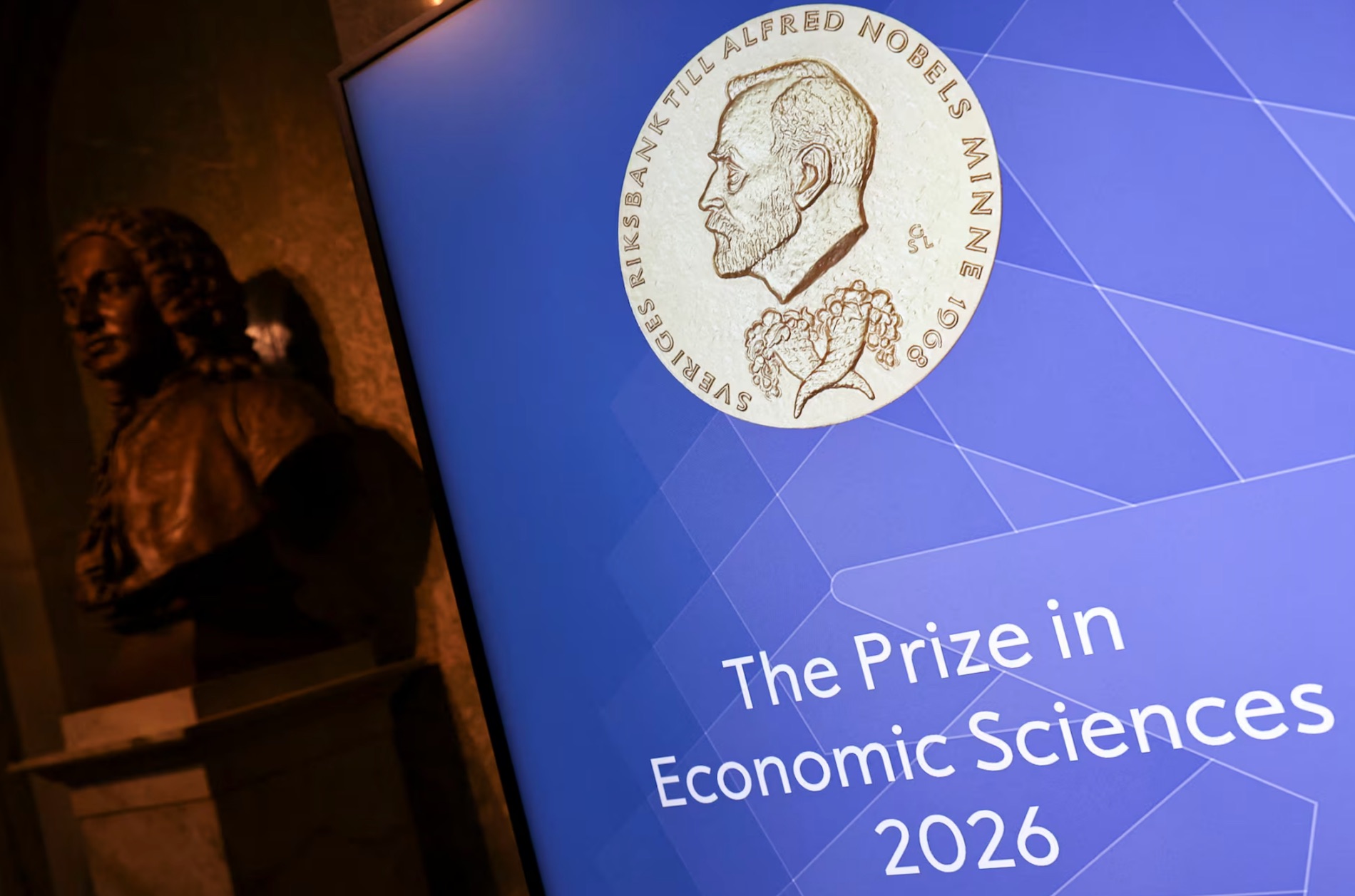
Sweden’s central bank established the award, formally called the Sveriges Riksbank Prize in Economic Sciences in Memory of Alfred Nobel, in 1968.
Unlike the original Nobel Prizes in medicine, physics, chemistry, literature, and peace, the economics prize was not included in Alfred Nobel’s will.
The prize was first awarded in 1969 and is presented alongside the other prizes at the annual Nobel ceremonies in December.
The 2026 economics award brings the total number of individual recipients to 101, of whom only three have been women.
Last year’s prize went to Joel Mokyr, Philippe Aghion, and Peter Howitt for research examining technological innovation and long-term economic growth.
This year’s award concludes the announcement of the 2026 Nobel laureates.
Hall and Woodford are scheduled to receive their medals and diplomas at the Nobel ceremony in Stockholm on December 10.




