
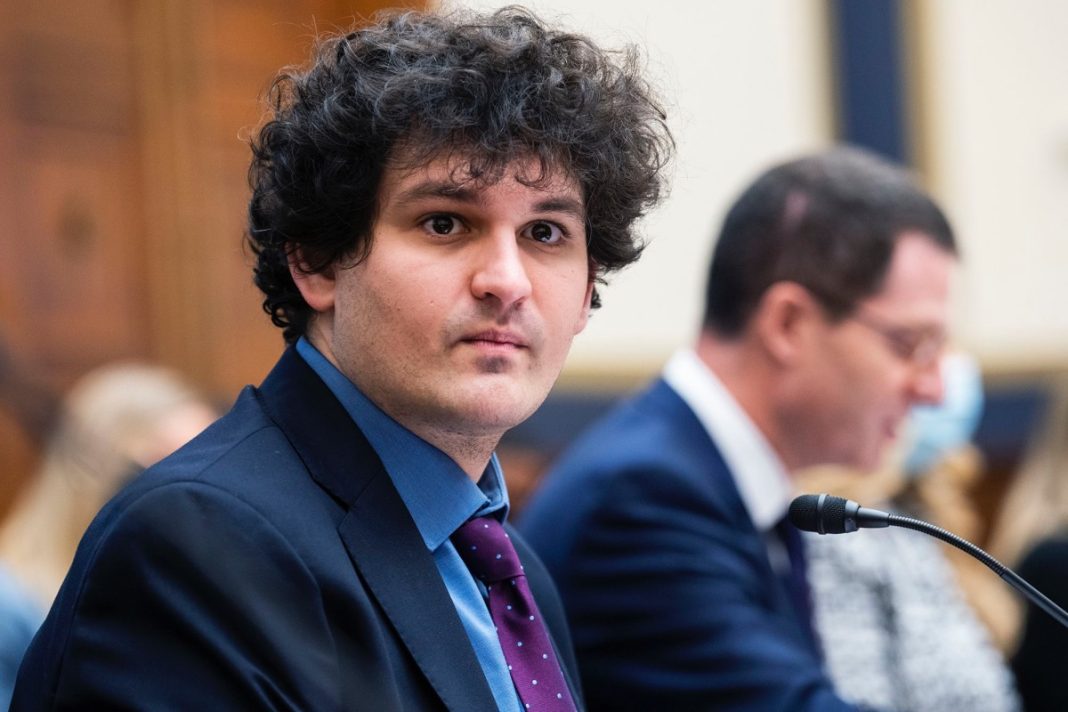

WASHINGTON, United States — Sam Bankman-Fried asked the US Supreme Court on Thursday, September 10, 2026, to overturn his fraud conviction and order a new trial.
He also sought to set aside an $11 billion forfeiture judgment.
The filing raises two questions: whether restrictions on evidence prevented Bankman-Fried from answering the government’s case and whether the financial penalty violates the Eighth Amendment’s protection against excessive fines.
Bankman-Fried, a former cryptocurrency billionaire, received a 25-year prison sentence in 2024.
Prosecutors said he channelled billions of dollars from the FTX exchange into Alameda Research, the hedge fund he controlled.
They said the money financed high-risk investments, political donations, and personal expenses.
The Evidence Dispute
Prosecutors were permitted to present evidence indicating that customers had lost money.
The defence says Bankman-Fried was not allowed to demonstrate that investments made with the funds could ultimately have covered those losses.
His lawyers argue that this imbalance undermined his defence.
The government pursued a form of fraud that did not require proof that victims sustained an eventual financial loss, they say, but was nevertheless allowed to submit evidence about losses.
The petition contends that once such evidence was introduced, Bankman-Fried should have been permitted to answer it with evidence concerning the eventual value of the investments.
Jeffrey Fisher, a veteran Supreme Court lawyer, told CNN that presenting loss evidence under a theory that did not require proof of loss was prejudicial.
Fisher said Bankman-Fried was also prevented from clearly advancing his claim that the victims had not ultimately lost money.
The Second US Circuit Court of Appeals rejected those arguments earlier this year.
A Supreme Court Fraud Ruling
Bankman-Fried’s petition relies substantially on a 2025 Supreme Court decision involving a US Department of Transportation contractor.
The contractor obtained a multimillion-dollar bridge-painting contract after promising to satisfy requirements concerning the participation of a disadvantaged business.
The company instead established a pass-through arrangement and submitted false certifications, according to the case.
Although the painting work was completed, the company and its manager were convicted of wire fraud and conspiracy.
They argued that the deception could not constitute wire fraud because they had not intended to inflict economic harm.
The Supreme Court unanimously rejected that position, finding that prosecutors proceeding under a fraudulent-inducement theory did not have to establish intended economic loss.
Bankman-Fried acknowledges that ruling but argues that it should affect what evidence prosecutors may introduce.
If proof of loss is unnecessary, his lawyers contend, prosecutors should not be allowed to present loss evidence without giving the defendant an opportunity to rebut it.
The $11 Billion Order
The petition separately challenges the forfeiture imposed as part of Bankman-Fried’s sentence.
His lawyers argue that the amount exceeds the constitutional limit on financial penalties established by the Eighth Amendment.
The appellate court also rejected that claim.
The Supreme Court is expected to consider Bankman-Fried’s request later this year.