


GUSAU, Nigeria — Samaila Bala, a schoolteacher detained in Zamfara State over witchcraft allegations, is expected to be released on bail after spending nearly five months in prison.
The decision follows a campaign by the Advocacy for Alleged Witches (AfAW), a Nigerian human rights organisation that has challenged Bala’s repeated detention.
Leo Igwe, the organisation’s director, announced the development on Wednesday, November 4, 2026 via an e-mailed statement to The Trent.
He said Dr Abdullahi, the registrar of the Sharia Court of Appeal in Zamfara, had informed him that state authorities had approved Bala’s release.
“He informed me that state authorities had decided to release Samaila Bala on bail,” Igwe wrote.
The registrar also asked him to arrange for someone to complete the bail formalities so that Bala could leave custody.
Igwe said he subsequently contacted the Zamfara State coordinator of the National Human Rights Commission (NHRC), who agreed to send a representative to complete the process.
Bala’s release had not been independently confirmed at the time of the announcement.
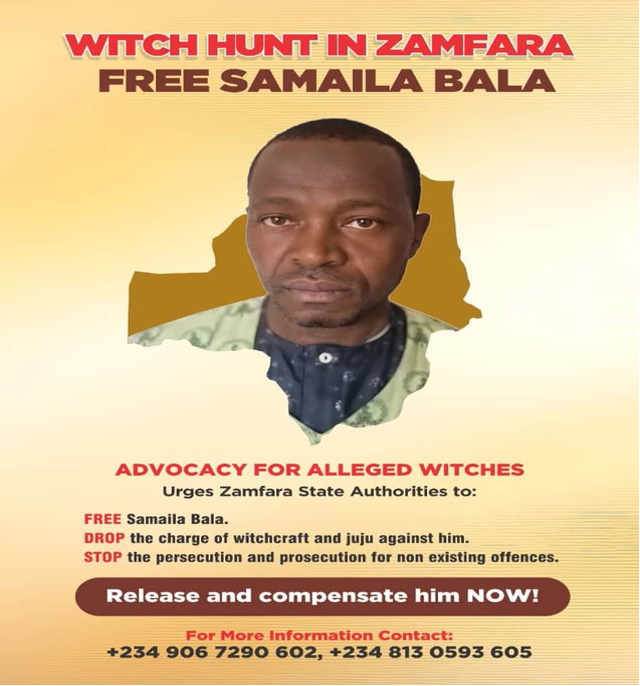
How a Schoolgirl’s Illness Led to the First Arrest
Bala’s legal troubles began in 2020, when he was working as a teacher at a school in Zamfara.
According to an earlier account published by Igwe in September, a female pupil became ill and mentioned Bala’s name while she was unwell.
Her family subsequently accused the teacher of causing her illness through witchcraft.
The girl was taken to hospital, where medical tests showed that she had sickle cell disease.
Despite the diagnosis, her relatives continued to attribute her condition to supernatural causes.
They brought a complaint against Bala before a local Sharia court.
He was remanded in custody for six months before being released.
The allegations resurfaced in 2024, leading to another detention.
Bala spent two months in custody before the Grand Khadi, the senior judicial officer of the state’s Sharia Court of Appeal, intervened and secured his release, according to Igwe.
The dispute continued.
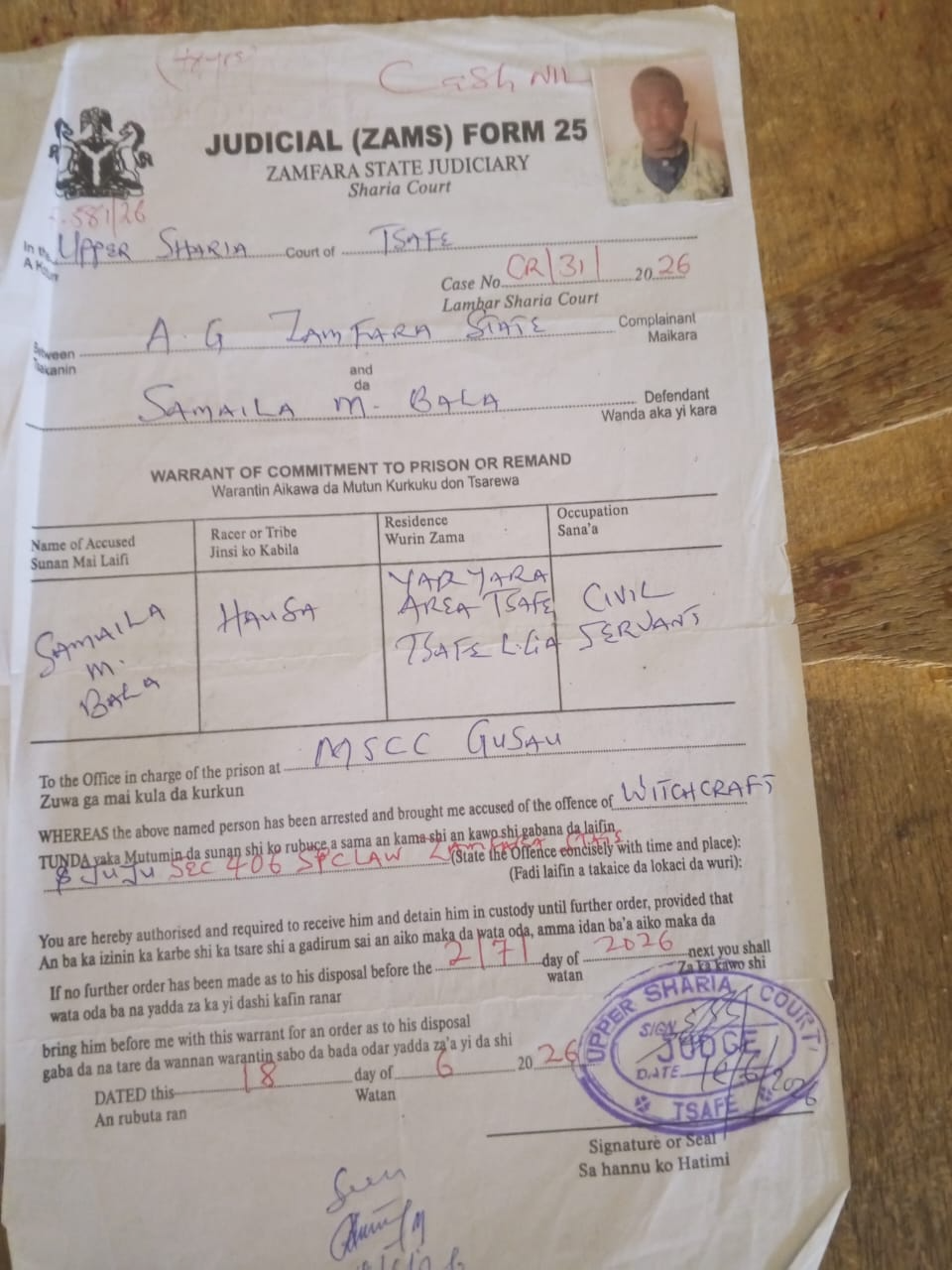
In June 2026, Bala was arrested again and brought before an Upper Sharia Court in Tsafe, Zamfara State.
The court remanded him over allegations involving witchcraft and juju.
It was his third detention in six years over accusations connected to the same dispute, according to the advocacy organisation.
International Religious Freedom Commission Records Case
Bala’s detention also attracted attention outside Nigeria.
The United States Commission on International Religious Freedom included him in its database of individuals detained over matters involving religion or belief.
The commission recorded his arrest in June 2026 and identified Section 406 of the Zamfara State Sharia Penal Code as the legal provision cited in the proceedings.
It also documented his earlier detentions in 2020 and 2024.
AfAW maintained that Bala had committed no offence and that the accusations against him did not justify imprisonment.
The organisation argued that the court proceedings violated his fundamental rights.
Dispute Over the Legal Basis for Detention
Bala’s case has also raised questions about how Nigerian courts interpret allegations involving witchcraft.
Section 406 of the Zamfara State Sharia Penal Code addresses several acts associated with witchcraft and juju.
They include claiming to possess supernatural powers, accusing another person of witchcraft, and participating in certain prohibited practices involving charms or juju.
However, Igwe has argued that these provisions do not justify imprisoning someone simply because another person believes that individual caused an illness through supernatural means.
In his earlier account of Bala’s detention, Igwe cited a legal expert who questioned whether the allegations established any recognisable criminal conduct.
The expert argued that prosecutors must identify a specific statutory offence and provide evidence that the accused committed it.
AfAW maintained that Bala’s detention lacked a valid legal foundation.
The available reports do not establish what evidence was presented against Bala in court.
Advocacy Group Campaigned for His Freedom
Following Bala’s latest detention, AfAW began seeking intervention from Zamfara State authorities.
The organisation contacted the governor, the attorney general, and the director of public prosecutions.
Its letters called for a review of the case and Bala’s release.
AfAW also worked with local and international organisations to draw attention to his imprisonment.
Representatives visited Bala in custody in Gusau and gathered information about his circumstances.
The organisation promised legal and humanitarian assistance while continuing its campaign for his freedom.
In his latest statement, Igwe welcomed the decision to grant bail and commended the Zamfara authorities for reviewing the case.
He also thanked the Sharia Court of Appeal registrar for communicating the decision and the National Human Rights Commission for agreeing to assist with the bail arrangements.
Group Calls for Review of Similar Cases
AfAW said Bala’s experience had raised concerns about other people who might be detained in Nigeria over comparable allegations.
The organisation called on judicial and correctional officers to identify cases involving questionable charges and refer them for review.
Igwe said the organisation would continue advocating for people whose liberty had been restricted because of accusations linked to witchcraft beliefs.
Bala’s expected release marks a development in a case that has continued for six years.
However, bail does not automatically terminate criminal proceedings.
It was not immediately clear whether the allegations against Bala would be withdrawn or whether further court hearings would be required.
For now, his release depends on the completion of the bail formalities.