
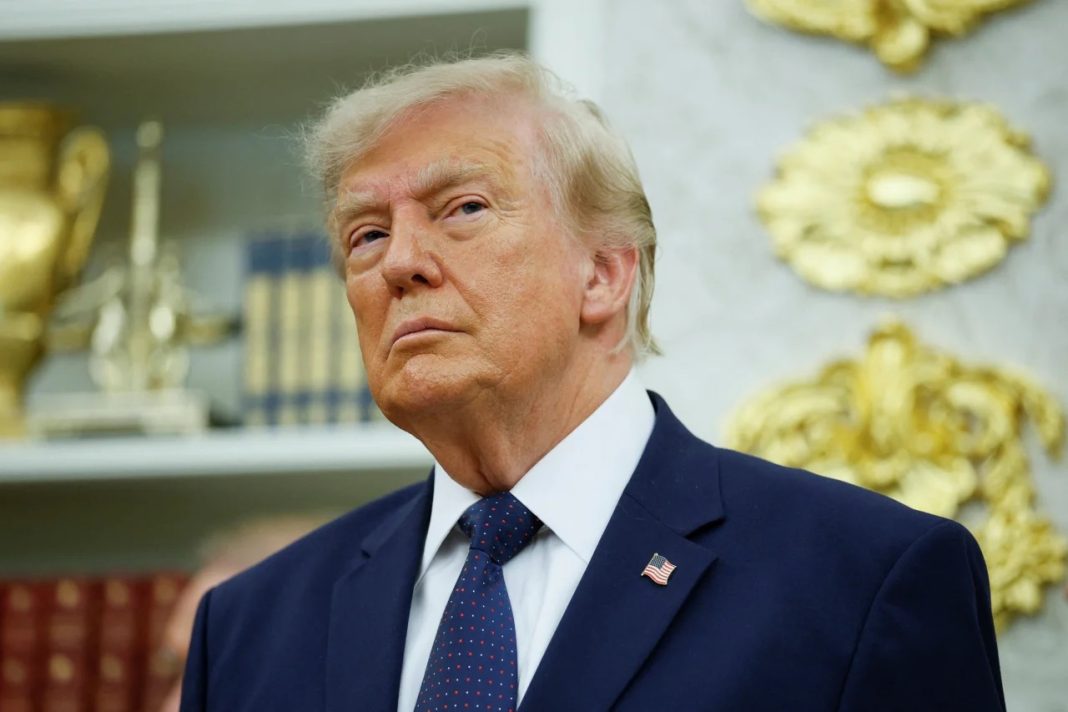

WASHINGTON, United States — President Donald Trump has approved a firing squad as the method for carrying out the death sentence imposed on Nidal Malik Hasan, the former U.S. Army major convicted of killing 13 people and wounding 32 others at Fort Hood, Texas, in 2009.
Defence Secretary Pete Hegseth recommended the method, and Trump approved it, Pentagon spokesman Sean Parnell announced on Monday, October 5, 2026.
The secretary of the Army will determine when and where the execution would take place.
If carried out, it would be the first execution by the U.S. military since 1961 and the first by an Army firing squad since World War II.
“The Secretary of the Army will set the time and place of the execution. Judgement day for Hasan has finally come,” Parnell said.
The decision marks the latest step in a capital case that has lasted more than a decade after Hasan was convicted and sentenced to death by a military jury in 2013.
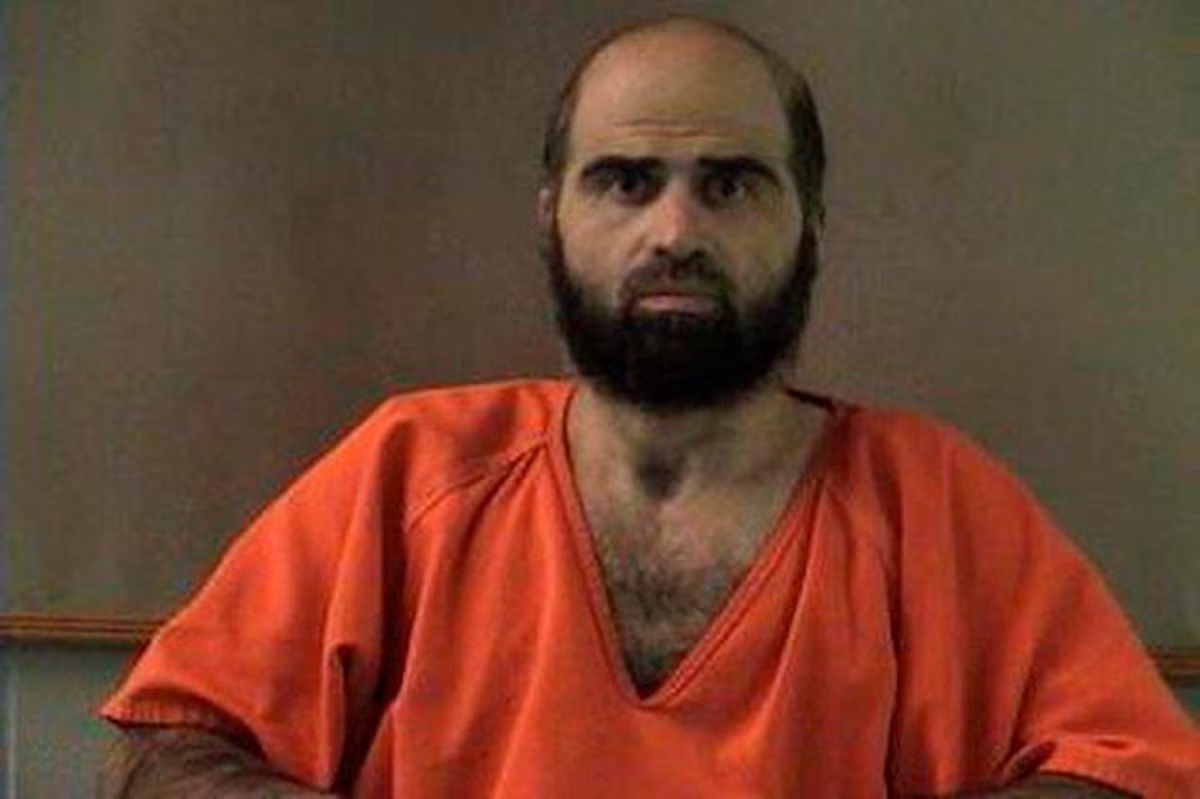
Nidal Hasan, charged with killing 13 people and wounding 31 in a November 2009 shooting spree at Fort Hood, is pictured in an undated handout photo obtained by Reuters on June 29, 2012. | REUTERS/Bell County Sheriff’s Office/Handout./File Photo
A 2009 Attack at Fort Hood
Hasan was an Army psychiatrist when he entered the Soldier Readiness Processing Center at Fort Hood on November 5, 2009, and opened fire with a semiautomatic handgun.
The centre was being used by soldiers preparing for deployments and other assignments.
Twelve active-duty soldiers and a retired soldier working as a civilian were killed. Thirty-two other people were wounded.
Witnesses said Hasan shouted “Allahu akbar,” Arabic for “God is greatest,” during the attack.
Police shot Hasan during the confrontation, leaving him paralysed from the waist down.
He was later charged with 13 counts of premeditated murder and 32 counts of attempted premeditated murder.
At his 2013 court-martial, Hasan represented himself and did not dispute that he had carried out the shooting.
He told the court that he had changed sides and sought to argue that his actions were intended to protect Taliban fighters from American military operations in Afghanistan.
A panel of 13 senior military officers convicted him and unanimously sentenced him to death in August 2013.
Hasan has since been held on military death row at the U.S. Disciplinary Barracks at Fort Leavenworth, Kansas.
Years of Appeals Followed Conviction
The death sentence survived years of review in the military courts.
The United States Court of Appeals for the Armed Forces affirmed the decision of the Army Court of Criminal Appeals in March 2024.
The U.S. Supreme Court subsequently declined to review Hasan’s case.
Trump’s approval allows the military to proceed towards carrying out the sentence, but an execution would not necessarily occur immediately.
Hasan could still seek to delay it through litigation in the federal courts.
A previous presidential authorisation illustrates that military death sentences can remain unresolved even after White House approval.
President George W. Bush authorised the execution of Army Private Ronald Gray in 2008 for murders and rapes committed while Gray was stationed at Fort Bragg, North Carolina.
Gray’s execution was later halted by a federal judge, and he remains on military death row.
First Military Execution in 65 Years if Carried Out
The American military last carried out an execution in 1961, when Army Private John A. Bennett was hanged at Fort Leavenworth after being convicted of raping and attempting to murder an 11-year-old girl.
The Army’s last execution by firing squad occurred in January 1945, when Private Eddie Slovik was executed in France after being convicted of desertion during World War II.
Trump’s administration has separately broadened the execution methods available in the civilian federal death penalty system.
The Justice Department announced in April that it was moving to allow firing squads, electric chairs, and gas in addition to lethal injection in some federal cases.
Officials cited, among other considerations, difficulties in obtaining drugs used for lethal injections.
Hasan’s sentence, however, falls under the military justice system rather than the civilian federal system.
During Trump’s first term, the federal government resumed executions after a nearly two-decade interruption and put 13 federal prisoners to death between July 2020 and January 2021.
President Joe Biden later imposed a moratorium on federal executions and, shortly before leaving office, commuted the death sentences of 37 of the 40 prisoners then on federal death row.
Hasan’s military death sentence was not affected by those commutations.
The timing and location of his execution have not been announced.