
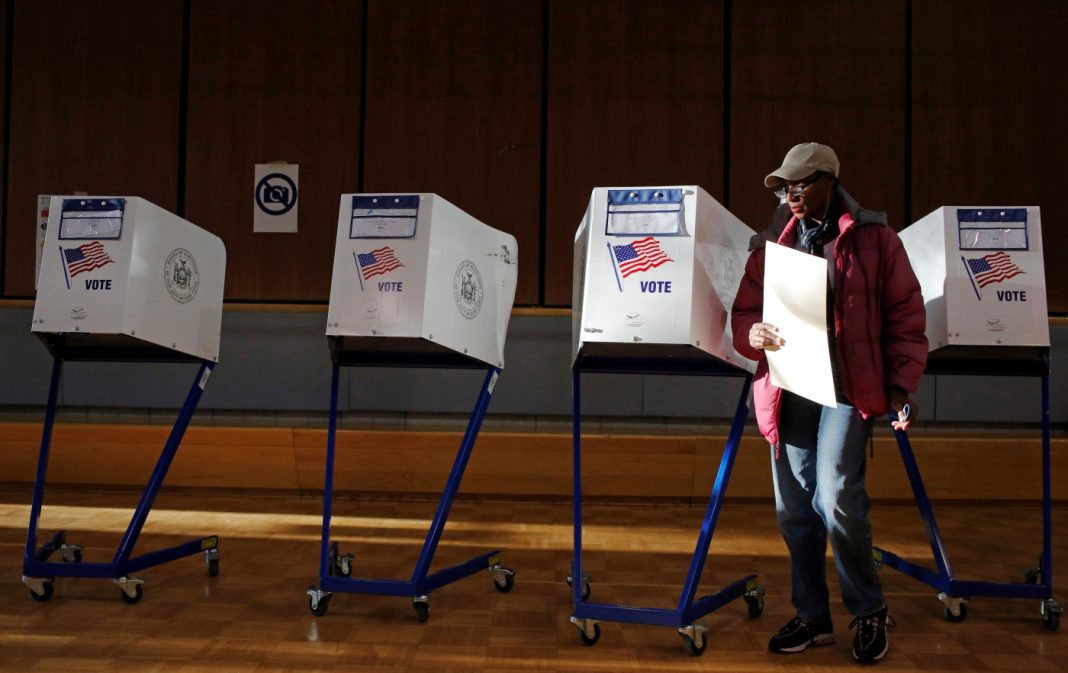

COLUMBUS, Ohio — Democrats are making significant gains in early-voter participation across Ohio, including in counties that overwhelmingly supported President Donald Trump in the 2024 election.
New voting data shows a nearly 27-percentage-point shift towards Democratic-affiliated voters compared with the same stage of the 2024 election.
The change comes as Republicans face competitive Senate and gubernatorial races in a state Trump won by more than 11 percentage points two years ago.
The figures, analysed by CNN and published on Sunday, October 11, suggest stronger early participation among Democratic-affiliated voters ahead of the November 3 midterm elections.
The shift is particularly pronounced in Republican strongholds.

In counties Trump won by at least 20 percentage points in 2024, Republican-affiliated voters held a 30-point advantage over Democrats at the comparable stage of that election.
This year, that advantage has narrowed to approximately five points.
The figures do not reveal which candidates voters have supported, and election analysts caution that early-voting patterns cannot reliably predict final results.
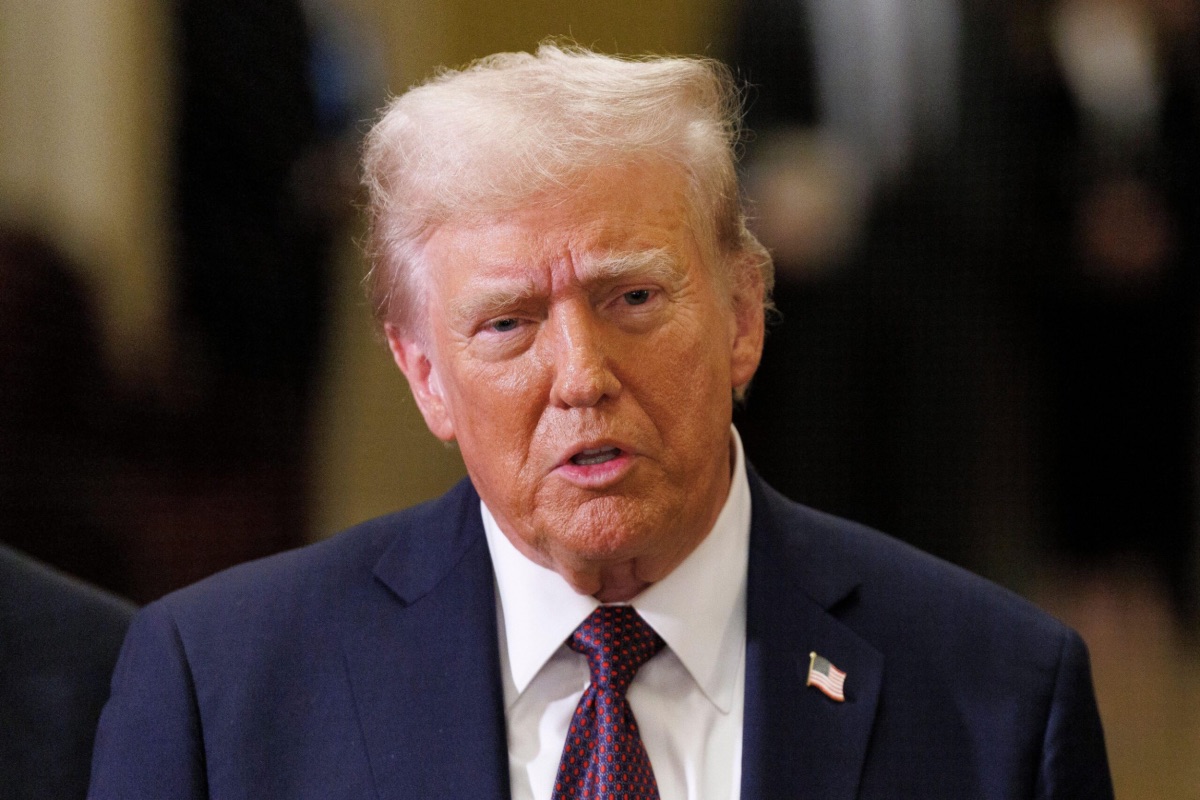
Donald Trump is seen at a public event as pressure mounts over calls for his resignation. | Aaron Schwartz/SIPA UA/Alamy
Republicans Lose Much of Their Early-Voting Advantage
According to Ohio Secretary of State records, the partisan composition of early voters has shifted 26.8 percentage points towards Democrats statewide compared with the same point in 2024.
The movement extends across counties with sharply different political preferences.
In counties Trump won by at least 20 points, the shift towards Democratic-affiliated voters was 24.6 percentage points.
Counties where Trump defeated former Vice President Kamala Harris by smaller margins recorded a 28.4-point shift.
Counties Harris won by fewer than 20 points recorded a 29-point change, while her strongest counties experienced a 25.4-point shift.
The findings indicate that stronger Democratic participation is not confined to traditionally liberal urban centres such as Cleveland and Columbus.
It is also evident in rural and working-class communities that have become important sources of Republican electoral support.
CNN’s analysis covered voting records available through Thursday, October 8, or 26 days before Election Day.
Wood County was excluded because it had not reported early ballots by party affiliation.
Later information from some counties suggested that Friday’s voting was slightly more favourable to Republicans.
Democrats Lead in Closely Contested Senate and Governor’s Races
The early-voting figures come as former Democratic Senator Sherrod Brown seeks to return to Washington after losing his Senate seat in 2024.
Brown is challenging Republican Senator Jon Husted, who was appointed to replace JD Vance after Vance became vice president.
A CNN/SSRS poll conducted between September 29 and October 5 found Brown supported by 49 per cent of likely voters, compared with 43 per cent for Husted.
The survey included 760 likely voters and had a margin of sampling error of approximately 4.5 percentage points.
Other polls have suggested a closer contest, including a co/efficient survey that placed Husted one point ahead.
Brown, a three-term senator with longstanding ties to organised labour, has focused on manufacturing, wages, healthcare costs, and industrial investment.
Husted, a former lieutenant governor, has emphasised economic development, Republican tax policies, and his record in state government.
Democrats have also recorded encouraging polling figures in Ohio’s gubernatorial contest.
Former state health director Amy Acton is challenging Republican entrepreneur Vivek Ramaswamy to succeed Governor Mike DeWine, who cannot seek another consecutive term.
The CNN survey showed Acton leading Ramaswamy by 50 per cent to 42 per cent.
Other surveys have reported narrower differences, including a co/efficient poll that placed Ramaswamy two points ahead.
The conflicting findings underscore the uncertainty surrounding both races.
Trump’s Economic Policies Face Growing Scrutiny
The early-voting figures coincide with polling showing dissatisfaction with Trump’s handling of the economy.
According to CNN’s October survey, 76 per cent of Ohio respondents said the president’s policies had increased the prices they paid.
Approximately 58 per cent believed his tariffs were bad for Ohio, while nearly half identified the economy and cost of living as their most important political concern.
Trump’s job approval rating in the state stood at 36 per cent.
Ohio’s manufacturing and agricultural industries are particularly sensitive to changes in trade policy, energy prices, and industrial investment.
Trump has defended his tariffs as necessary to protect American businesses, encourage domestic production, and restore manufacturing jobs.
Democrats argue that higher household costs and uncertainty surrounding trade policies have undermined purchasing power.
The president has sought to strengthen Republican turnout through campaign appearances in states he carried in 2024.
According to Reuters, Trump travelled to Youngstown, Ohio, to campaign for Husted and other Republican candidates as the party sought to defend its congressional majority.
Republicans hope his appearances will encourage supporters to vote, while Democrats are seeking to mobilise voters dissatisfied with the administration’s economic policies.
Why the Early-Voting Numbers Require Caution
Despite the substantial shift, early-voting figures do not establish which party will benefit when ballots are counted.
Ohio does not require voters to declare a political party when registering.
Instead, party affiliation in state voting records is generally determined by participation in previous party primaries.
A voter classified as Republican or Democratic can support any candidate in a general election.
The figures also cover only a small proportion of the expected electorate.
CNN reported that Ohio had recorded approximately 11 per cent of its total early-voting turnout from the 2022 midterm election when the data was analysed.
Voting methods are changing as well.
Early in-person voting had reached approximately 72 per cent of its level at the comparable stage of 2024, while mail voting stood at only 25 per cent.
Republicans have increasingly relied on Election Day voting, meaning changes in early participation may reflect differences in voting preferences rather than changes in candidate support.
There are also variations in turnout between counties.
Areas Harris won by at least 20 points had reached approximately 74 per cent of their early turnout from the comparable stage of 2024.
Counties Trump won by similarly large margins had reached approximately 67 per cent.
The seven-point difference suggests that early participation is proceeding more quickly in strongly Democratic communities.
Similar Democratic Shift Emerges in New Jersey
Ohio is not the only state showing changes in early-voter participation.
CNN also examined figures from New Jersey, where Democratic-affiliated voters have increased their share of returned ballots in areas that supported Trump.
Data from Catalist, a political research and analytics company, showed that the partisan composition of returned ballots in New Jersey’s three strongest Trump counties had shifted nearly 11 percentage points towards Democrats.
In the state’s strongest Harris counties, the change was less than two points.
Unlike Ohio, New Jersey allows voters to register with a political party, making party affiliation more directly identifiable.
However, its in-person early voting had not begun when the information was collected, and changes in mail-voting habits may have influenced the results.
The Ohio and New Jersey figures provide evidence of stronger Democratic participation at the beginning of the midterm voting period.
They do not establish that individual voters are changing their political preferences or that the final results will reflect the early trends.
With Election Day scheduled for Tuesday, November 3, both parties are concentrating resources on turnout, campaign advertising, and closely contested races.
For now, the most significant development is that Democrats account for a substantially larger share of Ohio’s early electorate than they did two years ago, including in some of the state’s most reliably Republican communities.




