
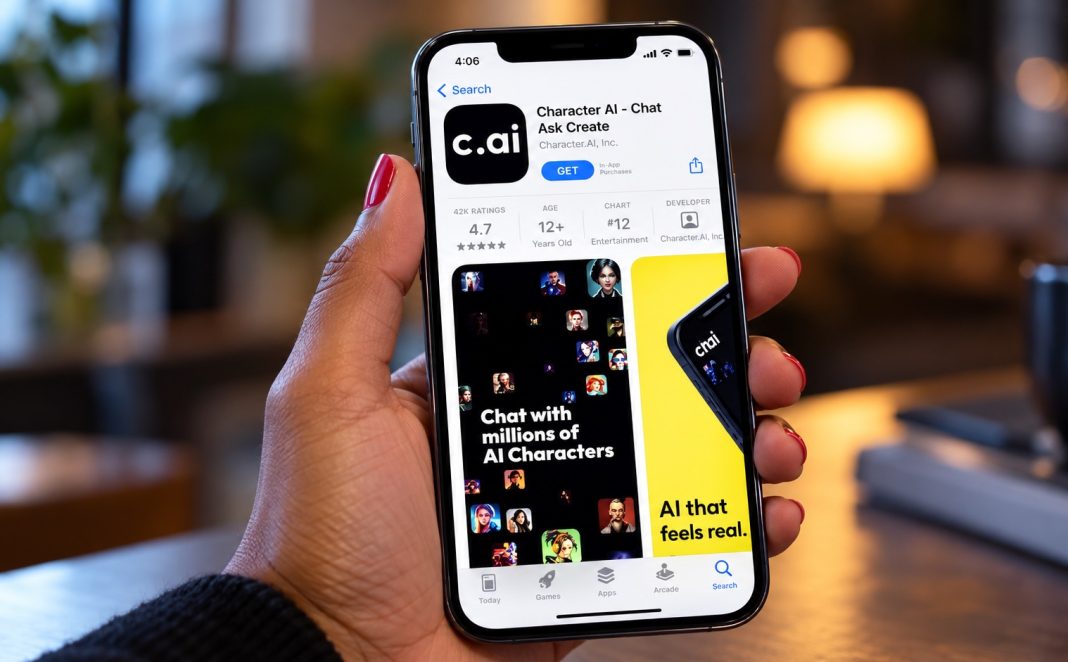

MENLO PARK, United States — Character AI, an artificial intelligence chatbot company facing lawsuits alleging its products contributed to psychological harm and suicides among teenagers, has filed for bankruptcy protection.
The California-based company announced the filing on Monday, October 12, 2026, saying it would seek a court-supervised sale of its business following mounting legal, regulatory, and operational difficulties.
The company warned that its popular platform could shut down unless a buyer emerges.
The Walt Disney Company has emerged as an initial bidder, offering $20 million for rights to certain intellectual property and other assets, according to court documents and a company statement.
The bankruptcy represents a dramatic reversal for one of the early success stories of the artificial intelligence boom, which attracted millions of users and achieved a valuation exceeding $1 billion within two years of its founding.
Character AI said its chatbot platform would remain operational during the bankruptcy proceedings but acknowledged that its future was uncertain.
The company’s parent, Character Technologies Inc., filed for Chapter 11 protection in the US Bankruptcy Court for the District of Delaware.
According to Reuters, the company disclosed estimated assets of between $50 million and $100 million and liabilities within the same range.

Disney Emerges as Initial Buyer
Disney Worldwide Services Inc., an affiliate of the entertainment company, has agreed to become the opening bidder in the bankruptcy sale process.
Under the proposed agreement, Disney would pay $20 million for a permanent, non-exclusive licence to certain Character AI intellectual property and specified legal claims.
The arrangement does not constitute an outright acquisition of Character AI or a guarantee that its chatbot service will continue operating.
Instead, Disney will act as a stalking-horse bidder, establishing an initial offer against which competing bids can be measured.
Other interested companies will be permitted to submit higher or otherwise better offers under the court-supervised sale process.
In its official announcement, Character AI said Disney would also provide transitional assistance using former Character AI employees it had recently hired.
The arrangement is intended to help maintain the platform during the restructuring and sale.
Disney’s involvement comes only weeks after it appointed Karandeep Anand, Character AI’s former chief executive, as its first company-wide chief technology officer.
Anand joined the entertainment company in September, alongside other Character AI technical employees.
The relationship is notable because Disney had previously accused Character AI of allowing users to create unauthorised chatbots based on its copyrighted characters.
In September 2025, Disney sent the startup a cease-and-desist letter demanding the removal of characters associated with its entertainment properties.
Character AI subsequently said it had removed the disputed characters.
The proposed transaction now places Disney in a position to acquire rights to technology developed by the company it previously challenged over intellectual property.
Company Warns Chatbot Platform Could Close
Character AI’s current chief executive, Colin Adams, said the bankruptcy filing followed an extensive review of the company’s options.
He attributed its difficulties to mounting legal disputes, regulatory scrutiny, and challenges in sustaining the business.
The board concluded that a supervised sale offered the most viable means of preserving value for investors, creditors, employees, and other stakeholders, he said.
Character AI expects the sale process to conclude by late November or early December 2026.
However, the company made clear that a successful transaction would not necessarily preserve the existing platform.
In a notice to users, it warned:
“If such a bid is unavailable, however, the platform will be wound down.”
For now, users can continue interacting with the service, and paid subscriptions remain active.
The company said subscription billing arrangements were unchanged and that customers would receive advance notice if changes affected paid features.
It also said existing privacy and data-security practices would remain in place during the proceedings.
Users who want to preserve their information can export their data or delete their accounts through the Character.AI website or application.
The company has not announced a shutdown date.
Lawsuits Alleged Chatbots Harmed Children
The bankruptcy follows years of controversy over the psychological effects of AI companion chatbots, particularly among children and teenagers.
Character AI allows users to hold conversations with virtual personalities, including fictional characters, celebrities, and customised AI companions.
Unlike conventional search engines, the chatbots are designed to engage in continuing conversations that can simulate emotional relationships.
The technology became the subject of widespread scrutiny after Megan Garcia, a Florida mother, filed a wrongful-death lawsuit in October 2024 following the suicide of her 14-year-old son, Sewell Setzer III.
Garcia alleged that her son had developed an intense emotional attachment to a Character.AI chatbot modelled on Daenerys Targaryen, a fictional character from Game of Thrones.
She argued that the chatbot encouraged unhealthy emotional dependence and contributed to the circumstances preceding his death.
Character AI and Google, which had entered into a separate technology licensing agreement with the startup, agreed to settle the lawsuit in January 2026.
The financial and other terms of the settlement were not publicly disclosed.
The companies also reached settlements in related cases brought by families in Colorado, New York, and Texas.
The agreements did not constitute court findings establishing that the companies were legally responsible for the deaths or injuries alleged.
Nevertheless, the litigation intensified scrutiny of chatbot systems designed to replicate personal relationships.
New Lawsuits Add to Legal Pressure
The legal challenges have continued despite the earlier settlements.
On October 8, Reuters reported that Kentucky’s attorney general had filed an unredacted version of a lawsuit alleging Character AI’s chatbots encouraged dangerous behaviour, including self-harm and suicide.
The lawsuit, originally filed in January, accused the company of prioritising user engagement over the safety of children.
The state presented transcripts of chatbot conversations that it said demonstrated harmful responses to users experiencing emotional distress.
Character AI has previously maintained that protecting users is a priority.
The circumstances in which the conversations cited by Kentucky were generated have not been independently established.
Pennsylvania has also brought legal proceedings alleging that Character AI chatbots impersonated medical professionals, raising additional questions about their potential influence on vulnerable users.
Those allegations remain subject to legal proceedings and should not be treated as established findings.
The growing litigation has added to regulatory scrutiny of AI companions and the adequacy of safeguards for minors.
In 2025, Democratic members of the US Senate examined the safety practices of Character.AI and other chatbot companies amid concerns about their interactions with children.
Company Restricted Chatbot Conversations for Teenagers
In response to mounting concerns, Character AI introduced several safety measures, including warnings directing users towards mental health resources and additional parental monitoring tools.
In October 2025, it announced that users younger than 18 would no longer be permitted to engage in open-ended conversations with AI characters.
The restrictions began taking effect the following month.
The company said younger users could continue accessing selected creative functions, including tools for generating stories and videos, without participating in unrestricted conversational exchanges.
The decision represented a significant change to the service that had helped attract millions of users.
Character AI had previously promoted its technology as a platform for entertainment, storytelling, and interactive experiences.
Its former chief executive, Anand, had told CNN that the business intended to concentrate on personalised AI entertainment while strengthening safety protections.
Despite those changes, the company continued facing competition from larger technology groups and uncertainty over the commercial future of its platform.
From Billion-Dollar Startup to Bankruptcy
Noam Shazeer and Daniel De Freitas, two former Google engineers who worked on artificial intelligence technology, founded Character AI in 2021.
Its conversational platform quickly attracted users interested in creating virtual characters and engaging in interactive storytelling.
In 2023, the startup secured approximately $150 million in investment at a valuation of about $1 billion.
The success reflected growing investor interest in conversational AI following the emergence of powerful generative AI models.
In 2024, Google entered into a multibillion-dollar agreement to license Character AI technology and rehire its two founders.
The deal, reportedly valued at approximately $2.7 billion, gave Google access to the startup’s technology while returning Shazeer and De Freitas to the company.
Character AI continued operating independently, shifting its focus towards entertainment products and growing its consumer business.
The platform had approximately 20 million monthly active users by October 2024, according to figures previously reported by TechCrunch.
However, maintaining a competitive chatbot service required substantial technical resources, while the company’s legal problems and safety-related restrictions complicated its operations.
The bankruptcy filing illustrates how the popularity of an AI product does not necessarily guarantee that its developer can sustain a viable business.
Court to Determine Company’s Future
Chapter 11 bankruptcy allows an American company to continue operating while reorganising its finances or seeking court approval to sell its assets.
It does not automatically mean that the business must close.
Character AI has requested permission to continue paying employees, honouring commitments to users, and meeting certain obligations to vendors during the proceedings.
The company’s advisers include law firm Wilson Sonsini Goodrich & Rosati, restructuring adviser Areté Partners, and investment bank Houlihan Lokey.
Disney is being advised by Skadden, Arps, Slate, Meagher & Flom.
The bankruptcy court must consider the proposed sale procedures, and any eventual transaction will be subject to the applicable legal requirements.
For users, the immediate situation remains unchanged: the platform is available, subscriptions continue, and conversations have not been discontinued.
The longer-term outcome will depend on whether Disney or another prospective buyer submits an offer capable of preserving the business.
If no satisfactory proposal emerges, Character AI says it will shut down the platform.




