


WASHINGTON — Israel halted its attacks on Iran on Monday, Prime Minister Benjamin Netanyahu announced, stopping short of confirming a formal ceasefire even as President Trump said both countries were working toward one.
Iran similarly suspended its operations but warned it would resume strikes if Israel continued its offensive in southern Lebanon, marking the most severe escalation since a truce was reached in April.

Iran’s Civil Aviation Organisation said the country’s airspace had returned to normal conditions and that flight operations were expected to resume, according to Iranian state media.
Israel said it would lift restrictions on schools and workplaces from 6 a.m. on Tuesday.
The pause came after a volatile Sunday in which Israeli warplanes struck the Dahiyeh neighbourhood of Beirut, a stronghold of the Iranian-backed militant group Hezbollah, for the first time since the most recent ceasefire took effect, drawing a swift military response from Tehran.

Missiles Intercepted Over Israel
The Israeli military said it detected two incoming ballistic missiles fired from Iran on Sunday night, the first such launches since early April, and said it intercepted both.
Alerts were sent to residents across northern Israel. Shortly afterwards, the Israel Defence Forces warned of “additional barrages” launched toward the country.
Netanyahu convened an emergency security consultation in response, an Israeli source told CNN.
Iranian lawmaker Ebrahim Rezaei, a spokesman for the Iranian parliament’s National Security Commission, had warned earlier on Sunday that a “decisive and painful response” to the Beirut strike was coming.
“Watch the skies over the occupied territories tonight,” he wrote on X.

Trump Presses Both Sides
Trump, speaking on NBC’s “Meet the Press” in an interview recorded on Friday and broadcast Sunday, revealed new details about the state of negotiations with Iran, saying Tehran had conceded that it would not obtain nuclear weapons.
He described a dispute over the precise language governing Iran’s nuclear programme, saying he had insisted on closing what he characterised as a loophole.
“They’ve conceded the fact that they will not have nuclear weapons,” Trump said.
“We had a clause in there that they will not develop nuclear weapons. And everybody was very happy with it except me. And I said, ‘Well, what happens if they, not develop, but they go out and purchase, they acquire?'”
He said he pressed for language specifying that Iran could not “buy, or purchase, or acquire” such weapons either.
On Iran’s nuclear stockpile, Trump said he was open to deploying American forces to retrieve the material, but hoped it could be done as part of a negotiated agreement.

“If we make a deal, now we’re friendly, we’ll all go together. It’ll be our equipment. We’ll take it out and destroy it, whether it’s onsite or whether we take it offsite,” he said.
He added that if no deal were reached, he would take out Iran “militarily very harshly” before sending in forces.
Trump also said he would like to see Israel conduct a more “surgical attack on Hezbollah” in Lebanon and pushed back on claims that the Lebanon conflict had complicated efforts to reach a broader deal with Tehran.
He described Iranian Supreme Leader Mojtaba Khamenei as “more rational” than his predecessor, adding that Khamenei was “pretty badly injured” from the Israeli strike that killed the former supreme leader.
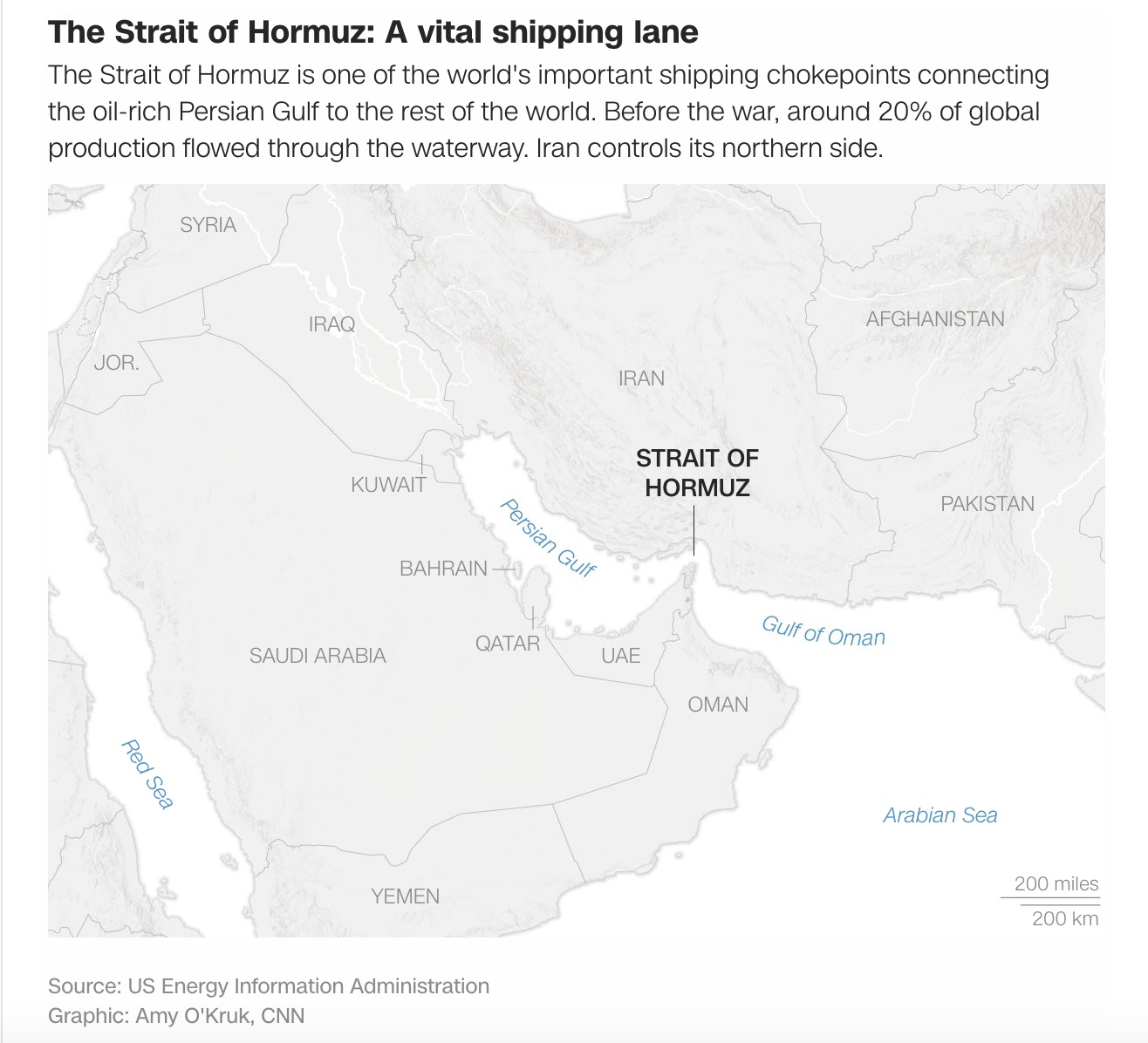
The Strait of Hormuz and Wider Stakes
The conflict has continued to roil global energy markets.
Ships transiting the Strait of Hormuz with Iranian permission are being charged an average fee of between $1.5 million and $2 million, according to a senior member of Iran’s parliament.
A member of Iran’s negotiating team told the country’s semi-official Fars news agency that Tehran could issue a 30-day deadline for reopening the strait under Iranian management, citing recent American military actions.

The United States military said on Saturday it had shot down several Iranian missiles and drones launched toward the strait and Gulf Arab allies, and had struck some of Iran’s coastal surveillance radar sites in retaliation.
Trump said he had no plans to withdraw the roughly 50,000 American troops involved in the Iran conflict until there was “a completion” of the war, adding, “I don’t consider them in danger.”
He also pushed back against the assertion that he had broken a campaign promise to keep the United States out of new military conflicts. “First of all, I didn’t guarantee no war,” he told NBC.