

NEW YORK, United States — Taylor Swift has filed applications in the United States to trademark her voice and likeness, in a move aimed at addressing concerns over artificial intelligence-generated impersonations.
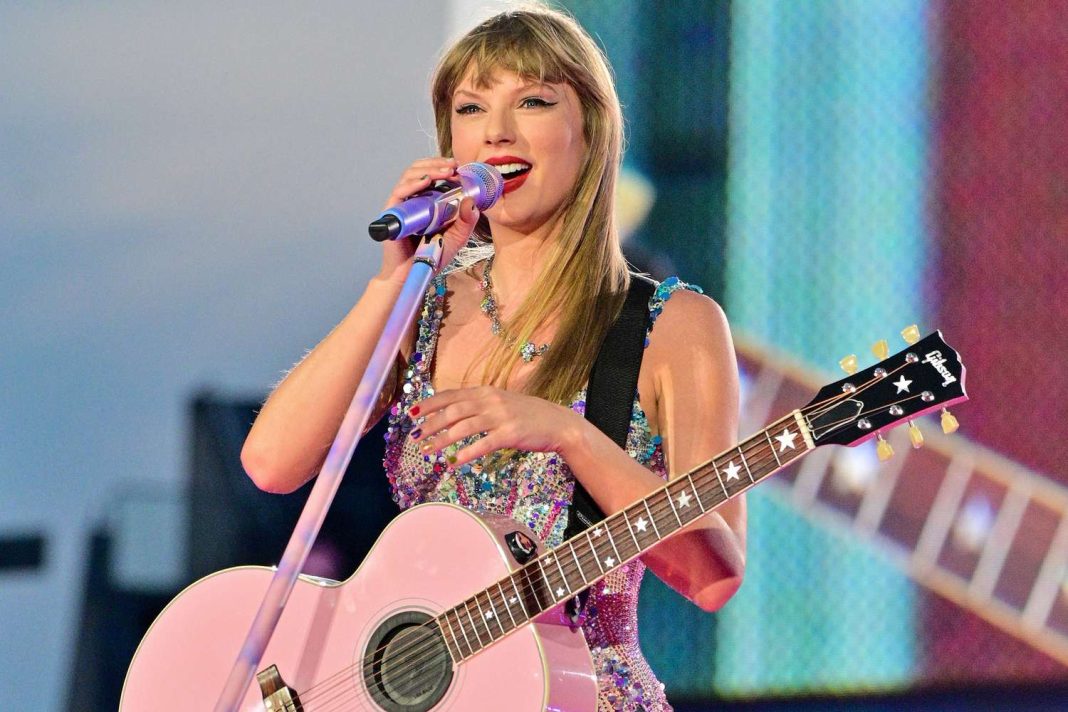
The filings include three separate trademark applications, one featuring a photograph of the singer performing during her Eras Tour, and two others based on audio clips of her introducing herself while promoting her album The Life of a Showgirl.
The image used in the application depicts Swift on stage “holding a pink guitar, with a black strap and wearing a multi-colored iridescent bodysuit with silver boots,” according to the filing.
The photograph has previously been used in promotional material for a Disney+ film of the tour.
The audio submissions include clips in which Swift says, “Hey, it’s Taylor” and “Hey, it’s Taylor Swift,” recorded for music streaming platforms including Spotify and Amazon Music.
Response to A.I. Impersonations
The filings come as artificial intelligence tools have been used to create images and recordings resembling Swift without her authorisation.
These have included explicit imagery and a fabricated political advertisement that portrayed her as endorsing Donald Trump.
Legal experts say trademark registration could provide broader protection beyond direct copying.
Josh Gerben said that registering phrases associated with Swift’s voice could allow her to challenge imitations that are “confusingly similar,” a standard applied in trademark law.
“By registering specific phrases tied to her voice, Swift could potentially challenge not only identical reproductions, but also imitations that are ‘confusingly similar,’” Gerben said.
He added that the image filing could also support claims against AI-generated depictions resembling the registered likeness.
Growing Use of Trademark Law
Swift’s applications follow similar efforts by Matthew McConaughey, who earlier this year sought trademark protection for his voice and image in response to concerns about AI misuse.
Trademark law is increasingly being explored by public figures as a tool to address unauthorised digital replication, as existing intellectual property frameworks adapt to the rapid development of artificial intelligence technologies.
The filings highlight ongoing legal efforts to define how likeness and voice can be protected as AI-generated content becomes more widespread.