
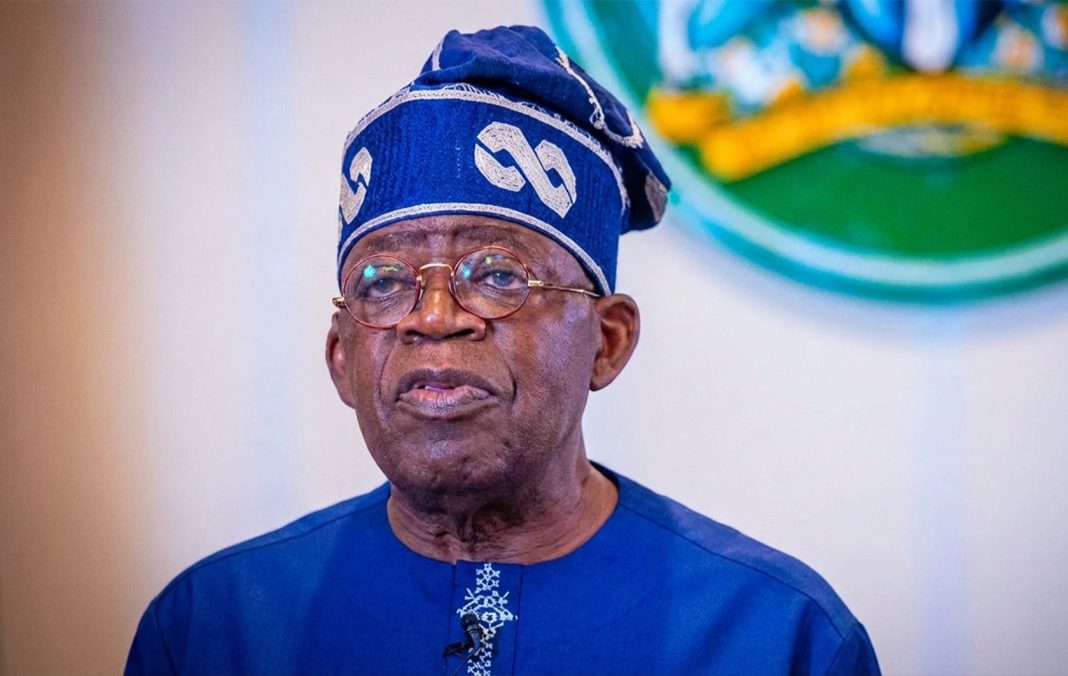

ABUJA, Nigeria — President Bola Tinubu has ordered a broad reform of Nigerian football after the country failed to qualify for major international tournaments.
The directive followed the resignation of Nigeria Football Federation President Ibrahim Gusau and mounting criticism of the administration of the sport.
In a statement issued on Thursday, August 27, 2026, presidential spokesman Bayo Onanuga said the overhaul would address governance, accountability, domestic competitions, player development and the representation of football stakeholders.
“The reform must respond to a longstanding need to strengthen governance, administration, stakeholder representation, development pathways, domestic competitions and accountability across Nigerian football,” Tinubu said in the State House statement.
The president said football had not recorded the progress seen in some other sports since the restoration of the National Sports Commission. He attributed the continuing problems to weaknesses in the way the game is administered.
NFF Independence Places Limits on Government Role
Although Tinubu has directed the reform, the NFF is a member of FIFA and is required to operate independently of government control.
Articles 14 and 19 of the FIFA Statutes require every national association to administer its affairs without undue interference from outside parties. The rules also require the association’s governing bodies to be elected or appointed through procedures established in its own statutes.
Under the provisions, a government may support football development, provide public funding, investigate suspected criminal conduct and participate in consultations. It cannot, however, take over the federation’s governing functions, choose or dismiss its officials outside the NFF’s statutory processes or impose an unelected leadership on the association.
FIFA’s rules state that each member association must manage its affairs “independently and without undue influence from third parties.” A breach may lead to sanctions even when the interference was not caused by the association itself, according to the governing body’s legal framework.
Suspension from FIFA can prevent a country’s national teams, clubs and officials from participating in international football activities.
In 2022, FIFA suspended the All India Football Federation over outside interference.
The suspension was lifted after an administrative committee that had assumed the powers of the federation’s executive body was removed and the elected football administration regained control of its affairs, FIFA said.
The distinction means that Nigeria’s proposed reform must be conducted with the NFF rather than imposed upon it. Any alteration of the federation’s leadership, electoral arrangements or internal structures must follow the NFF statutes and FIFA requirements.
The presidency acknowledged those restrictions in its announcement.
It said the reform process would involve consultation with FIFA and the Confederation of African Football while protecting Nigeria’s obligations under international football rules.
Sports Commission Asked to Lead Consultations
Tinubu directed National Sports Commission Chairman Shehu Dikko to work with the NFF Secretariat and other football stakeholders.
The commission is expected to help maintain essential administrative functions while facilitating consultations on the proposed changes.
The presidency did not provide a timetable for the process or identify the specific structural changes under consideration.
The involvement of the NFF Secretariat is significant because the federation, rather than the federal government or the sports commission, remains the body recognised by FIFA to administer association football in Nigeria.
Under the FIFA framework, reforms may be developed with government support, but decisions concerning the federation must be made through its authorised bodies.
FIFA may also establish a normalisation committee in exceptional circumstances, usually after consultation with the relevant continental confederation, but such a committee derives its authority from FIFA rather than a national government.
Gusau Leaves After World Cup Failures
Tinubu’s announcement came hours after Gusau resigned as NFF president. Gusau said he was leaving to allow other Nigerians to contribute to the development of the game.
He maintained that the federation was in a stronger position than when he took office, despite the failure of the country’s senior men’s and women’s teams to reach their respective World Cups.
The Super Eagles did not participate in the men’s World Cup earlier this year. The Super Falcons also failed to qualify for the Women’s World Cup after losing to Cameroon and missing the semi-finals of the qualifying competition.
It will be the first Women’s World Cup without Nigeria since the tournament began in 1991.
Those results intensified demands for changes at the NFF, which oversees the national teams, domestic football administration and Nigeria’s relationship with FIFA and CAF.
Tinubu called on football officials and other stakeholders to support the transition. The presidency said the objective was to build institutions capable of converting Nigeria’s football talent, public support and investment into sustained results.
The next steps will have to satisfy two requirements: responding to the government’s demand for greater accountability while preserving the institutional independence that Nigeria accepted as a condition of FIFA membership.