
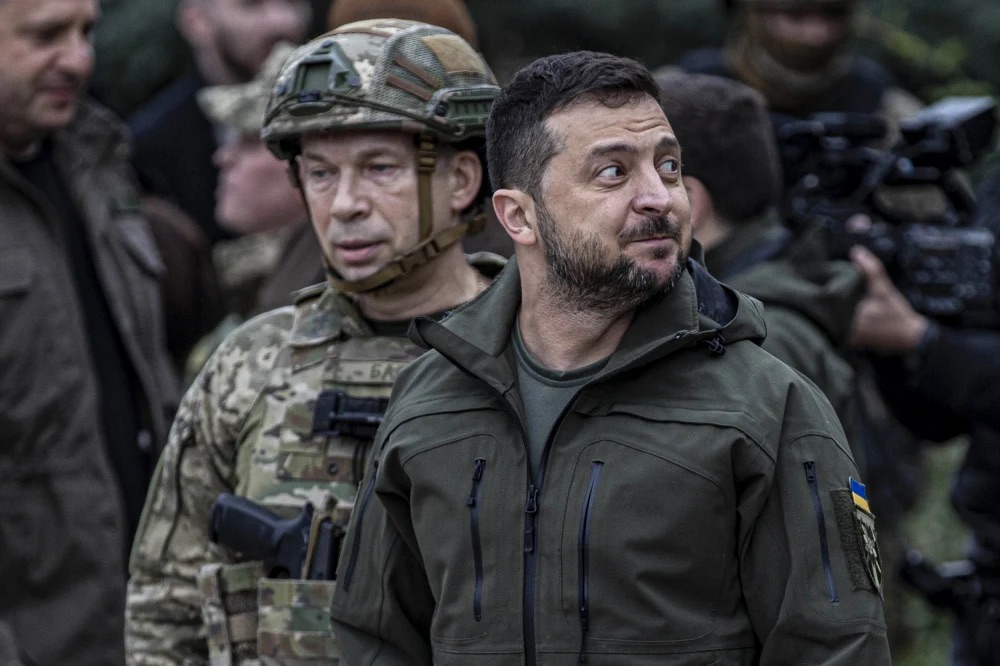

KYIV, Ukraine — President Volodymyr Zelenskyy has removed Gen. Oleksandr Syrskyi as commander-in-chief of Ukraine’s armed forces, bringing an abrupt end to a military leadership dispute that had provoked rare public demonstrations during the war with Russia.
Zelenskyy named Maj. Gen. Mykhailo Drapatyi as Syrskyi’s successor on Tuesday, July 21, 2026, after several days of consultations with senior commanders. Drapatyi formally assumed command the following day.
The change followed mounting anger over Zelenskyy’s earlier dismissal of Defence Minister Mykhailo Fedorov, a leading advocate of Ukraine’s increasingly technology-driven approach to the war.
Protesters had demanded Fedorov’s reinstatement and Syrskyi’s removal, turning a disagreement inside the defence establishment into one of the most serious political challenges Zelenskyy has faced since Russia’s full-scale invasion.
In announcing the new commander, Zelenskyy sought to move the country beyond the division.
“The desire in all of us is one — victory over the enemy and achieving such conditions on the front and in pressure on Russia, which would allow forcing Russia to peace,” he wrote.
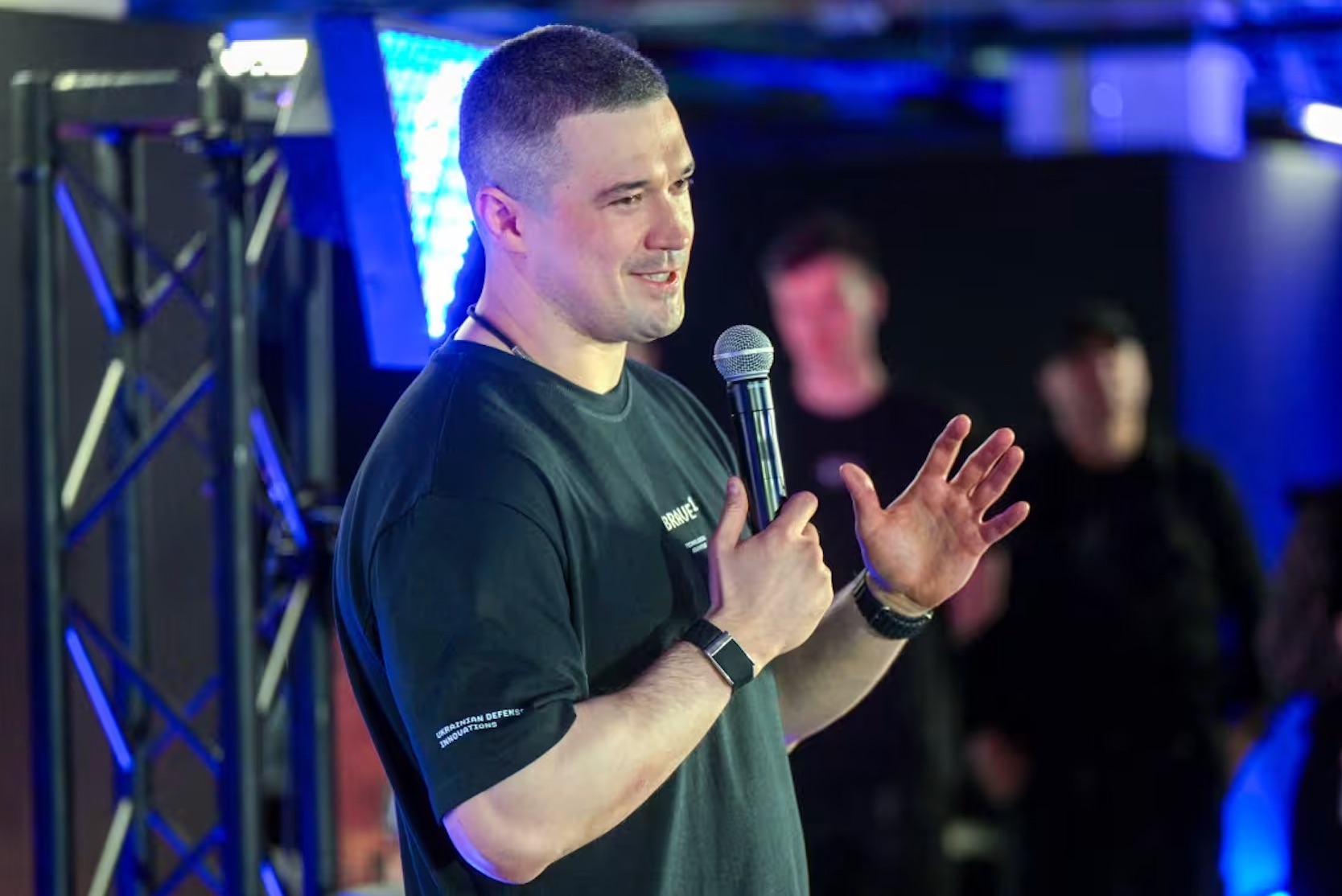
A Rift at the Centre of Ukraine’s War Effort
The crisis exposed competing ideas about how Ukraine should conduct a war in which drones, electronic systems and long-range strikes have assumed growing importance.
Syrskyi, 60, rose through a more traditional military system built around infantry, artillery and centralised command.
Fedorov, 35, became associated with efforts to introduce new technology, improve military procurement and expand Ukraine’s use of inexpensive drones against Russian forces and strategic targets.
Their professional relationship had deteriorated to the point that the two men were no longer communicating directly, according to Zelenskyy.
The president said the breakdown had effectively forced him to choose between the defence minister and the armed forces commander.
Fedorov publicly confirmed that the disagreement involved the direction of Ukraine’s military reforms.
He said Syrskyi had resisted discussions about problems within the defence system and had failed to adapt sufficiently to a changing battlefield.
Fedorov acknowledged Syrskyi’s contribution to Ukraine’s defence during the opening phase of the invasion but argued that methods suited to the early stages of the conflict could not determine its future.
“Why is this trajectory breaking now, and why are we veering off course? There is such a risk. And the Ukrainian people have taken to the streets for that,” he said at a news conference.
Dismissal Brings Ukrainians Into the Streets
Zelenskyy’s removal of Fedorov after six months as defence minister produced an unusual wartime backlash.
Demonstrators gathered in Kyiv and other cities for several consecutive days, calling for the president to reverse the decision.
Soldiers, veterans and civilians joined protests demanding that Fedorov be returned to the ministry and that Syrskyi leave the military command.
The demonstrations reflected concerns extending beyond the fate of one minister.
For many participants, the dispute had become a test of whether Ukraine’s military leadership was prepared to abandon older structures and respond more quickly to developments in drone warfare.
Syrskyi’s record also came under renewed scrutiny.
Critics have blamed him for costly military decisions, including the prolonged defence of Bakhmut before Ukraine withdrew from the city.
They have also cited the retreat from parts of Russia’s Kursk region, where some Ukrainian troops were reportedly left in exposed positions.
His supporters, however, have pointed to his role in the defence of Kyiv during the early weeks of Russia’s invasion and his involvement in other important Ukrainian operations.
Syrskyi’s reputation for accepting heavy losses earned him the nickname “The Butcher” among some of his critics.
The protests transformed that long-running military debate into a direct challenge to Zelenskyy’s leadership.
A senior air force commander also resigned in opposition to Fedorov’s removal, further demonstrating the depth of the divisions within the defence establishment.
Zelenskyy Consults Senior Commanders
As the protests continued, Zelenskyy spent several days meeting military commanders and reviewing the leadership of the armed forces.
The president held discussions with officers responsible for different sections of the front, military equipment producers, security officials and representatives of the defence establishment.
His office described the meetings as an effort to improve coordination between battlefield commanders and the institutions responsible for supplying the military.
Drapatyi, 43, emerged from that process as the choice to replace Syrskyi.
He belongs to a younger generation of Ukrainian commanders whose careers have been shaped largely by the conflicts that began after Russia’s intervention in Ukraine in 2014.
Before his latest appointment, he had commanded the country’s land forces and held senior battlefield responsibilities.
His selection is likely to be welcomed by Ukrainians who regarded Syrskyi’s command as too closely tied to an older military culture.
Drapatyi has also been viewed as more receptive to the modernisation programme associated with Fedorov.
Zelenskyy said Drapatyi would work alongside senior military and security officials to maintain operations and continue reforms.
The president also approved the appointment of Ihor Skybiuk as chief of the general staff. He said the new leadership team consisted of experienced officers known to Ukrainian troops.
Fedorov Offered Another Government Role
Syrskyi’s departure satisfied one of the protesters’ principal demands, but it did not immediately resolve Fedorov’s position.
Zelenskyy met the former defence minister separately and offered him another senior role overseeing military technology and innovation.
The president described the proposed position as one that could unite different parts of Ukraine’s technology sector.
“Change is inevitable,” Fedorov wrote before the command reshuffle was announced. “The dialogue is happening. I believe we will succeed.”
Fedorov has maintained that effective reform requires direct control over military policy.
He later rejected alternative posts, arguing that only the presidency, Defence Ministry or military command carried enough authority to implement his programme.
His removal has strengthened his political profile and raised questions about whether the demonstrations will continue until he is restored as defence minister.
A public opinion survey conducted during the dispute found that 61 per cent of respondents opposed Fedorov’s dismissal.
A Reshuffle During a Difficult Phase of the War
The leadership change comes as Ukraine confronts persistent pressure along the eastern front.
Russian forces have continued to make gradual territorial gains, while Ukraine has struggled with troop shortages and a declining supply of missile interceptors.
Russian attacks have repeatedly tested the air defences protecting Kyiv and other cities.
Ukraine has increasingly relied on drones and long-range operations to offset Russia’s advantage in personnel and conventional weapons.
Its forces have demonstrated an ability to strike oil facilities, logistics networks and military sites deep inside Russian territory.
Those operations have reinforced Fedorov’s argument that technology can alter the balance against a larger enemy.
But they have not removed the need to defend an extensive ground front, where artillery, infantry and manpower remain critical.
Drapatyi must now reconcile those demands while restoring confidence among soldiers and civilians unsettled by the public breakdown between the country’s senior defence officials.
The new commander also takes office with Ukraine’s political leadership under greater scrutiny.
The protests showed that, even under martial law, decisions affecting the conduct of the war could produce organised public opposition.
Zelenskyy’s removal of Syrskyi may ease part of the immediate anger.
Whether it ends the wider dispute will depend on the direction of military reform, Fedorov’s future and the performance of Ukraine’s forces under their new commander.