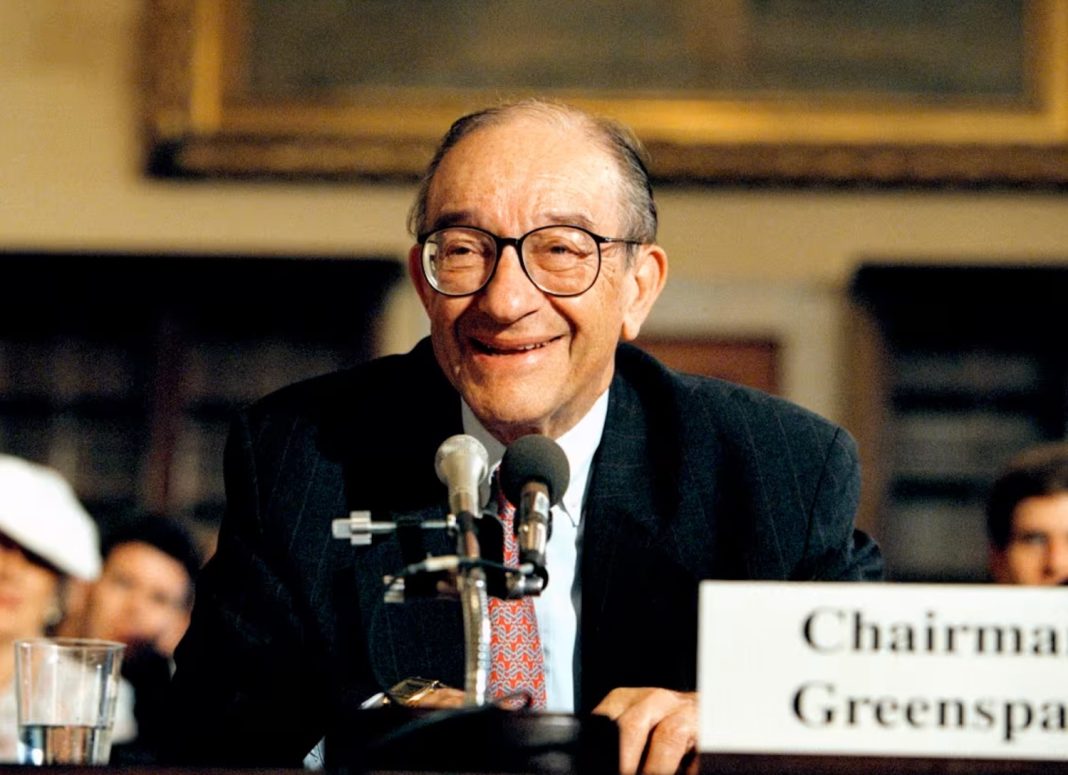

WASHINGTON, United States — Alan Greenspan, the former Federal Reserve chairman whose long command of American monetary policy made him one of the most influential economic officials of the late 20th century, has died, his wife, Andrea Mitchell, said.
His death was announced on Monday, June 22, 2026.
“Alan passed away at our home this morning at the age of 100 from complications of Parkinson’s Disease,” Mitchell said in a statement.
Greenspan led the Federal Reserve for 18 and a half years, serving under Presidents Ronald Reagan, George H.W. Bush, Bill Clinton and George W. Bush.
His tenure, which began in 1987 and ended in 2006, was the second-longest in the history of the American central bank.
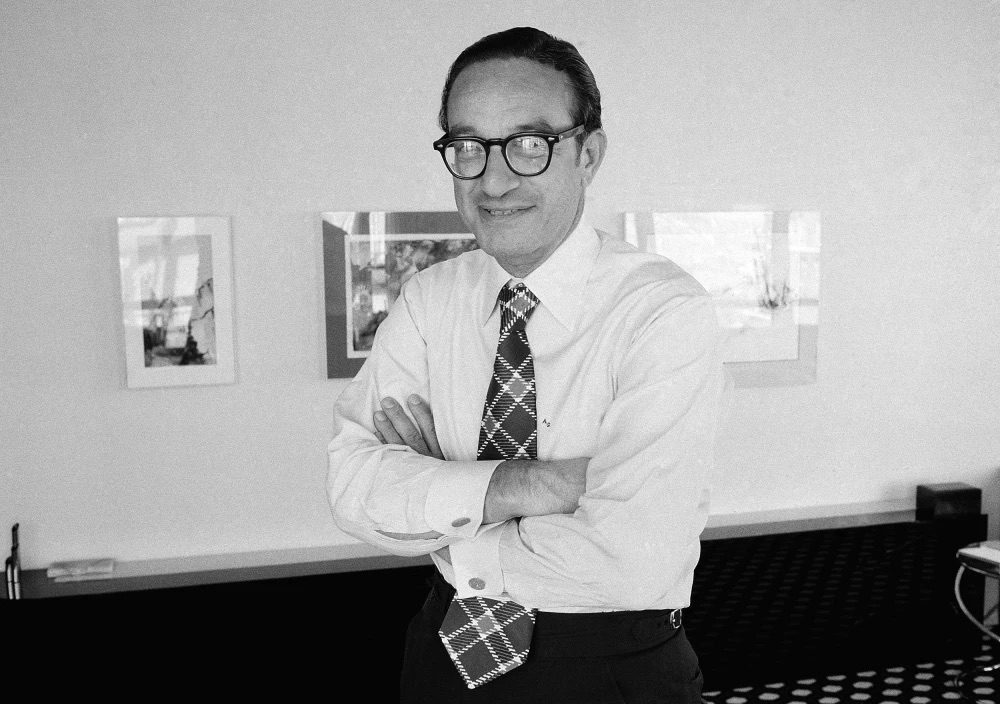
For much of his time in office, Greenspan was celebrated as a master of monetary policy, credited with helping steer the United States through a period of expansion, low unemployment and rising financial markets.
But his record came under renewed scrutiny after the housing collapse and financial crisis that followed his departure from the Fed.
Mitchell, an NBC News correspondent who was married to Greenspan for 29 years, described him as a major figure in American public life.
“He was a giant of a man who helped shape the U.S. economy for decades under presidents of both parties, but was always honest in acknowledging his mistakes,” she said.
A Long Tenure at the Fed
Greenspan was nominated by Reagan in 1987 and took over the central bank shortly before one of the most turbulent moments in modern market history.
Two months after he became chairman, the Dow Jones industrial average fell 22 percent in a single day on October 19, 1987, in what became known as Black Monday.
Greenspan responded by saying that the Fed stood ready “to serve as a source of liquidity to support the economic and financial systems,” a signal that helped calm markets.
During the 1990s, the American economy entered one of its strongest peacetime expansions.
Unemployment fell below 4 percent, stocks climbed to record levels and the federal government moved from deficits into budget surpluses.
Greenspan’s public remarks were often closely watched by investors, who parsed his words for clues about interest rates and the direction of the economy.
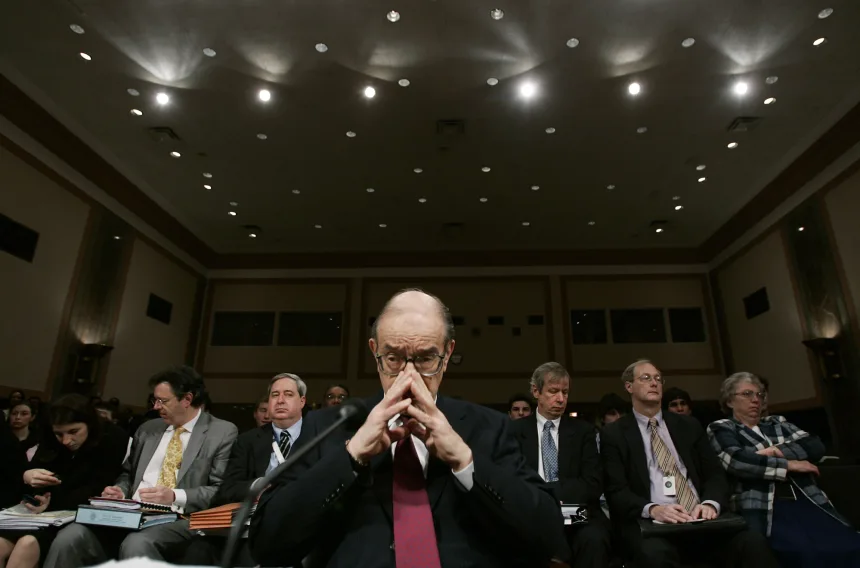
His style was famously opaque, a habit he once said was deliberate.
“I spend a substantial amount of my time endeavouring to fend off questions, and worry terribly that I might end up being too clear,” he told The New York Times in 1995.
In 1996, he delivered one of his best-known warnings, questioning whether “irrational exuberance” had pushed asset prices too high.
The phrase briefly unsettled global markets, though technology stocks continued to rise for several years.
Praise, Then Criticism
After the collapse of the dot-com bubble in 2000 and the recession that followed in 2001, Greenspan and the Fed cut interest rates sharply.
The September 11 attacks deepened concerns about the economy, and the central bank eventually lowered its benchmark rate to 1 percent.
Those low rates later became a central part of the debate over Greenspan’s legacy.
Many economists argued that the policy helped fuel the housing boom by making credit cheaper and encouraging riskier mortgage lending.
The Fed was also criticised for not doing more to oversee mortgage-market excesses before the crisis.
While still in office, Greenspan rejected the idea that the United States had a nationwide housing bubble, though he acknowledged that some local markets appeared overpriced.
When housing prices later fell across the country and foreclosures and bank failures accelerated in 2008, Greenspan told the House Oversight Committee that he was in a “state of shocked disbelief.”
He said the economic damage from the collapse had “turned out to be much broader than anything I could have imagined.”
He later defended the Fed’s decisions on interest rates, saying he did not believe they had caused the housing bubble or the financial crisis.
From New York to Washington
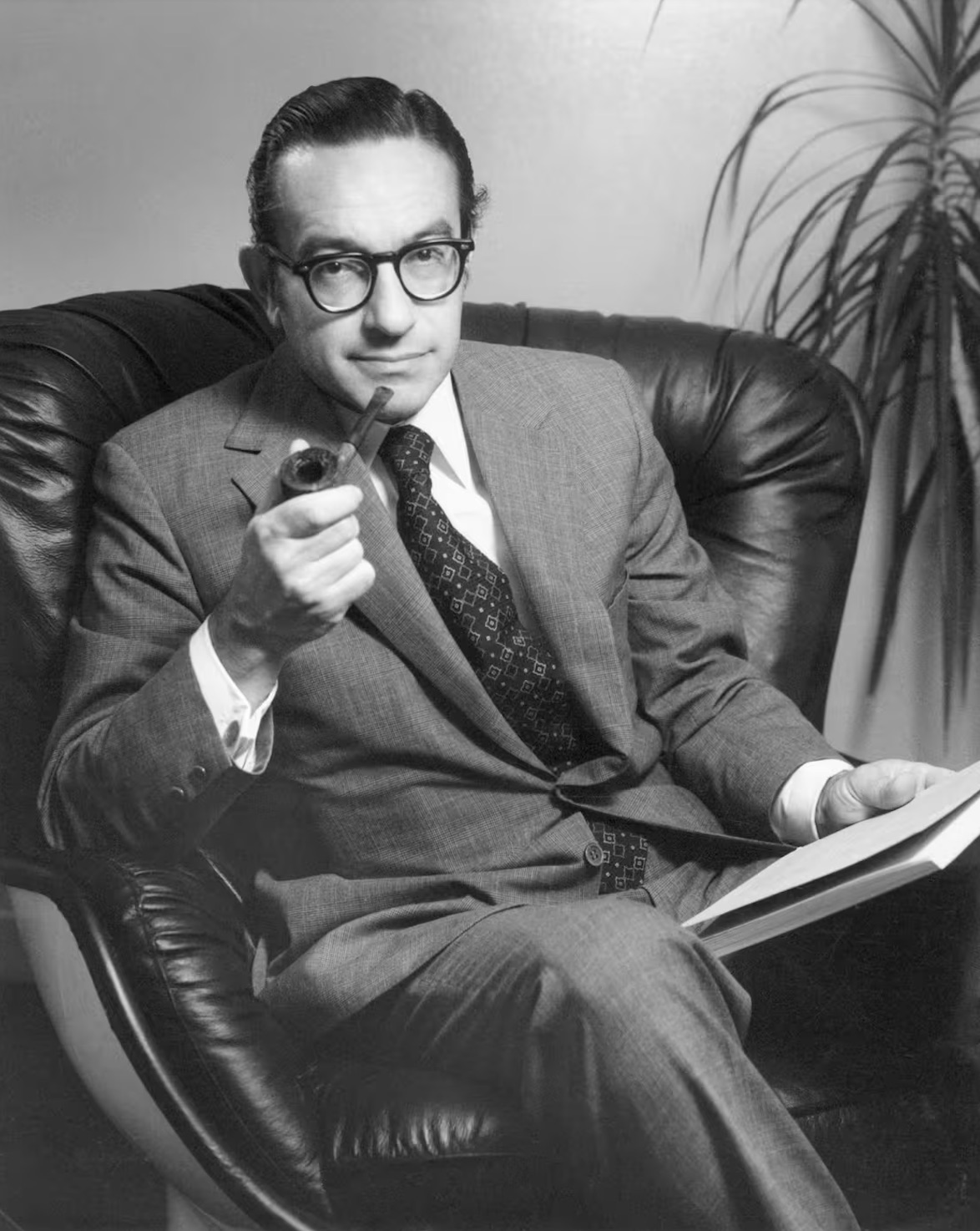
Alan Greenspan was born in New York City and studied at New York University, where he later taught economics in the 1950s.
He also helped run Townsend-Greenspan & Co., an economic consulting firm where he served as chairman and president for 21 years.
He advised Richard Nixon’s 1968 presidential campaign and later served as a part-time adviser after Nixon entered the White House.
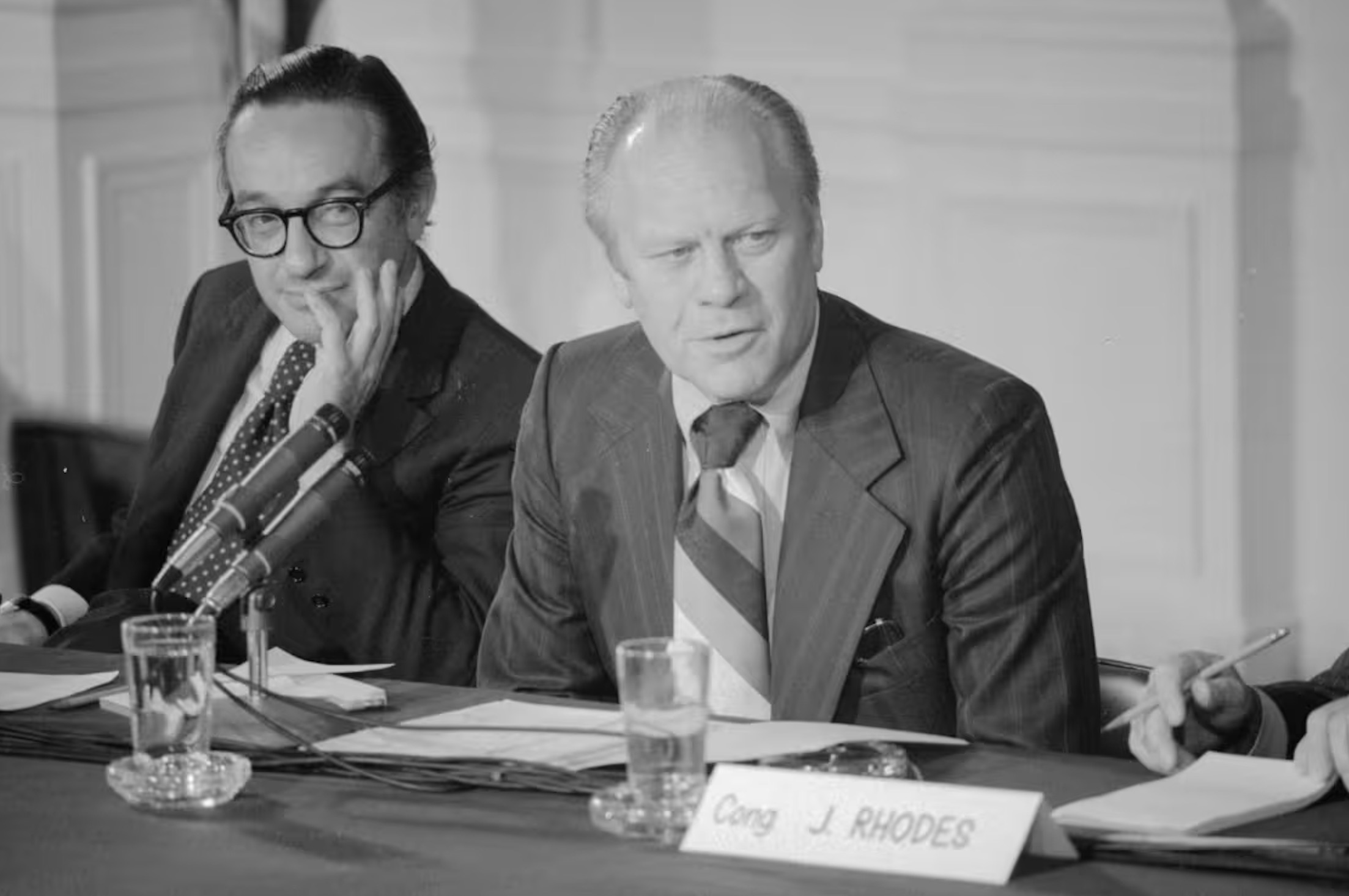
In 1974, Greenspan became chairman of the President’s Council of Economic Advisers, a position he held through the administration of President Gerald Ford.
After Ford lost the 1976 election, Greenspan returned to consulting, remaining there until his appointment to the Federal Reserve.
His stature grew during the long expansion of the 1990s. Bob Woodward’s 2000 book about him was titled “Maestro: Greenspan’s Fed and the American Boom.”
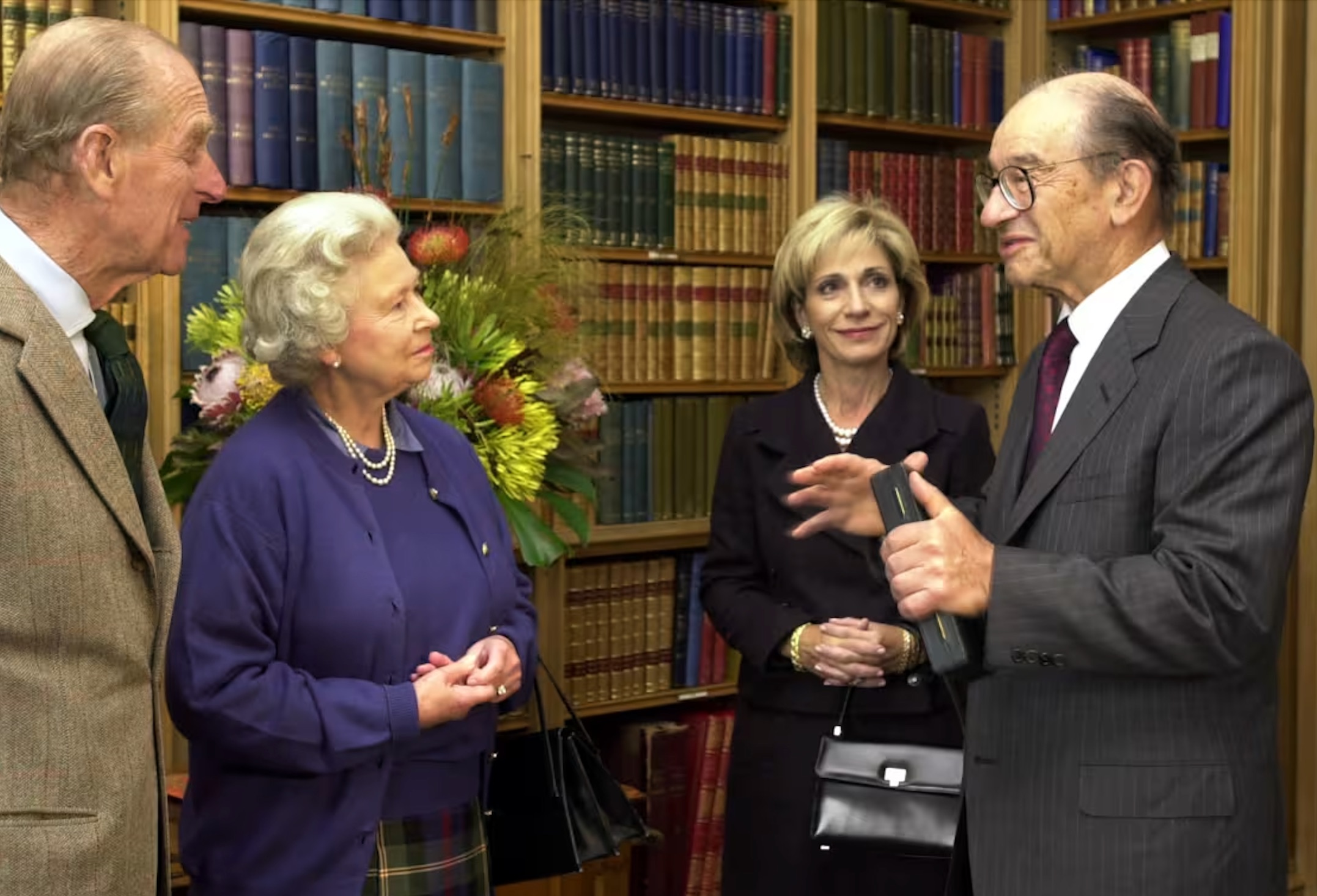
In 2002, Queen Elizabeth II made him an honorary Knight of the British Empire, citing his contribution to global economic stability.
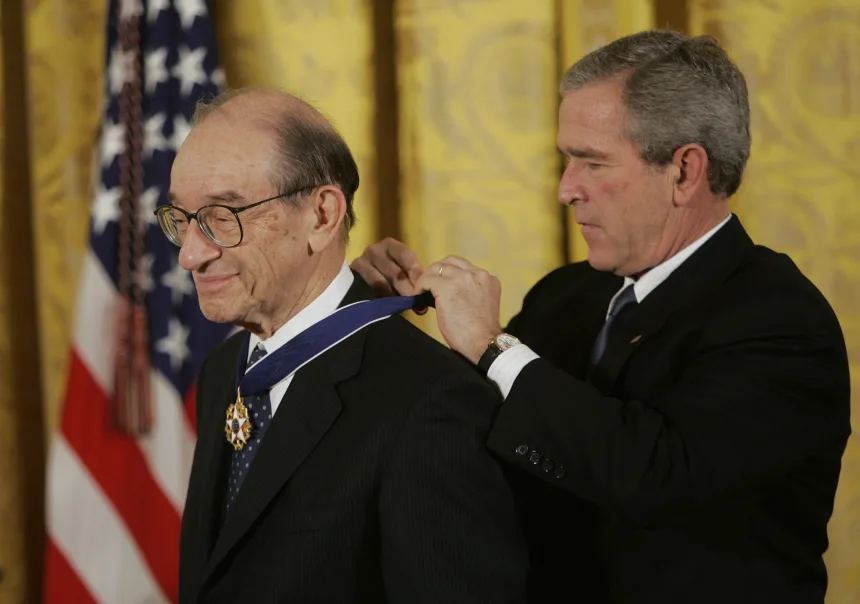
President George W. Bush awarded him the Presidential Medal of Freedom in 2005.
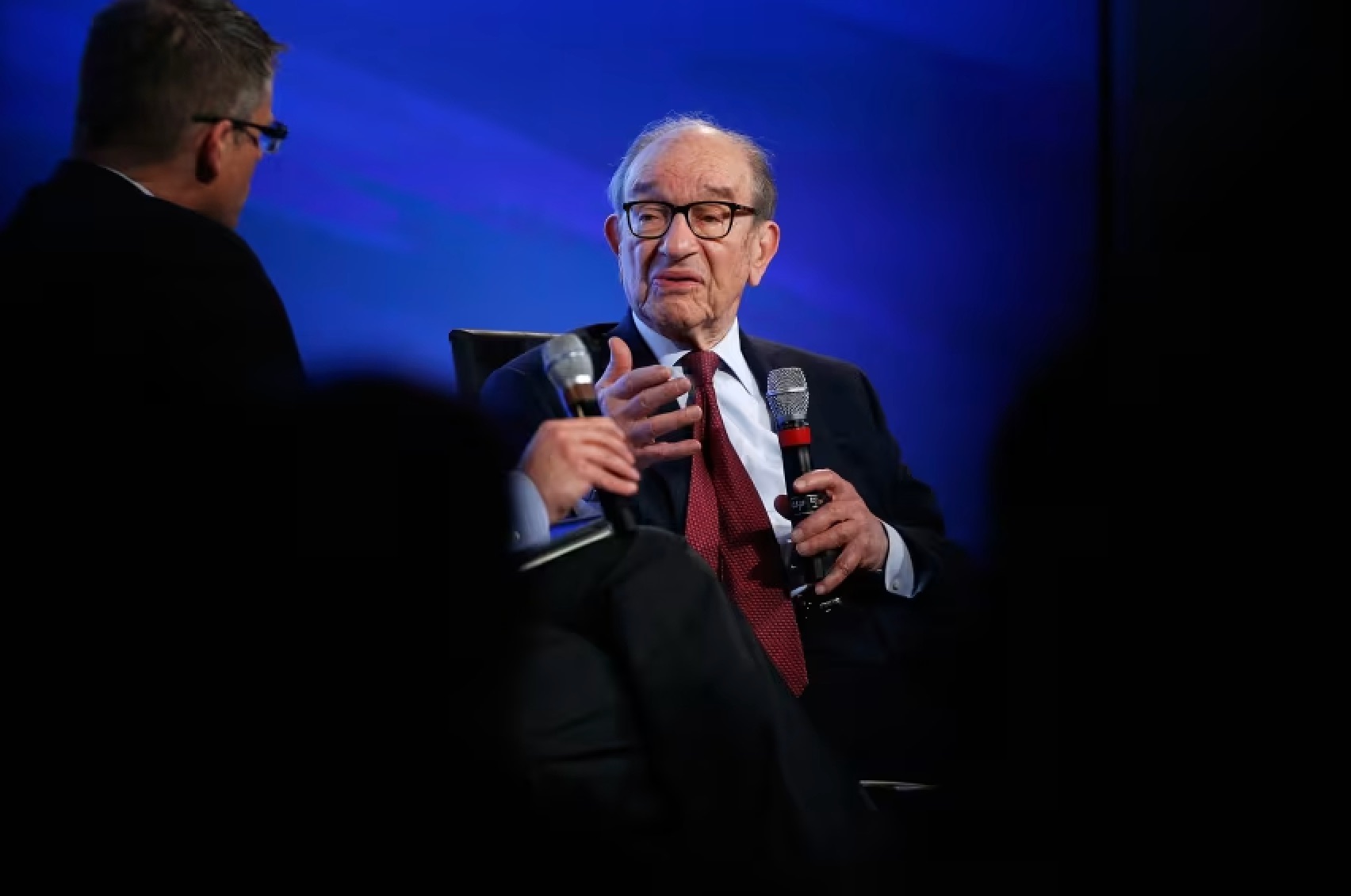
After leaving the Fed, Greenspan founded Greenspan Associates LLC, a Washington consulting firm, and advised major financial institutions.
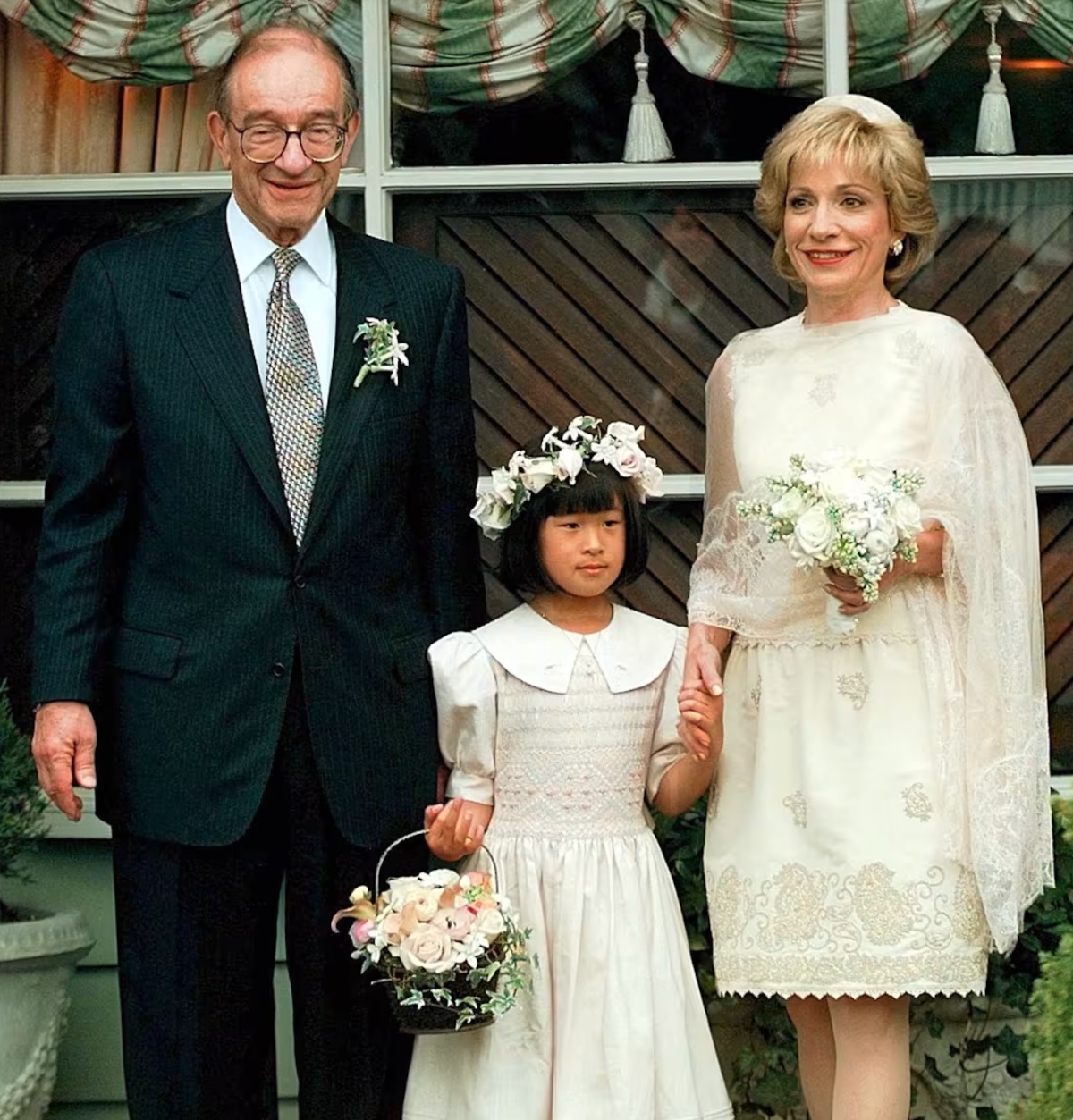
His memoir, “The Age of Turbulence: Adventures in a New World,” was published in 2007, just before the recession that reshaped public assessments of his career.
His most recent book, “Capitalism in America: A History,” was published in 2018.
Mitchell said her husband’s interests extended beyond economics and public policy.
“He will be remembered for his brilliance and his kindness. Being his life partner was the joy of my life.”