
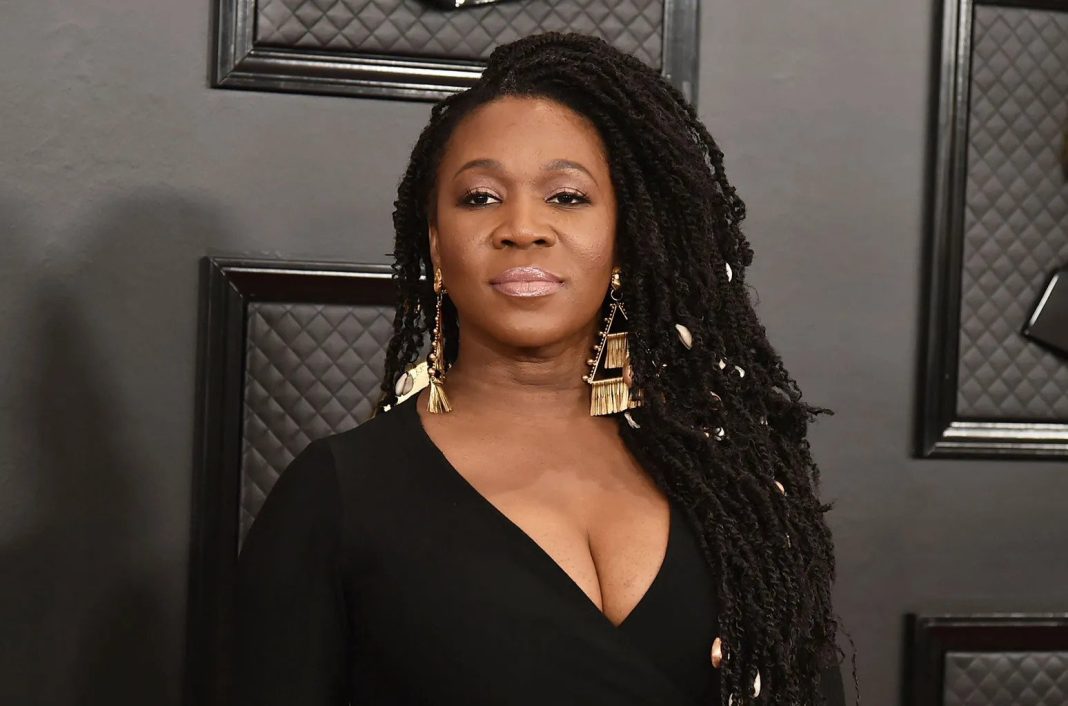

India.Arie has built a career on the language of healing. Long before self-care became a marketing category and vulnerability became a social media strategy, she was singing about self-worth, inner light, spiritual clarity and the difficult business of becoming whole.
So it is fitting that her latest reflection, published on Substack under the title “My Most Important Lessons of the Decade,” does not read like celebrity confession in the familiar sense. It is not a scandalous tell-all. It is not a polished reinvention campaign. It is something quieter and, in many ways, more consequential: a woman taking inventory of the beliefs that shaped her, protected her, exhausted her and, at times, kept her from herself.
The post is structured as a list of lessons. But beneath that simple format is a larger argument about womanhood, friendship, ambition, marriage, health and the emotional labor often demanded of people who are gifted at caring for others.
Arie writes with the bluntness of someone who has stopped negotiating with her own truth. She describes realizing that what she once understood as community may have been a system in which she was carrying more than her share. She reflects on friends who were not quite friends, on people she recognized as harmful but excused because she did not want them to be the ones causing pain. She writes, too, about the social script of marriage, not as a woman waiting for the right partner, but as someone questioning whether the traditional role itself ever fit her.
The most arresting thread in the essay is not rejection. It is recovery.
Again and again, Arie returns to the cost of putting everyone else first. The language is personal, but the experience is widely recognizable, especially for women raised to be agreeable, emotionally available and endlessly useful. There is a particular kind of praise reserved for women who overextend themselves: selfless, nurturing, strong, dependable. But praise can become a cage when it rewards disappearance.
Arie’s post pushes against that old bargain. She is no longer treating exhaustion as evidence of virtue. She is no longer confusing intensity with a flaw simply because it unsettles other people. She is no longer offering explanations where a boundary would do.
One of the sharpest lessons in the piece is her insistence that not wanting to do something is reason enough. It is a deceptively simple idea, but it cuts through decades of social conditioning. Many people do not ask for explanations because they want understanding; they ask because explanations provide openings for persuasion. Arie appears to have learned that every unnecessary explanation can become an invitation to be talked out of oneself.
There is also a revealing distinction in her reflection on admiration and friendship. For public figures, especially artists whose work is intimate and spiritually resonant, the line between being loved and being consumed can blur. Fans may feel they know the artist. The artist may mistake that intensity for closeness. Arie’s observation that some people she considered friends were actually fans is not a dismissal of admiration. It is a recognition that admiration is not the same as mutuality.
That recognition matters because Arie’s music has always invited emotional closeness. Songs like “Video,” “Ready for Love,” “I Am Not My Hair” and “Strength, Courage & Wisdom” became part of the inner lives of listeners who saw themselves in her honesty. But the very quality that made her beloved — her willingness to give language to other people’s healing — also raises the question at the heart of her Substack post: What happens when the healer needs to stop being available to everyone?
The answer, for Arie, seems to be a new ethic of self-possession.
This does not mean hardness. It does not mean isolation. It means discernment. It means recognizing that compassion without boundaries can become self-abandonment. It means understanding that a woman’s intensity does not need to be softened for every room she enters. It means accepting that being an inspiration is not the same as being obligated.
There is humility in the final lesson she shares: the recognition that believing something does not automatically make it true. In an era when personal truth is often treated as the highest form of authority, that admission feels unusually mature. Arie is not only defending her instincts; she is refining them. She is not presenting herself as someone who has always known. She is presenting herself as someone who has lived long enough to learn.
That may be the most powerful part of the piece. It refuses the fantasy of effortless enlightenment. Wisdom, in Arie’s telling, is not a quote on a pastel background. It is the result of misreading rooms, trusting the wrong people, overfunctioning in the name of love, mistaking performance for purpose and finally deciding to come home to oneself.
Celebrity culture often rewards dramatic transformation: the new body, the new relationship, the new album, the new public image. Arie’s transformation is less theatrical. It is internal. It is the slow, difficult work of removing oneself from roles that once felt noble but became unsustainable.
For longtime listeners, the post may feel like a continuation of a message she has been offering for years. But there is a difference between singing about worth and enforcing it. There is a difference between naming light and refusing to dim it. There is a difference between wanting to heal the world and realizing that one’s own life must be included in that healing.
India.Arie’s decade of lessons is not merely a personal retrospective. It is a reminder that growing older can bring a different kind of freedom: the freedom to disappoint expectations, to outgrow old definitions of goodness, to leave behind relationships that require self-erasure, and to understand that peace sometimes begins with one brave, unadorned sentence: no.