


Type a question into an artificial intelligence system and an answer appears in seconds. Yet behind that glowing text box lies one of the most concentrated and politically consequential supply chains ever assembled.
The response may depend on a chip designed in California, manufactured in Taiwan with Dutch machinery, and operated inside an American data centre. It is financed by global capital, filtered through rules written by a private laboratory, and delivered by a platform already embedded in daily life.
So, who controls AI?
Not one chief executive, company, or country. Control is layered, contested, and concentrated. Different actors hold different levers—and the struggle among them is becoming a struggle over economic power, national security, culture, and human agency.
RELATED: Anthropic and OpenAI Chiefs Call for Slower Development of Advanced AI
ALSO READ: Trump Calls AI Safety Fears a ‘Hoax’ as Industry Pushes for Guardrails
The Answer Is a Supply Chain
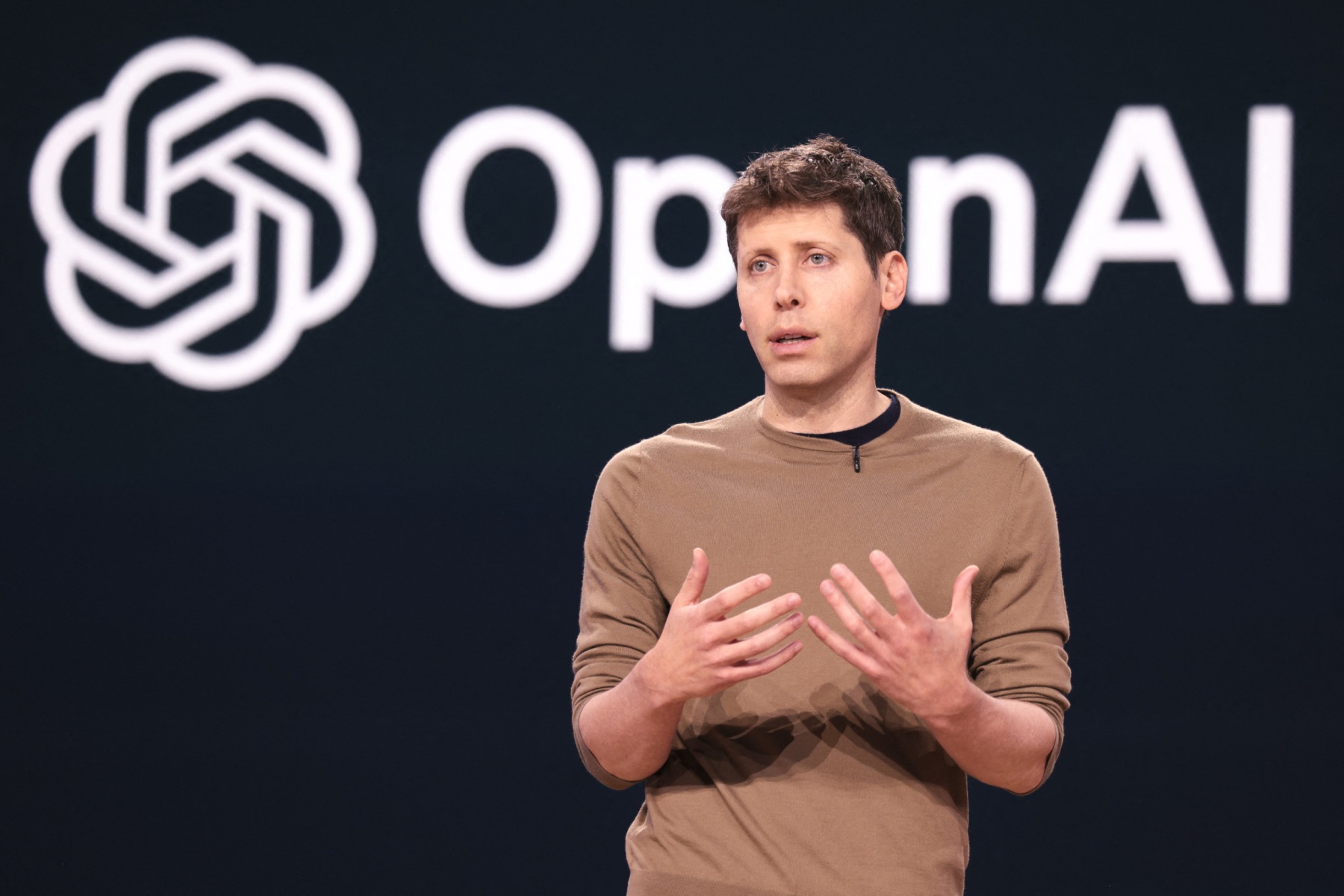
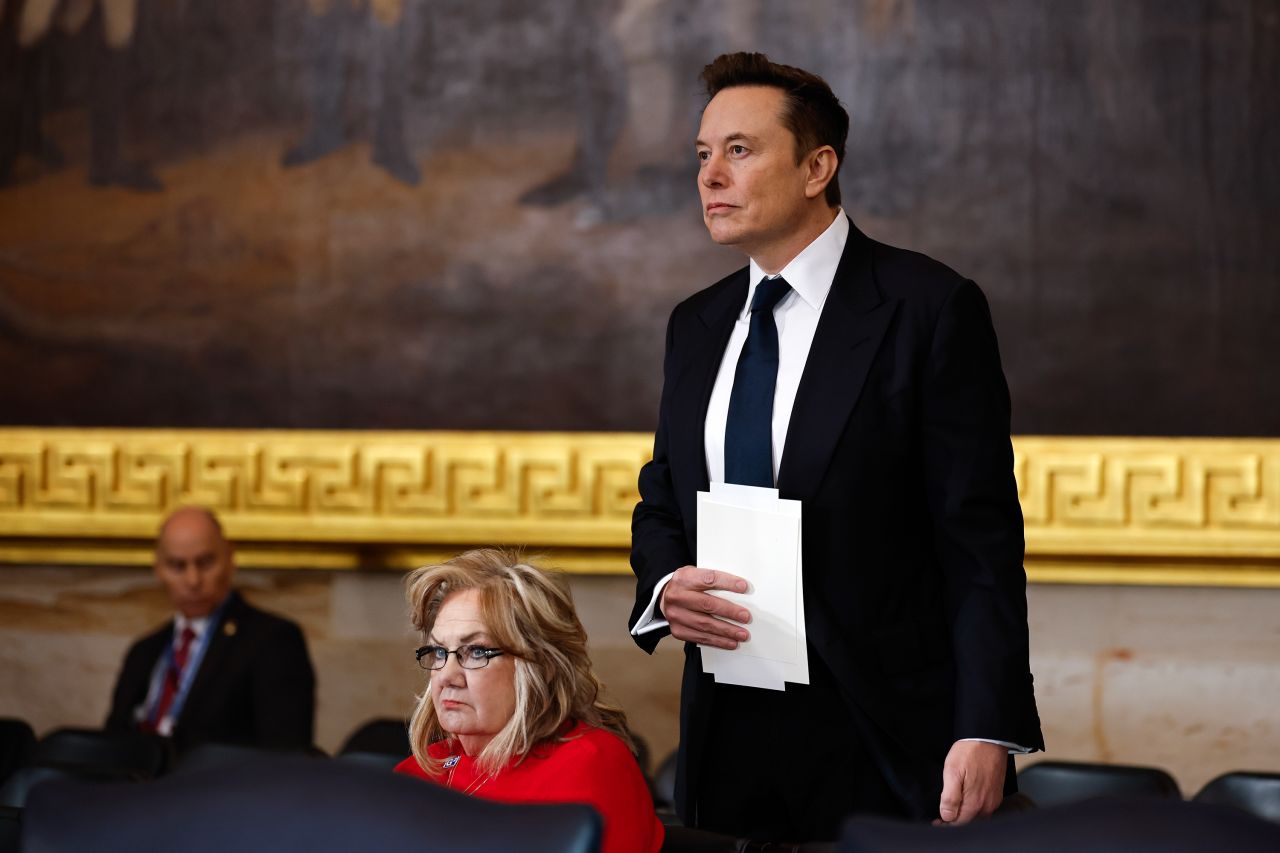
Public attention focuses on figures such as Sam Altman, Elon Musk, Demis Hassabis, and Dario Amodei. They matter, but none commands the entire system.
AI control rests on six powers: manufacturing chips, securing electricity and computing capacity, financing training, designing models, controlling distribution, and writing the rules.
A laboratory may own a model but depend on another corporation’s cloud. A technology company may dominate distribution but rely on a Taiwanese foundry. A government may build no leading model yet control the chips, electricity, or market access required to operate one.
AI is therefore less a throne than a chain of gates. Power belongs to those who can close them.
ALSO READ: Bill Gates Says AI Could Widen Injustice Without Global Safeguards
RELATED: Anthropic Researcher Resigns With Warning AI Poses Existential Threat to Human Survival
Power Starts With Silicon
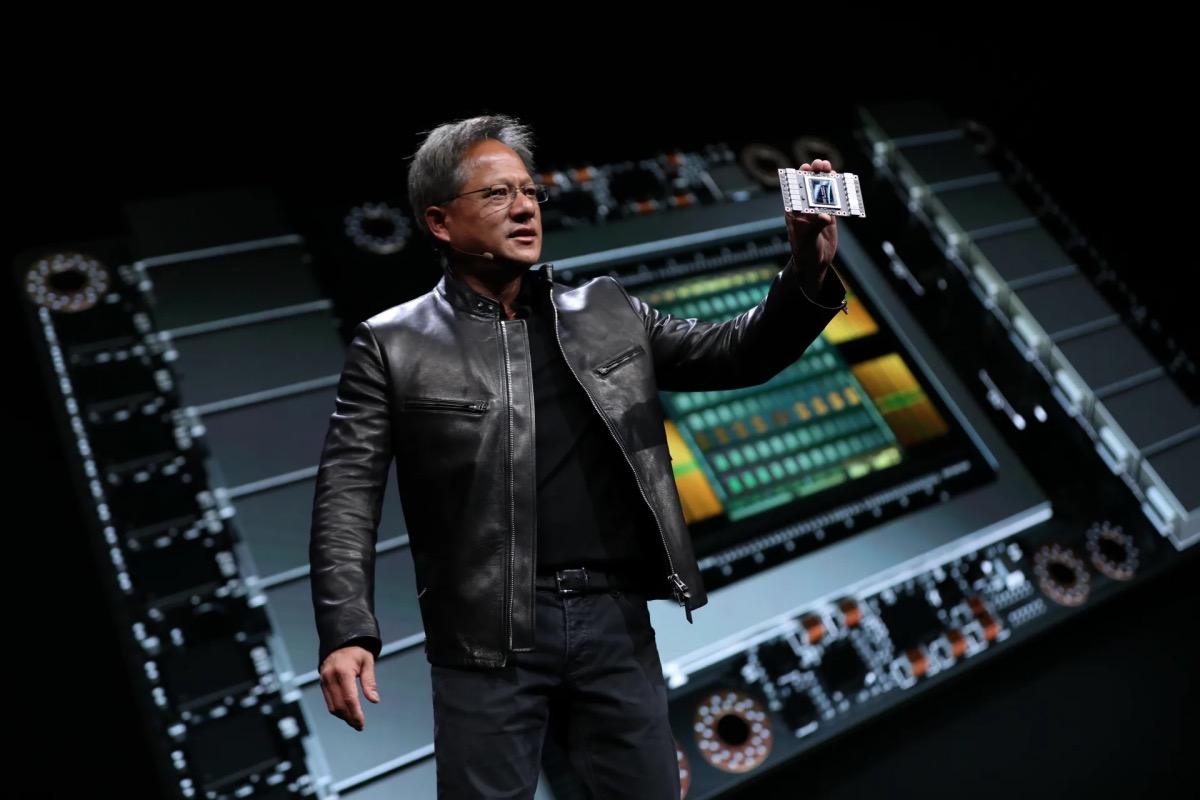
Before an AI system can write, reason, diagnose, or generate an image, it needs physical infrastructure. That makes the semiconductor supply chain the first arena of control.
The 2026 Stanford AI Index reports that the United States hosts 5,427 data centres—more than ten times the number in any other country—while a single Taiwanese company, TSMC, fabricates almost every leading AI chip. The machines needed to produce the most advanced chips create another bottleneck. Dutch manufacturer ASML says the extreme-ultraviolet lithography technology used to print their most intricate layers is unique to the company.
Semiconductors have consequently become instruments of statecraft. Export controls, manufacturing subsidies, and technology restrictions can decide which countries approach the frontier.
AI data centres also require immense and dependable electricity, land, water, and transmission capacity. The International Energy Agency’s research on energy and AI makes the constraint plain: the future of intelligence is also being negotiated around power grids.
The Companies Building the Mind
Model developers—including OpenAI, Google DeepMind, Anthropic, Meta, xAI, and leading Chinese laboratories—decide which capabilities they release, what access costs, and what their systems refuse to do.
These are not merely engineering choices. Rules governing politics, religion, warfare, or cyber activity are decisions about values and power. The public usually cannot inspect the full training data, evaluations, or deliberations behind them.
Stanford found that industry produced more than 90 per cent of notable frontier models in 2025. The frontier has moved towards companies able to spend heavily on talent, chips, and computing.
The laboratories are tied to larger financial and cloud empires. Anthropic announced that Amazon’s investment would total $8 billion and that Amazon Web Services would become its primary cloud and training partner. Such alliances fund competition while increasing dependence on infrastructure providers.
Distribution adds another quiet power. The model installed by default inside a search engine, office suite, or phone gains an advantage no benchmark can capture.

Governments Are Both Referees and Competitors
Governments are not neutral referees. They purchase AI, fund research, control exports, deploy systems, and pursue military applications. They want to regulate the race while also winning it.
The United States has treated leadership as an economic and national-security objective. Its AI Action Plan organised federal policy around accelerating innovation, building domestic infrastructure, and extending American AI influence abroad. China has pursued its own combination of state direction, industrial investment, platform regulation, and rapidly advancing domestic models. Stanford concluded in 2026 that the performance gap between leading American and Chinese models had effectively closed.
Europe possesses fewer frontier-model champions but exercises regulatory power through the size of its market. The EU AI Act, broadly applicable since August 2026, gives authorities powers over general-purpose models and establishes obligations based on risk. Europe’s wager is that the ability to set rules can rival the ability to build systems.
The contest is therefore over whose laws, standards, assumptions, and security priorities will travel with AI.
Does Open AI Break the Hierarchy?
Open and open-weight models offer a counterforce, allowing researchers, businesses, and governments to adapt systems without relying entirely on closed interfaces. Stanford reports that open development is broadening global participation.
But a downloadable model still requires chips, engineers, and electricity, while access to its weights may reveal little about its training. Openness redistributes some power; it does not dissolve the infrastructure beneath it.
The Countries Outside the Room
Most of the world controls none of the decisive layers. Many countries do not manufacture advanced chips, operate hyperscale clouds, train frontier models, or determine international standards. They enter the AI economy primarily as customers, data sources, testing grounds, or hosts for infrastructure.
That imbalance affects which languages are represented, which risks receive attention, and where profits accumulate. Adopting AI may be easy; governing dependence on it is not.
AI sovereignty, therefore, cannot mean that every country builds an enormous model. It can mean retaining authority over public data, procurement, critical infrastructure, local languages, education, and the conditions under which foreign systems make consequential decisions.
Who Controls the Controllers?
The most important battle is ultimately not between humanity and a machine. Today’s AI systems do not elect boards, approve budgets, sign defence contracts, or pass legislation. Human institutions do.
Technical power has advanced faster than public accountability. Companies often investigate their own models, governments invoke secrecy, and citizens encounter systems after decisive choices have been embedded. The International AI Safety Report 2026—written by more than 100 experts and backed by over 30 countries and international organisations—found continuing limitations in safeguards for general-purpose AI.
Accountability requires independent testing, enforceable transparency, competition policy, public-interest research, rights of appeal, and international co-operation.
No single actor controls AI. That is not necessarily reassuring. A small, interdependent group controls most of its essential gates, while responsibility is dispersed widely enough for each participant to claim that someone else is in charge.
The question that will define the AI era is not simply whether machines become more powerful. It is whether democratic institutions, acting on behalf of the public, become powerful enough to govern the people and organisations building them.