
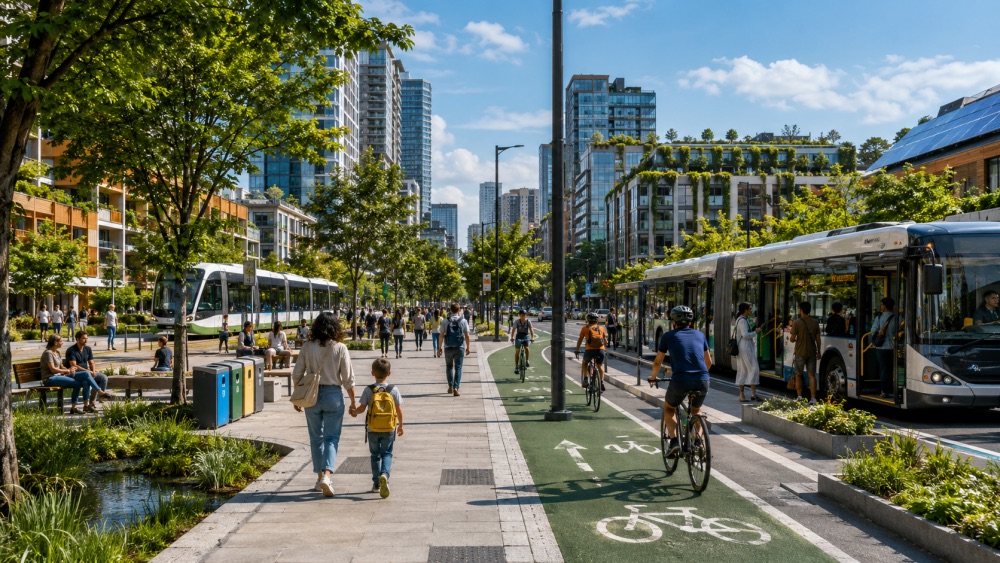

Big cities are where the climate crisis becomes visible. They are also where some of the most practical solutions can begin.
The city is where a child breathes polluted air on the way to school, where traffic steals hours from workers, where floods punish poor drainage, where heat turns concrete into a public health threat, and where waste reveals the hidden cost of modern consumption. But the city is also where policy can move quickly, habits can change visibly, and millions of people can feel the benefits of better design.
Advocating sustainability in big cities is therefore not about fashionable language. It is about making urban life cleaner, fairer, healthier and more liveable. The challenge is that city residents are busy, sceptical and often overwhelmed. They do not respond to abstract lectures. They respond to ideas that touch their lungs, their streets, their bills, their children and their future.
Here are 12 definitive rules for making the case.
1. Start With Daily Life, Not Distant Doom
Many sustainability campaigns fail because they begin too far away from ordinary experience. They speak of global temperature targets when residents are worried about transport fares, food prices, school runs, flooding, power supply, rent and safety.
The better opening is local and immediate.
Talk about the unbearable heat in badly planned neighbourhoods. Talk about children walking beside traffic fumes. Talk about blocked drains, unsafe roads, wasted electricity, poor sanitation and the cost of generators. Big-city sustainability becomes persuasive when people can recognise it outside their own front door.
The climate crisis is global. But advocacy becomes powerful when it sounds like the street people live on.
2. Make Health the First Argument
Clean air is not a luxury. Shade is not decoration. Safe walking routes are not urban cosmetics. They are public health infrastructure.
In big cities, sustainability must be framed as a health issue before it is framed as an environmental one. Dirty air worsens respiratory and cardiovascular risks. Extreme heat endangers older people, children and outdoor workers. Unsafe transport systems lead to injuries, stress and inactivity.
When advocates speak only about carbon, the argument can feel remote. When they speak about asthma, heatstroke, road deaths, anxiety, sleep, exercise and life expectancy, the issue becomes personal.
People may disagree about climate politics. They rarely want their children breathing poison.
3. Connect Sustainability to Economic Survival
A green city must not sound like an expensive hobby for the comfortable. In many places, residents hear “sustainability” and imagine higher costs, lifestyle policing or policies designed by people who do not understand survival.
That is why advocates must connect sustainability to money.
Efficient buildings reduce energy waste. Reliable public transport saves time and income. Flood prevention protects homes and businesses. Better waste systems create jobs. Urban trees can reduce cooling pressure. Walkable neighbourhoods help small businesses by bringing customers closer.
The strongest sustainability argument is not “sacrifice more”. It is “waste less, breathe better, move faster, spend smarter and live longer”.
4. Do Not Shame People for Bad Systems
Many residents use private cars, diesel generators, plastic packaging or informal waste disposal because the system around them gives them few better options. Shame is lazy advocacy. It attacks individuals while ignoring the structure that shaped their choices.
If public transport is unsafe, unreliable or humiliating, people will avoid it. If electricity is unstable, people will use generators. If recycling is unavailable, households will throw everything away together. If pavements are broken, people will not walk.
Good advocacy separates people from the broken systems they are trapped inside. The message should be: you deserve better options, not you are the problem.
5. Fight for Better Design, Not Just Better Behaviour
Personal behaviour matters, but big cities are shaped mostly by design. Roads, zoning, drainage, housing, power, waste systems, parks and transport routes decide how millions of people live.
A city that is built around cars will produce car dependency. A city without shade will produce heat stress. A city without safe pavements will punish walking. A city that allows uncontrolled building on flood plains will keep manufacturing disasters.
Advocates must therefore push beyond lifestyle advice. The real battleground is urban design: mixed-use neighbourhoods, efficient mass transit, safe pedestrian routes, drainage that works, green public spaces, clean energy systems and building codes that reflect climate realities.
Better behaviour is easier when the city makes better choices possible.
6. Treat Public Transport as Climate Policy
In many big cities, transport is where sustainability either becomes real or collapses into rhetoric. A city cannot claim to be serious about climate action while leaving people trapped in unsafe, unreliable and polluting mobility systems.
Public transport is not merely a convenience. It is climate policy, economic policy and social policy at the same time.
When buses, rail, ferries, cycling routes and walking networks are safe, affordable and dignified, residents gain time, health and opportunity. Traffic falls. Air improves. Productivity rises. Families spend less of their income moving from one obligation to another.
The goal is not to punish car owners. The goal is to build a city where fewer people are forced to depend on cars.
7. Make Green Space Non-Negotiable
A park is not empty land waiting for a more profitable use. A tree is not an obstacle to development. In hot, crowded cities, green space is protective infrastructure.
Trees cool streets. Parks give children somewhere to play. Vegetation helps absorb water. Green corridors support biodiversity. Public spaces improve mental wellbeing and give residents a shared civic life beyond malls, offices and traffic.
But green space must be equitable. A city has not succeeded if wealthy districts enjoy tree-lined streets while poorer communities inherit heat, dust, flooding and concrete. Sustainability advocacy must demand green protection for the people most exposed to environmental harm.
A liveable city is not measured only by its skyline. It is measured by who gets shade.
8. Put Waste Where People Can See the System
Waste is one of the most visible failures of urban life. It clogs drains, spreads disease, pollutes waterways, worsens flooding and makes entire neighbourhoods feel abandoned.
But waste advocacy must go beyond telling people not to litter. A serious city needs collection, sorting, recycling, composting, enforcement, education and markets for recovered materials. It also needs to reduce waste before it begins.
The best campaigns show the whole chain. Where does the waste go? Who collects it? What can be reused? What should businesses stop producing? How can households participate without carrying the entire burden?
People are more likely to cooperate when the system is visible, reliable and fair.
9. Speak the Language of Justice
Climate harm is not evenly distributed. The people who contribute least to the crisis often suffer first and worst. Informal settlements flood. Low-income families live beside polluted roads. Outdoor workers face dangerous heat. Poorer districts often have fewer trees, weaker drainage and less political protection.
That is why sustainability advocacy must be inseparable from justice.
A city’s green transition must not become another way to displace the poor, punish small traders or beautify elite districts while ignoring the vulnerable. Cleaner cities must also be fairer cities.
The test is simple: does this policy improve life for those most exposed to harm, or does it merely make privileged spaces look greener?
10. Use Data, But Tell Stories
Data gives advocacy credibility. Stories give it force.
Numbers can show pollution levels, flood risk, heat islands, energy waste, commuting times, tree cover and disease burden. But people also need human evidence: the market woman whose goods are ruined by flooding; the student who spends four hours in traffic; the child with breathing difficulties; the family whose home overheats at night.
The strongest advocacy combines both. Data prevents exaggeration. Stories prevent indifference.
A chart may win the policy table. A story may move the public. A city needs both.
11. Build Coalitions Beyond Environmental Circles
Sustainability cannot be left only to environmental activists. In big cities, the movement must include doctors, teachers, transport workers, architects, engineers, religious leaders, market associations, youth groups, disability advocates, landlords, tenants, waste collectors, business owners and community leaders.
Each group sees a different part of the problem. Each can carry the message into places where environmental language alone may not enter.
The wider the coalition, the harder it becomes for opponents to dismiss sustainability as a niche concern. Clean air is not a niche concern. Flood protection is not a niche concern. Safe streets are not a niche concern. They are civic necessities.
12. Demand Visible Wins, Then Scale Them
Big-city sustainability can feel overwhelming. The problems are too large, the politics too slow, the budgets too tight. That is why advocates need visible wins.
A cleaned canal. A shaded school route. A pedestrianised street. A reliable bus corridor. A restored park. Solar power for a clinic. Waste sorting in a market. Flood mapping in a vulnerable district.
Small wins do not replace systemic change. They make it believable. They show residents that sustainability is not a slogan. It is a practical improvement in daily life.
The work of advocacy is to connect the pilot to the policy, the policy to the budget, and the budget to a citywide transformation.
The City Is the Argument
To advocate sustainability in a big city is to fight for a better form of urban life. It is to insist that development must mean more than taller buildings, wider roads and brighter billboards. It must mean cleaner air, safer movement, cooler streets, reliable services, less waste, greater dignity and more protection for the vulnerable.
The best sustainability message is not anti-growth. It is pro-future.
A city that cannot breathe cannot thrive. A city that floods every rainy season is not modern. A city where children cannot walk safely is not advanced. A city that treats green space as decoration has misunderstood survival.
The case for sustainability is ultimately the case for a city that loves its people enough to plan for them.