
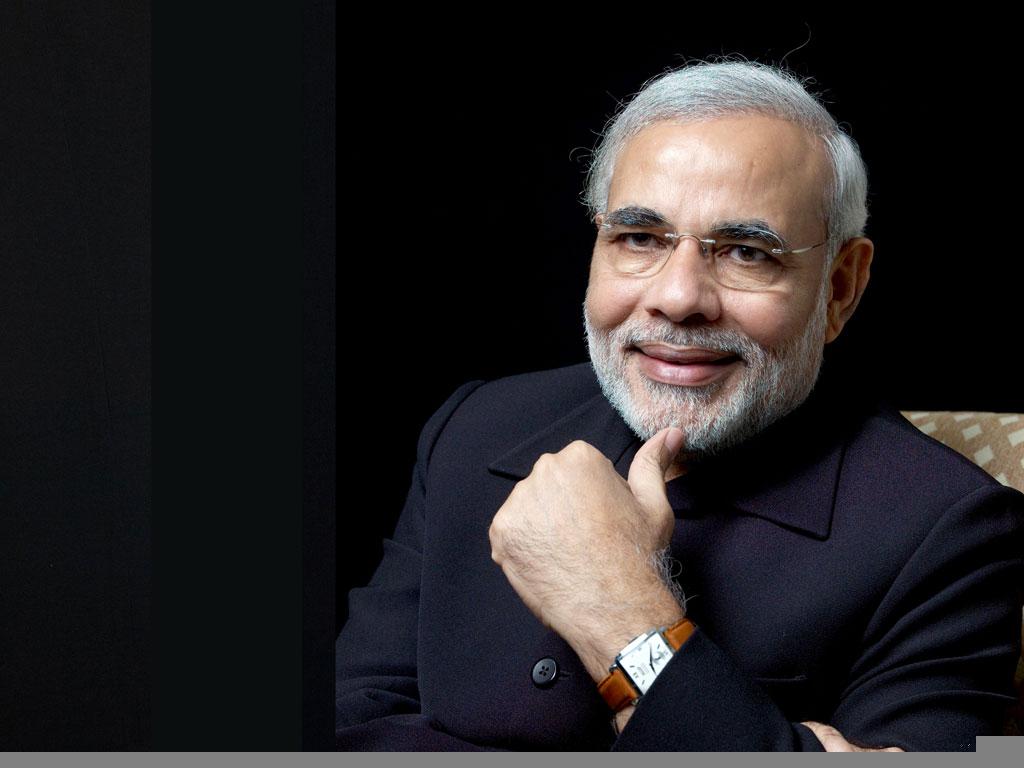

NEW DELHI, India — Narendra Modi was poised to become India’s next prime minister on Friday as a BJP election victory put the opposition party on course for an outright parliamentary majority.
By Friday, May 16, 2014, counting trends showed the Bharatiya Janata Party leading in 278 of Parliament’s 543 seats. An alliance headed by the party was ahead in 337 constituencies, according to NDTV.
The projected result represented India’s most decisive electoral mandate in three decades. It also delivered the Congress party, led by Prime Minister Manmohan Singh, its worst defeat.
Singh telephoned Modi to congratulate him as the scale of the outcome became clear.
BJP supporters celebrated at party offices across India, setting off fireworks, distributing sweets, and dancing. In Gujarat, crowds surrounded Modi’s vehicle after he visited his mother.
“India has won,” Modi wrote in a message that quickly became the country’s most widely shared Twitter post at the time.
“I’m so happy because all of India wanted a strong government,” said Vinod Rai, a software engineer celebrating at the BJP headquarters in Delhi.
The Prospect of Single-Party Government
The BJP’s commanding lead placed it more than six times ahead of its nearest rival and gave Modi the strongest mandate received by an Indian leader since the election that followed Prime Minister Indira Gandhi’s assassination in 1984.
India has been governed by coalitions since 1989. A BJP majority would allow Modi to form a government without depending on coalition partners for its survival.
The outcome also weakened the Nehru-Gandhi political dynasty, whose members and party have governed India for much of the country’s 67 years of independence.
Rahul Gandhi, 43, was Modi’s principal Congress rival during the campaign. Gandhi’s grandfather, Jawaharlal Nehru, became India’s first prime minister after independence from Britain in 1947.
Modi, 63, repeatedly contrasted his beginnings as a tea seller with the privileged background of his political opponents. Since the BJP selected him as its candidate in September, he had travelled 300,000 kilometres, or 186,000 miles, and addressed 457 rallies in a highly personalised national campaign.
The vote followed five weeks of polling across the country. More than 500 million ballots were cast, from the Himalayan north to India’s tropical south, as voters endured intense heat. Turnout reached a record 66 per cent.
The campaign took place amid continuing concerns about Modi’s Hindu-centred politics and violence against Muslims during his tenure as Gujarat’s leader. The vote count, however, showed his party making substantial gains across the country.
Economic Promises Take Centre Stage
Modi built his campaign around promises of faster economic growth, expanded employment, and stronger government. He pledged to revive delayed investments in road, railway, and power projects.
He had governed Gujarat for more than 12 years, promoting the state as a destination for investment and overseeing the development of infrastructure. A clear parliamentary majority would give him greater latitude to pursue a similar programme nationally.
“He can afford to have a smaller but stronger cabinet, that means a far more decisive government. He has been saying less government and more governance, we are really likely to see that,” said Navneet Munot, chief investment officer at SBI Funds Management in Mumbai.
The economic programme awaiting Modi had its origins in reforms introduced by Singh when he served as finance minister in 1991. Those measures opened India’s previously socialist economy to international investment.
Singh’s 10 years as prime minister ended with economic growth faltering, government decision-making slowing, and corruption damaging Congress. He had already said farewell to his staff before the election results emerged.
Modi would take office as India confronted its most severe economic slowdown since the 1980s. Growth had remained below 5 per cent during the previous two years, while inflation, reduced purchasing power, and limited employment opportunities had become significant concerns for voters.
“It’s important to be realistic about how quickly they can instigate change. It takes time to, number one, get economic reforms through the political machinery, and number two, it also takes a while before economic reforms actually have a positive impact,” said Leif Eskesen, an economist at HSBC in Singapore.
Markets Rise After the Vote
Indian financial markets rallied as the counting pointed towards a decisive BJP victory.
The rupee strengthened past 59 against the United States dollar, reaching its highest level in 11 months. India’s benchmark share index climbed as much as 6 per cent to a record before surrendering part of the advance.
Foreign investors had committed more than $16 billion to Indian shares and bonds during the preceding six months in anticipation of a Modi victory. They controlled more than 22 per cent of equities listed in Mumbai, a holding Morgan Stanley valued at almost $280 billion.
The market response reflected expectations that a government with a secure parliamentary majority would be able to advance economic changes more quickly. The task confronting Modi, however, would include translating those expectations into growth and employment for the millions of Indians who supported his campaign.