


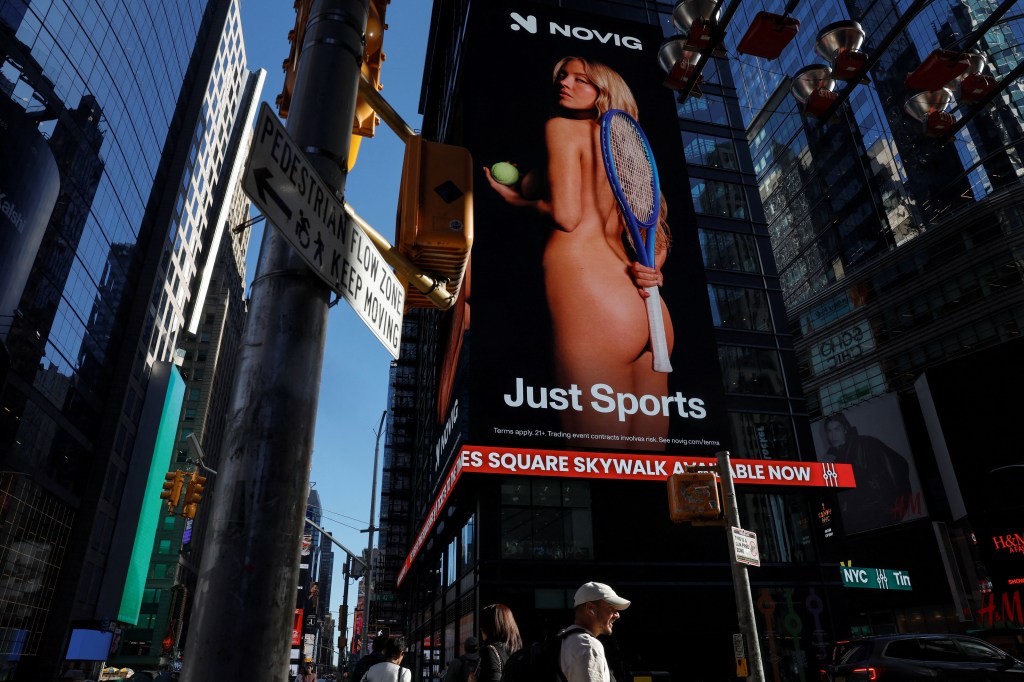
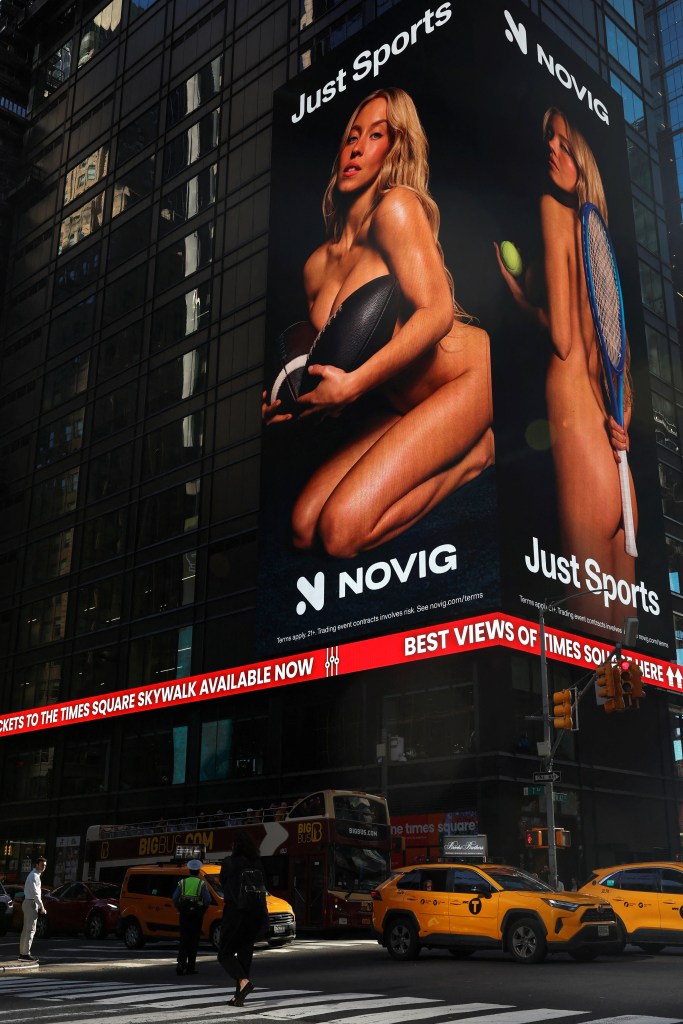
NEW YORK, United States — Olympians and other female athletes have criticised a Novig advertising campaign in which actress Sydney Sweeney poses nude or partly clothed with sporting equipment.
They say the imagery sexualises women’s sport and diminishes the work required to compete professionally.
Released on Wednesday, September 9, 2026, the campaign promotes the American sports prediction platform through photographs and videos showing Sweeney with American footballs, a tennis racket, a baseball bat, and a basketball.
The Sydney Sweeney sports ad quickly spread online.
By Tuesday, the campaign had accumulated more than 40 million Instagram views.
Athletes Post Their Own Sporting Images
Australian surfer Felicity Palmateer called the campaign damaging to athletes and girls considering careers in sport.
“We want to be valued for what we can do, not what we look like,” Palmateer said.
British sprinter Amy Hunt addressed Sweeney during a televised interview after competing on Sunday. Hunt described women’s sport in markedly different terms: “Muscles. Hard work. Sweat, blood, tears.”
Australian Olympic swimmer Ariarne Titmus said the advertisement angered her because female competitors had spent years seeking recognition for their athletic abilities.
Titmus said sport should be associated with teamwork, friendship, dedication, excellence, and unity.
Fellow Australian swimmer Lani Pallister responded with a video showing her training and competing.
The accompanying message said the footage represented what sport looked like.
Australian boxer Skye Nicolson published a similar compilation and urged companies to stop sexualising women in sport.
Nicolson acknowledged that public responses were giving the campaign further attention but said advertisers should exercise greater responsibility.
Retired American gymnast Gracie Kramer also said the campaign was infuriating.
Kramer said female gymnasts had long contended with being judged by their bodies rather than their performances and described the advertisement as a significant reversal of that progress.
The athletes’ posts developed into a broader online response in which competitors shared videos of training sessions, races, medals, injuries, and other aspects of professional sport.
Novig Defends the Campaign
Novig founder and chief executive Jacob Fortinsky has now responded to the criticism, saying the advertisement was not intended to depict female athletes.
“We never intended to portray female sports,” Fortinsky said during a Front Office Sports conference.
Fortinsky said Sweeney appeared in the campaign as an actress communicating that Novig concentrates exclusively on sporting events.
He also said the platform was restricted to customers aged 21 and older.
Sweeney’s involvement extends beyond appearing in the advertisement.
She joined Novig as a strategic partner and equity holder after approaching the company about a collaboration, Fortinsky said.
The size of her ownership interest and the amount she was paid for the campaign have not been disclosed.
Fortinsky said Sweeney participated extensively in creating the advertisement.
“It really was Sydney who’s driving a lot of the visuals and the messaging,” he said.
Before the backlash, Sweeney said the campaign was built around a playful concept intended to direct attention towards sport.
Novig has also said that she helped develop its message that the platform does not offer prediction markets involving wars, deaths, or politics.
Sweeney Offers an Indirect Response
Sweeney has not issued a direct public reply to the athletes’ objections.
On Sunday, however, she posted photographs from ESPN The Magazine’s annual “Body Issue”, which featured professional athletes posing nude or partly clothed. The publication ran the edition for 11 years before ending it in 2019.
The posts were widely interpreted as a response to the criticism, although Sweeney did not accompany them with an explanation addressing the distinction athletes had drawn between celebrating athletic bodies and using sexualised imagery to advertise a prediction market.
The Novig campaign follows another advertising dispute involving Sweeney.
In 2025, an American Eagle campaign used a play on the words “jeans” and “genes”, prompting criticism from people who said its references to inherited physical characteristics evoked ideas associated with eugenics and racial superiority.
Sweeney later said she had been surprised by the reaction.
She did not apologise for that campaign and said she would speak publicly when she had an issue she wanted to address.