
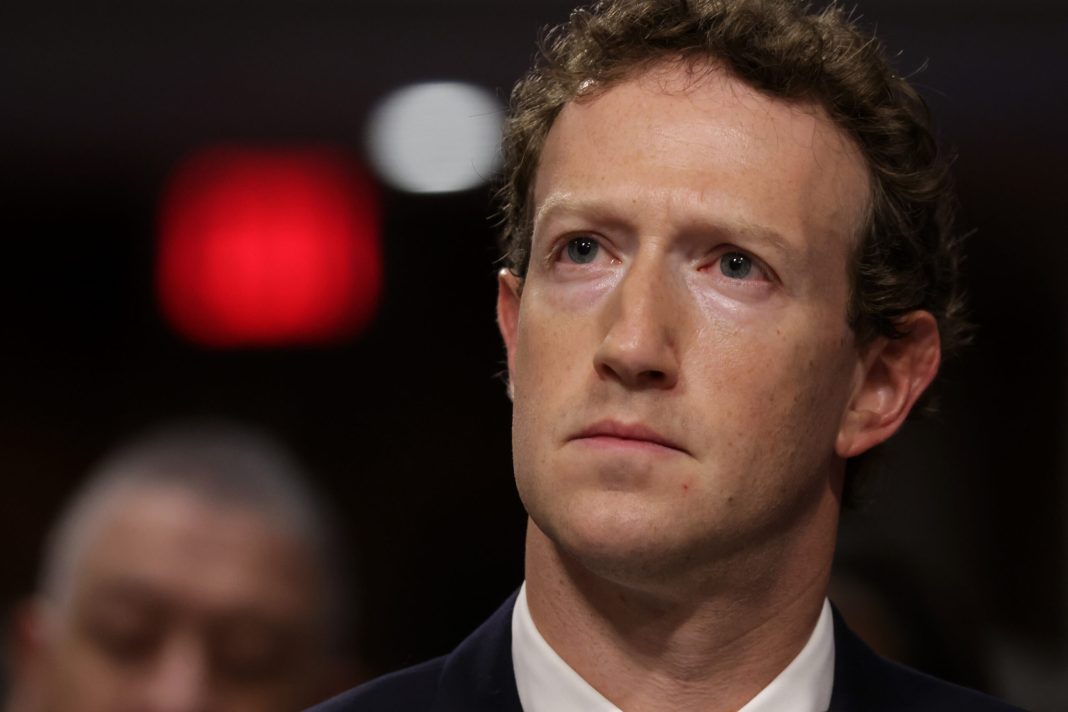

CALIFORNIA, United States — Mark Zuckerberg has rejected calls for an industrywide agreement to slow the development of artificial intelligence, saying individual companies should determine when to delay their work to address safety concerns.
The Meta chief executive made the comments in an interview with NBC News chief technology analyst Joanna Stern, published on Thursday, September 24, 2026, amid growing calls from technology executives and political leaders for stronger oversight of advanced AI systems.
Zuckerberg said companies developing the technology should take additional time when they identify safety problems but opposed a collective arrangement requiring the industry to slow development.
“I don’t think that we need some kind of industrywide coordination,” Zuckerberg told NBC News.
“I think that each lab needs to take the time, and when it sees that there are issues, you just take the time that you need internally to basically make sure that you’re proceeding safely.”
Zuckerberg also argued that companies have commercial reasons to ensure their products are safe and reliable, saying consumers would be reluctant to use systems that failed to meet their needs.
His position differs from proposals by several other leading AI executives, who have called for greater cooperation, independent safety assessments, and a slower pace of development.

AI Industry Leaders Call for Coordinated Safety Measures
Dario Amodei, chief executive of Anthropic, has urged developers of advanced AI models to reduce the pace of development to allow more time for safety research and testing.
Sam Altman, chief executive of OpenAI, subsequently supported Amodei’s proposal, saying the industry needed to proceed more cautiously as increasingly powerful systems emerge.
Altman also backed giving independent safety evaluators greater access to AI laboratories.
Elon Musk, who leads SpaceXAI, and Demis Hassabis, co-founder of Google DeepMind, have also expressed support for Amodei’s call for a more deliberate pace of development.
According to Axios, the executives endorsed additional safeguards following warnings about the potential dangers of increasingly capable AI systems.
OpenAI has separately called for mandatory national safety requirements and international standards governing the development of advanced AI.
In a policy statement, the company said governments and developers should establish common standards for assessing risks and determining when further development should be delayed or stopped.

Trump, King Charles, and Prince Harry Address AI Risks
US President Donald Trump has opposed proposals for a broad slowdown in AI development, arguing that restrictions could weaken America’s technological position relative to China.
The Trump administration’s AI Action Plan prioritises technological innovation, infrastructure development, and international competitiveness.
The administration has also introduced measures intended to strengthen cybersecurity and the security of AI systems used by government agencies.
King Charles III has called for international cooperation and stronger safeguards to ensure that AI remains under human control.
At a gathering of technology executives at Dumfries House in Scotland, the King raised concerns about the potential for advanced AI to be used in ways that could endanger human life.
The meeting brought together representatives of Nvidia, Google DeepMind, OpenAI, and Anthropic.
In his published address, Charles asked how governments and technology companies could establish international cooperation to address the risks while preserving the benefits of the technology.

Prince Harry, the Duke of Sussex, has also called for greater caution over AI development, particularly concerning systems designed for children.
Speaking at the Clinton Global Initiative in New York, Harry warned that AI companionship products could create risks beyond those associated with conventional social media.
According to the Associated Press, he expressed concern about AI systems encouraging emotional attachment among young users and being introduced before their safety had been adequately established.

Mario Tama/Getty Images
California Moves to Strengthen Independent AI Oversight
California has introduced legislation requiring greater transparency and independent scrutiny of advanced AI systems.
Governor Gavin Newsom signed two bills establishing standards for independent safety assessments and the registration of AI auditors.
The state has also required developers of advanced AI models to disclose their safety frameworks and report specified serious safety incidents.
Newsom subsequently issued an executive order directing state agencies to accelerate the implementation of independent oversight measures.
The order also called for expert recommendations on additional safeguards, including a potential emergency shutdown mechanism for advanced AI systems.
California has not mandated an industrywide suspension of AI development. Its measures instead establish requirements for disclosure, external assessment, and accountability.
Zuckerberg, meanwhile, has maintained that individual AI laboratories should determine when safety concerns require them to slow their own development.