

LAGOS, Nigeria — The Socio-Economic Rights and Accountability Project, SERAP, has asked the National Assembly to withdraw the Nigeria Data Protection (Amendment) Bill, 2026, a bill that permits the shutdown of social media platforms in the country.
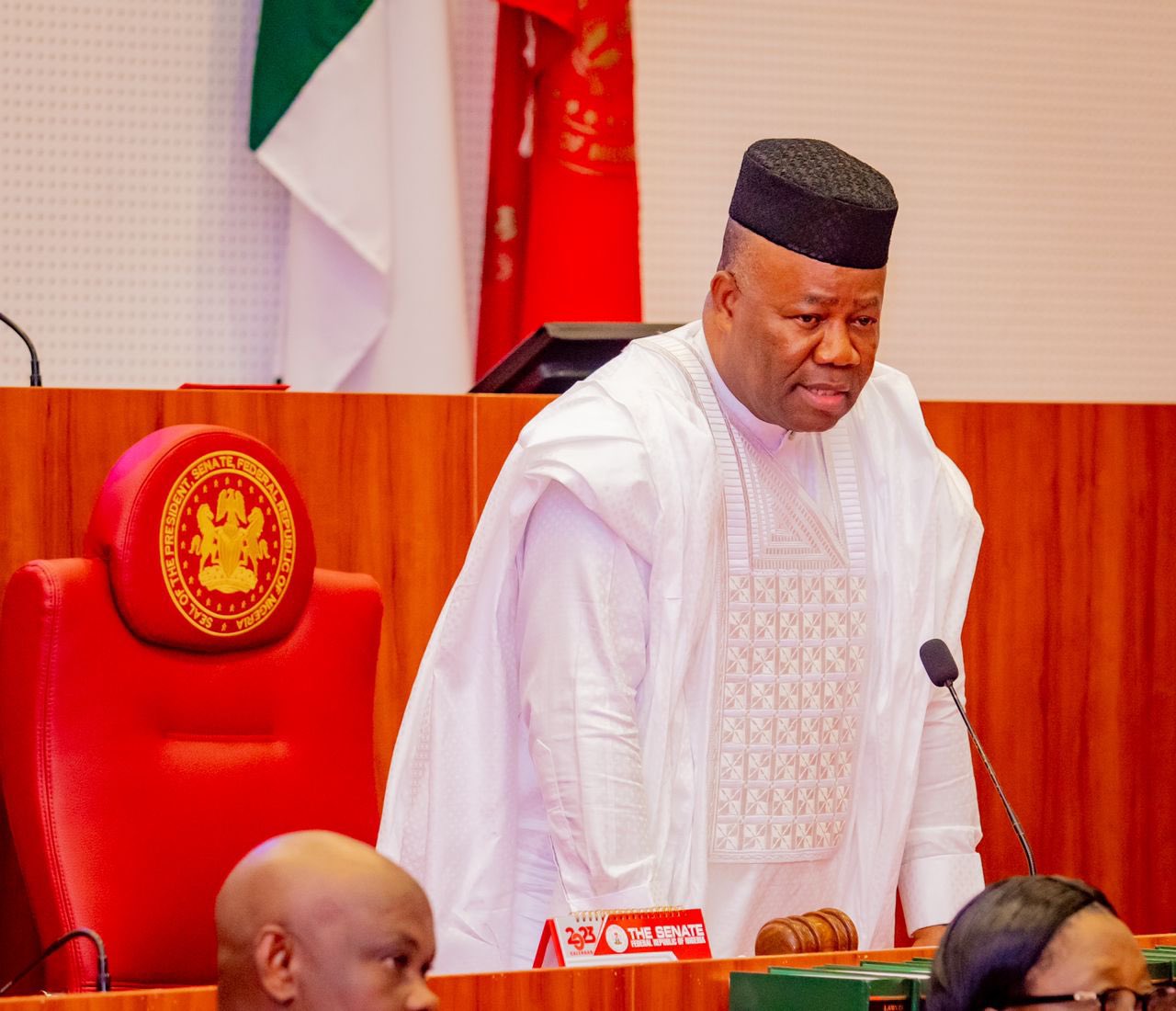
SERAP made the demand in a letter dated Saturday, July 18, 2026, addressed to Senate President Godswill Akpabio and House Speaker Tajudeen Abbas and signed by its deputy director, Kolawole Oluwadare.
The organisation warned that it would challenge the legislation in court if lawmakers passed it in its present form or with substantially similar provisions.
The bill, sponsored by Senator Ned Nwoko, who represents Delta North, would require social media platforms, data controllers and data processors operating in Nigeria to establish physical offices in the country.
It would also empower the Nigeria Data Protection Commission to prohibit a company from operating in Nigeria if it failed to comply with the requirement within 30 days.
SERAP described the proposal as an attempt to introduce greater government control over social media through changes presented as data protection measures.
“The Bill constitutes a backdoor attempt to regulate social media and increase governmental control over online expression through corporate localisation requirements rather than through transparent and constitutionally permissible regulation,” the organisation said.
Warning Over Regulatory Powers
SERAP said the proposed local-office requirement could expose technology companies and their employees to political pressure.
“Requirements compelling technology companies to establish local offices would increase government leverage over platforms, facilitate political pressure, make censorship demands easier and expose local employees to retaliation,” it said.
The organisation argued that the commission’s proposed authority to stop digital platforms from operating could affect millions of Nigerians who depend on the services for communication, education, commerce and civic participation.
“The Bill would create sweeping powers capable of shutting down or excluding social media platforms from the Nigerian market and expose millions of Nigerians to serious violations of their constitutionally and internationally guaranteed human rights,” SERAP said.
It said the legislation would authorise an administrative agency to impose restrictions with consequences comparable to a nationwide disruption of digital communication.
SERAP also criticised what it described as inadequate protections for affected companies and users.
“The Bill contains no requirement for prior judicial authorisation, no obligation to consider less restrictive alternatives, no meaningful opportunity to remedy alleged non-compliance beyond the arbitrary 30-day period, and no requirement to consider the impact of any prohibition on the fundamental rights of millions of Nigerians,” the letter said.
According to the organisation, the measure would allow regulators to apply one of the most severe available sanctions solely because a digital company had not opened a physical office in Nigeria.
Comparison With Twitter Ban
SERAP said the proposal risked producing effects similar to Nigeria’s suspension of Twitter, now known as X.
It referred to the judgment of the ECOWAS Court of Justice in SERAP and Others v. Federal Republic of Nigeria, which found that the suspension violated rights to freedom of expression, access to information and media freedom protected by the African Charter on Human and Peoples’ Rights.
“Although the present Bill differs from the Twitter suspension in form, it creates the possibility of achieving the same result indirectly by empowering regulators to prohibit digital platforms from operating in Nigeria,” SERAP said.
The organisation argued that lawmakers should not use corporate localisation rules to introduce restrictions that could not lawfully be imposed directly on social media.
“The National Assembly should not achieve indirectly through regulatory localisation requirements what it cannot constitutionally achieve directly through restrictions on social media,” it said.
“The practical consequences for millions of Nigerians would be indistinguishable from a platform ban.”
SERAP said the amendment followed previous attempts by the National Assembly to regulate social media that attracted public opposition and raised human rights concerns.
It added that the bill revived proposals previously introduced by Nwoko and renewed concerns about the use of localisation requirements to exert control over digital platforms and online expression.
Constitutional Objections
SERAP acknowledged the government’s authority to require digital companies to act responsibly and comply with Nigerian law.
It said, however, that any regulation must remain within the limits of the Constitution and international human rights standards.
“Measures regulating digital services should enhance transparency, accountability and users’ rights—not create additional tools for censorship, surveillance or political interference,” the organisation said.
SERAP cited Section 39 of the Nigerian Constitution, Article 19 of the International Covenant on Civil and Political Rights and Article 9 of the African Charter on Human and Peoples’ Rights.
It said those provisions protected freedom of expression and access to information, including the use of digital platforms.
The organisation also argued that the bill could not satisfy the conditions set out under Section 45 of the Constitution for restricting fundamental rights.
According to SERAP, restrictions must be prescribed by law, pursue a legitimate objective and be reasonably justifiable in a democratic society.
It said improved regulatory compliance could be a legitimate government objective but maintained that the proposed powers were neither necessary nor proportionate.
“There is no evidence that existing powers under the Nigeria Data Protection Act are inadequate, that current enforcement mechanisms have failed, or that less restrictive alternatives would be insufficient,” SERAP said.
The group also referred to guidance from the United Nations Human Rights Committee, which requires limitations on freedom of expression to satisfy tests of legality, necessity and proportionality.
It said governments were expected to adopt the least restrictive means available when pursuing legitimate public objectives.
SERAP further cited the African Commission on Human and Peoples’ Rights’ Declaration of Principles on Freedom of Expression and Access to Information in Africa, which calls on governments to promote internet access and avoid unnecessary restrictions on digital communications.
The letter also referred to warnings by David Kaye, a former United Nations special rapporteur on freedom of expression, against using local-office requirements to facilitate censorship or place indirect pressure on technology companies.

Impact on the Digital Economy
SERAP said the proposed amendment could undermine Nigeria’s digital economy and discourage innovation and investment.
It argued that the bill conflicted with the objectives of the Nigeria Startup Act 2022 and the National Digital Economy Policy and Strategy.
The organisation said mandatory physical offices would increase compliance costs, particularly for smaller technology companies, start-ups, artificial intelligence developers, research institutions, educational organisations and open-source projects.
“The Bill would undermine the country’s digital economy, innovation ecosystem and international standing,” SERAP said.
Although the amendment was presented as a measure to strengthen compliance and consumer protection, the organisation said its effect would extend far beyond data regulation.
It said the legislation would create a statutory process through which regulators could remove digital platforms from the Nigerian market after 30 days of non-compliance.
SERAP said such a prohibition would affect not only technology companies but also Nigerians who use the platforms to exchange information, associate with others, operate businesses, pursue education and take part in political and civic activities.
“No major democratic jurisdiction requires every social media platform to establish a physical office as a blanket precondition for providing services,” it said.
The organisation called on Akpabio and Abbas to stop further consideration of the amendment.
“The National Assembly should immediately reject and withdraw the Bill, as it is manifestly incompatible with the Nigerian Constitution and Nigeria’s obligations under the African Charter on Human and Peoples’ Rights and the International Covenant on Civil and Political Rights,” SERAP said.
It added that legal proceedings would follow if the bill became law without the disputed provisions being removed.
“Should the Bill be enacted into law in its current or substantially similar form, SERAP shall promptly take all appropriate legal actions to challenge its legality in the public interest and to ensure that Nigerians’ fundamental rights are fully protected,” the organisation said.